
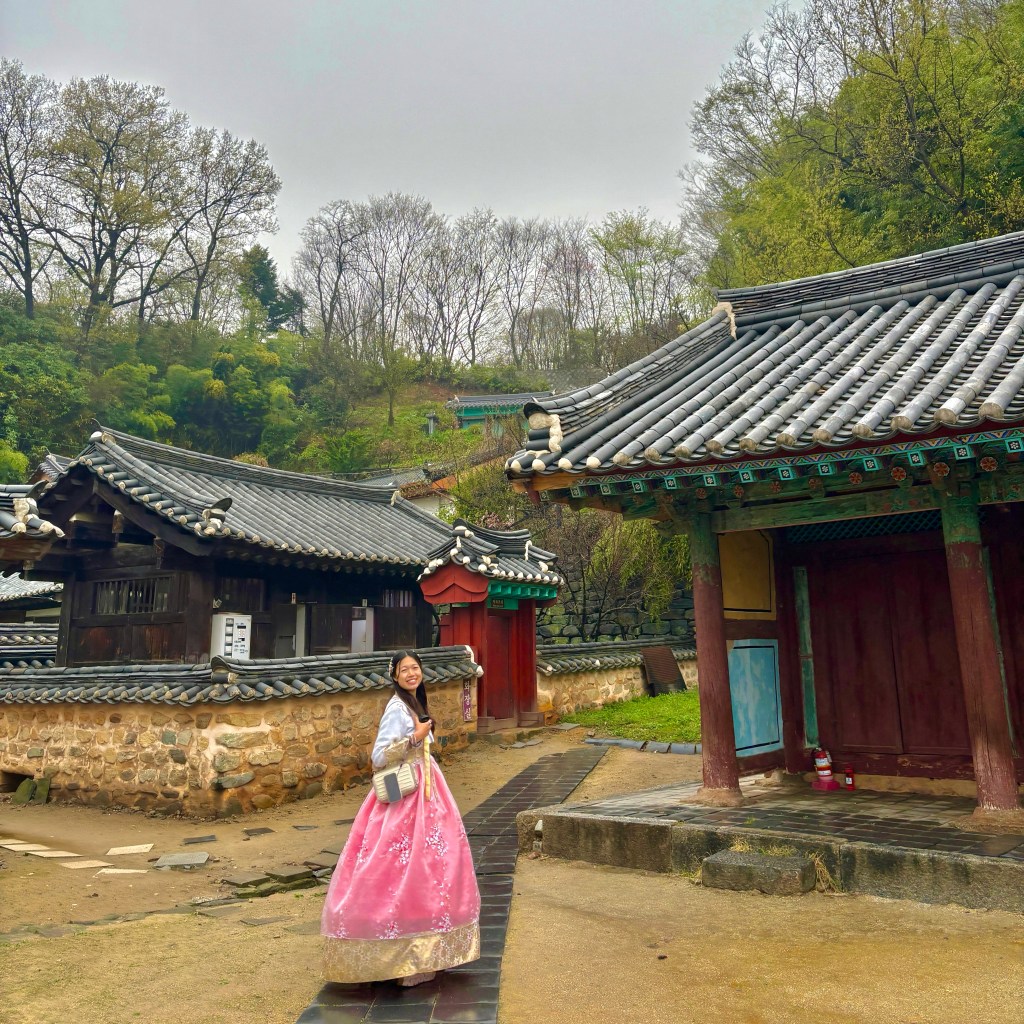
Located in Western South Korea, Jeonju is best known for the Jeonju Hanok Heritage Village which features the traditional Korean style homes. After spending some hectic days in Seoul, coming to this small town is a nice change of pace to the slow city lifestyle.
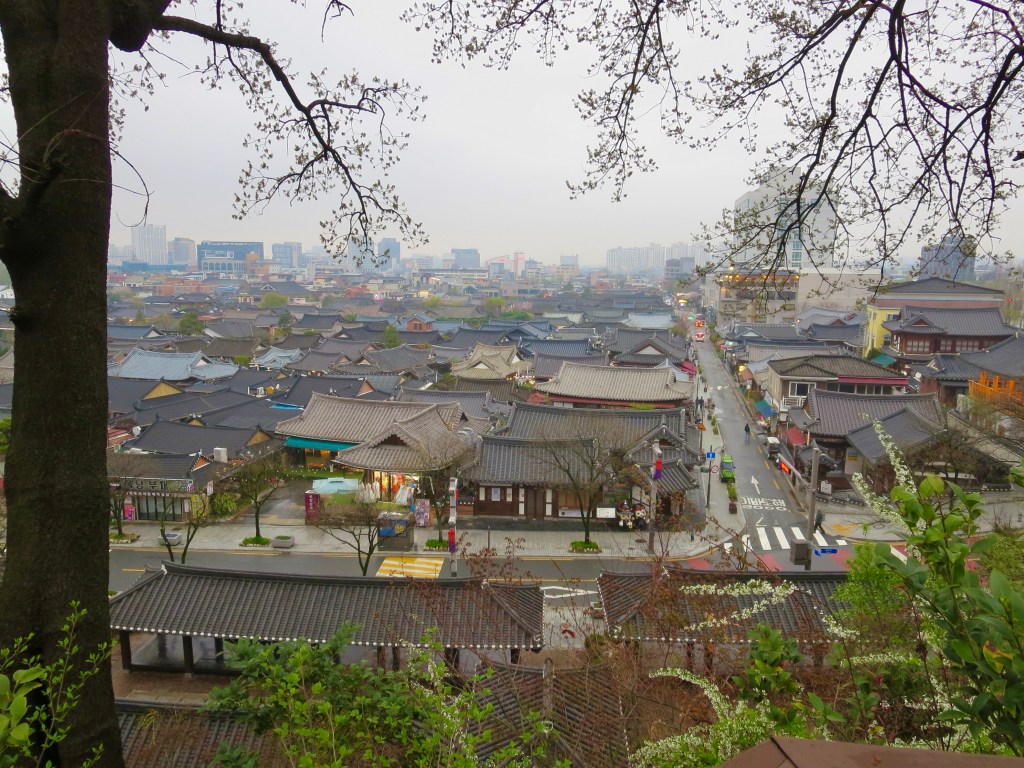
We only stayed in Jeonju for a night to spend a full day here, but I could have stayed for longer! People normally spend at least 2 nights here or you can even take a day trip tour out of Seoul. Hopefully I can go back one day and explore more of this quaint heritage town. Since I was here such a short amount of time, here are my must do-s in Jeonju (hehe it rhymes)!
How to Get to Jeonju
We took the high-speed KTX train from Seoul Station to Jeonju Station which took us about 2 hours. There are also buses or local trains that can take you to Jeonju from Seoul.
Where to Stay
I would recommend staying the night in a hanok! Jeonju is the perfect place for this experience. We opted for the traditional style bed which was just a one futon mattress directly on the ground. Surprisingly, it’s as comfortable as a normal bed and I woke up feeling great!
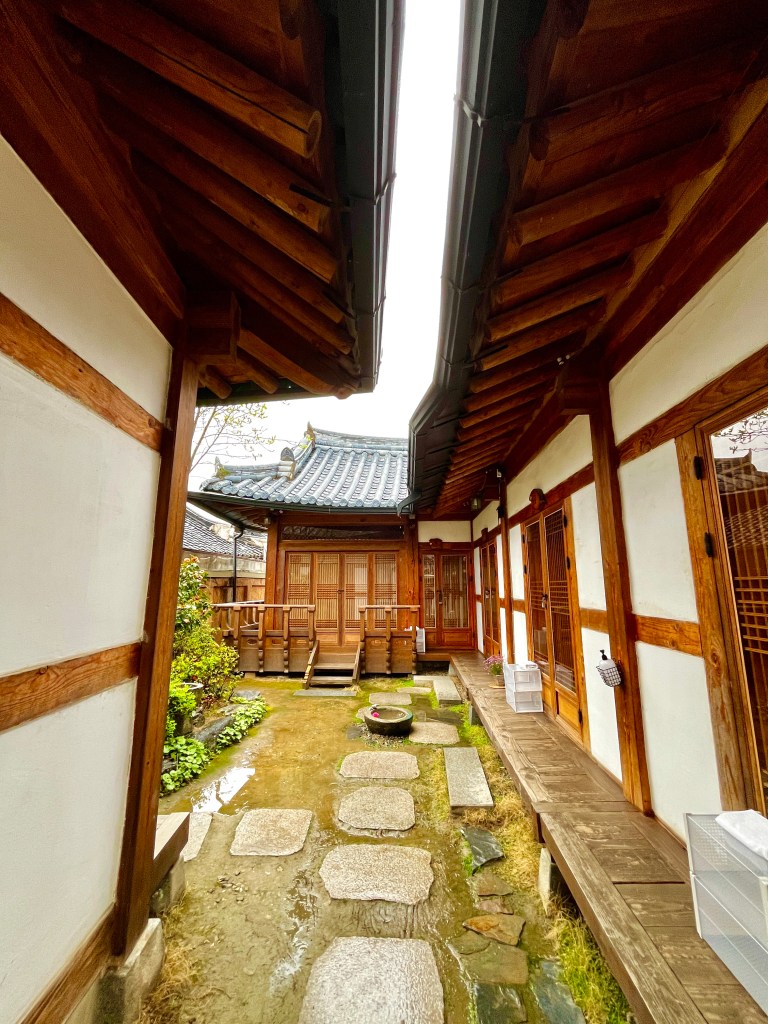
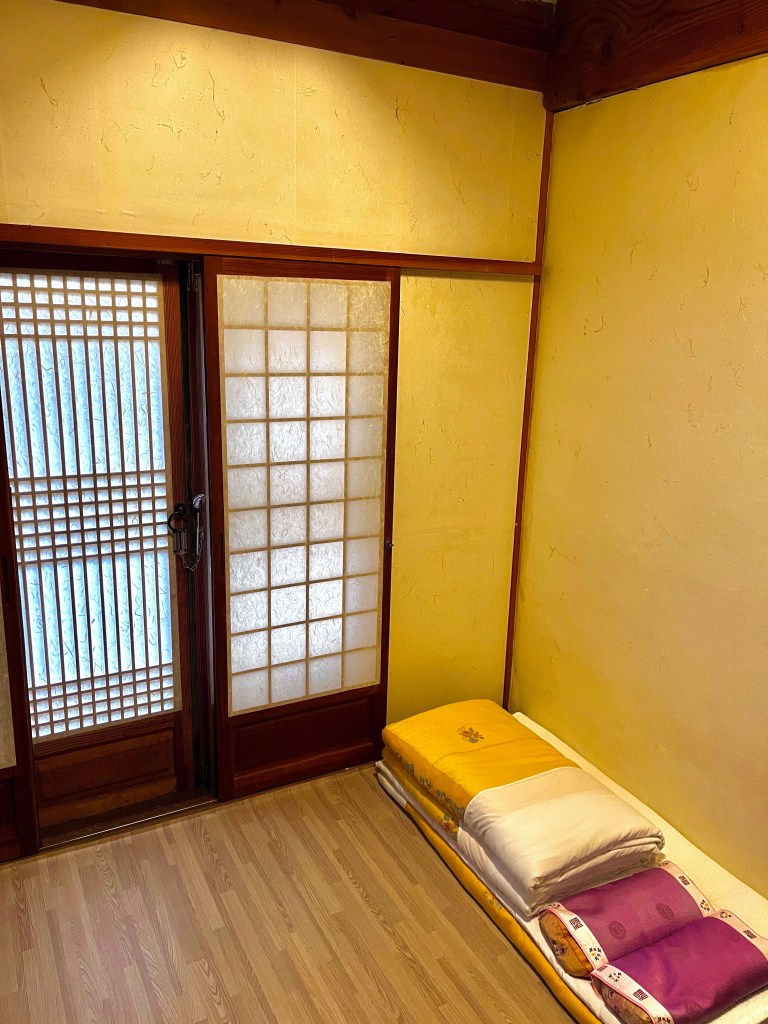
There are many guesthouses and hotels within the Hanok Village, but we stayed at Sarangroo which was lovely. Located right at the edge of Hanok Village, it was an easy few minute walk to everything we explored!
Jeonju Hanok Village
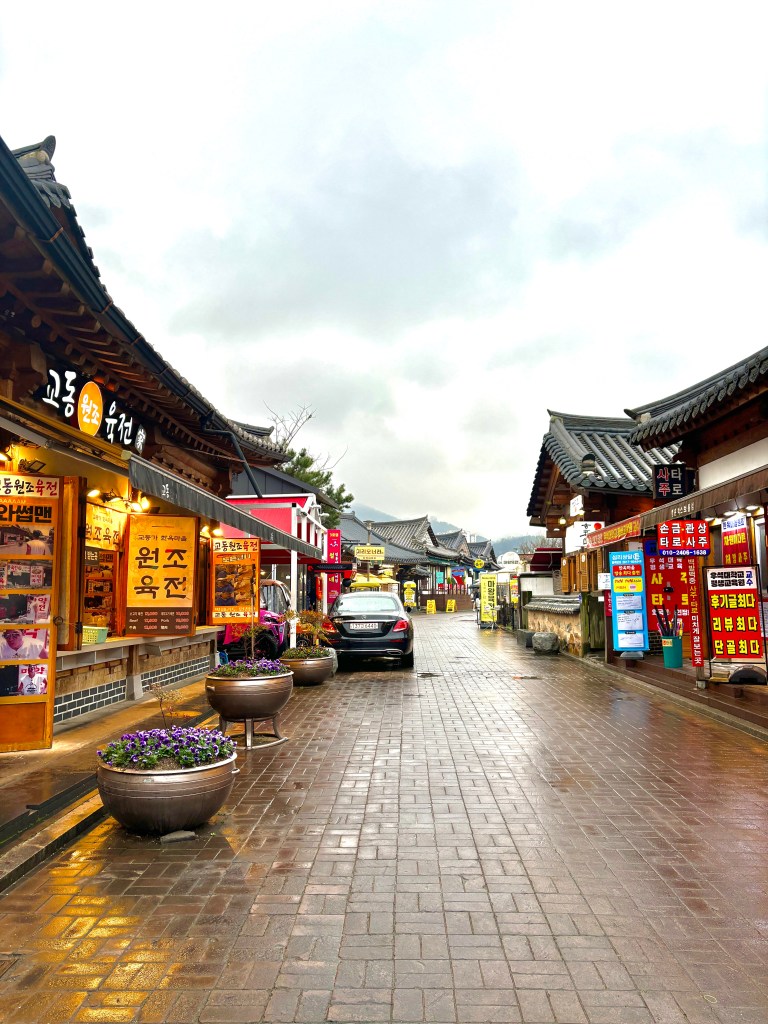
This city is well known for the Hanok Village that contrasts the tall cityscape around it. Here, you can stroll through the various museums, shops, and restaurants as you take in this traditional Korean town. There were many self-service shops here which shocked us: employee-less coffee shops, soap shops, and others that fully ran on its own!
Rent a Hanbok
In addition to staying in a hanok, Jeonju is a great place to rent a hanbok (traditional style Korean clothes) to take memorable photos in this scenic town. A plus is that it’s also cheaper compared to renting one at Gyeongbokgung Palace in Seoul!
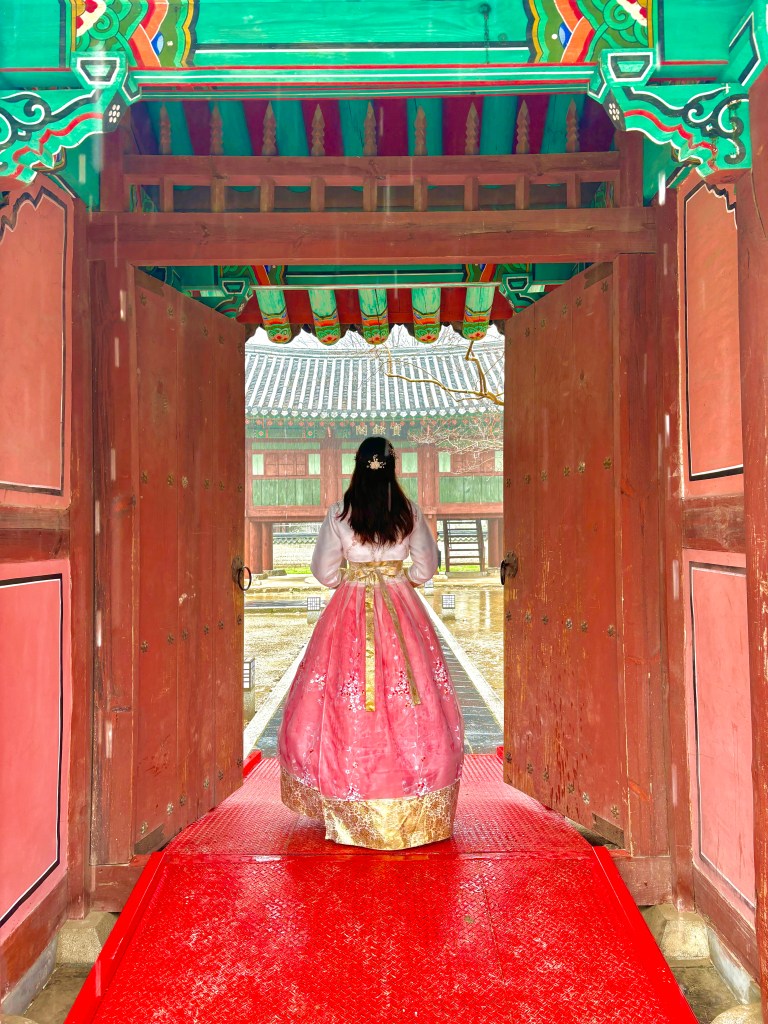
At the shop, you can go through various types and colors of hanboks to pick your favorite. The staff help give you recommendations on what top best matches with what skirt, helping put on the clothes (over your own clothes), and pinning everything in place.
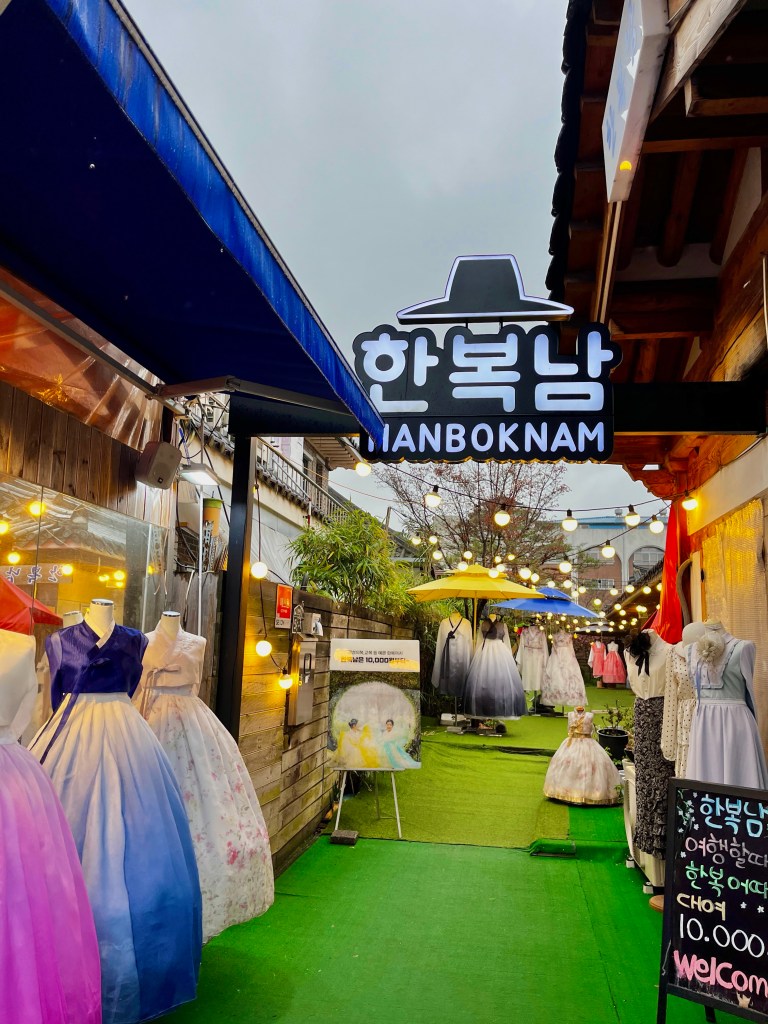
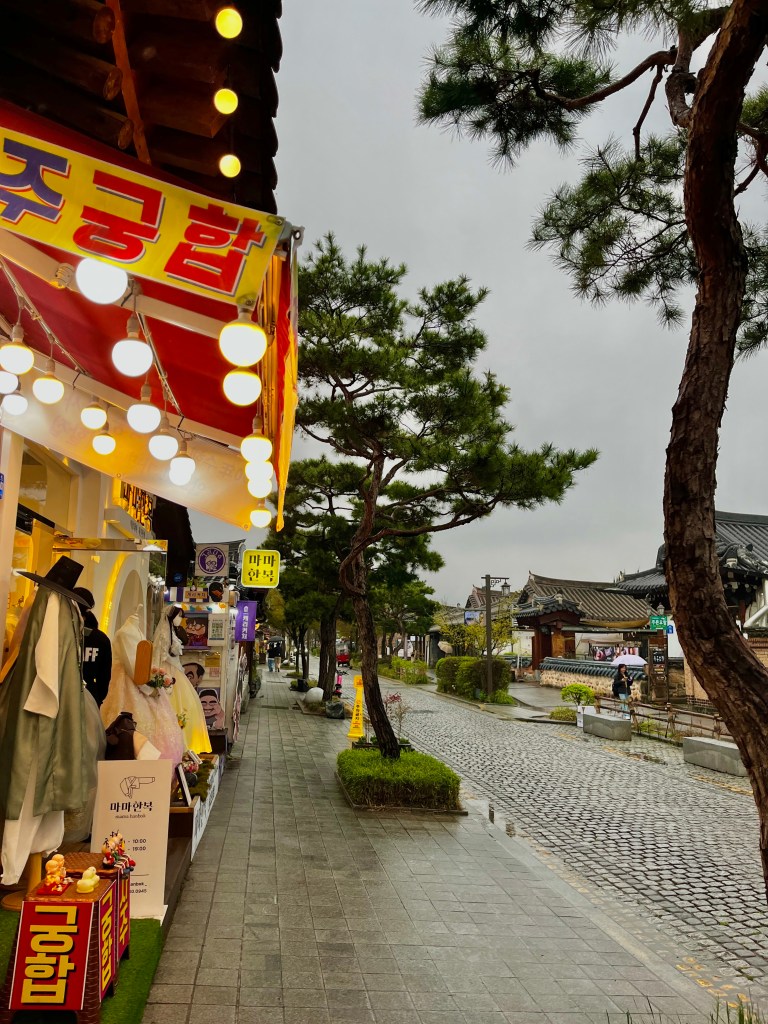
There are many rental shops to choose from, but I rented from Hanboknam rental. The rental cost 10,000 won for an hour but we chose to rent for the full day at 20,000 won (I think, it wasn’t that much more than the hour rental), so we wouldn’t feel rushed to get back and could wander around the village and museums in our hanboks. In addition to the dress, you could get your hair done as well for 3,000 won extra (choosing from half up-half down, updo, braids, etc.) and comes with various hair clips and pins! I chose to keep my own, but you can go all out and rent matching small bags and shoes to complete your outfit at extra fee.
Gyeonggijeon Shrine
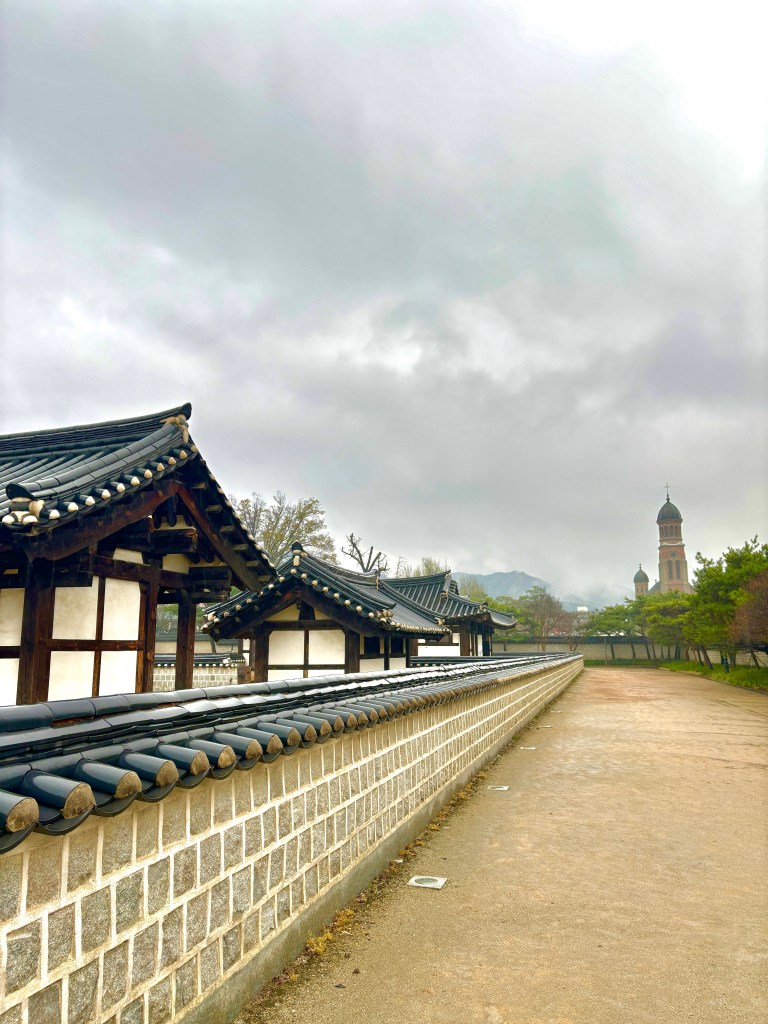
In the center of the Hanok Village lies the Gyeonggijeon Shrine which is a perfect first stop to start the day touring Jeonju. This is the only thing on this itinerary that costs money, which was 3,000 won to enter both the shrine and museum.
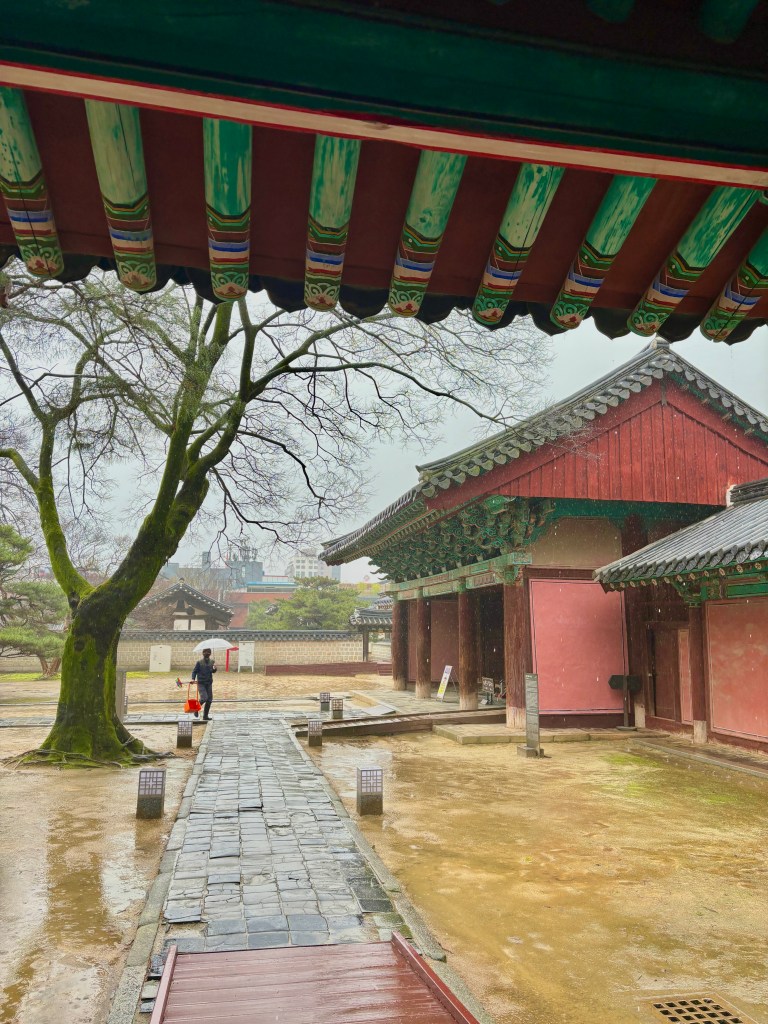
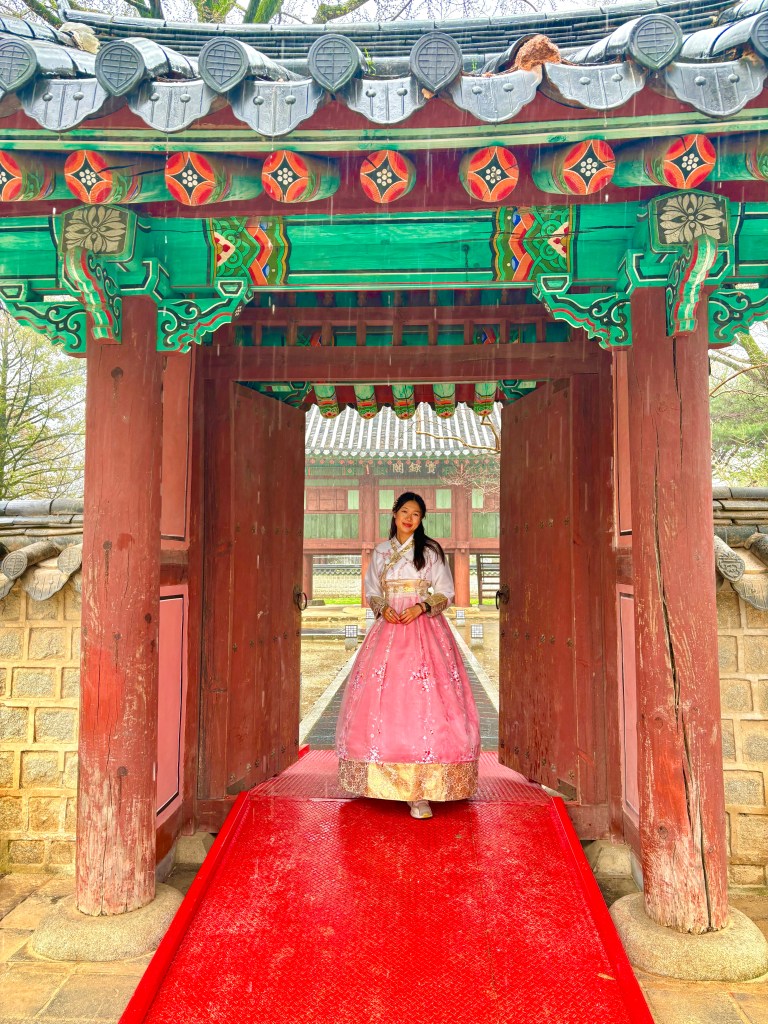
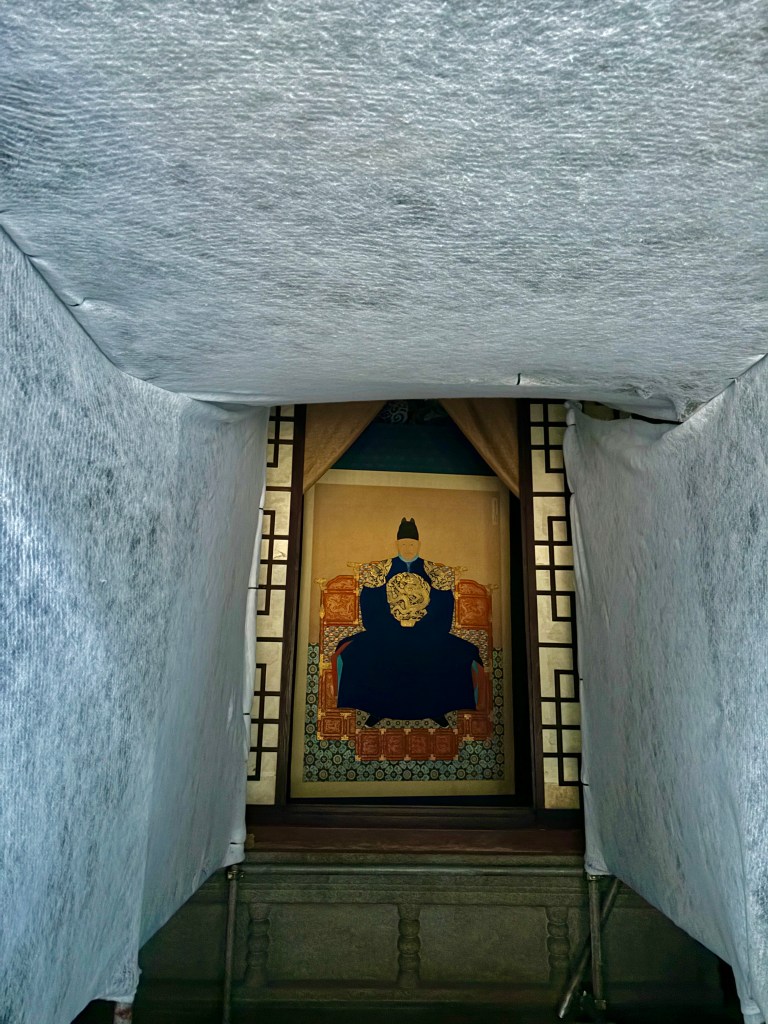
The shrine features a copy of a portrait of King Taejo, the founder of the Joseon Dynasty that ruled Korea starting from the late 1300s. The complex includes numerous buildings, gardens, bamboo forest, and courtyards. It was pretty rainy on the day we were there and the museum was closed, so there weren’t as many people roaming around at least.
Omokdae Viewpoint
For a viewpoint overlooking the Hanok Village, you can either reach the summit by hiking up the slope by Girindaero road or take the stairs by the Exhibition Centers. We were coming from Hyanggyo, so we chose the way bypassing Girindaero road.
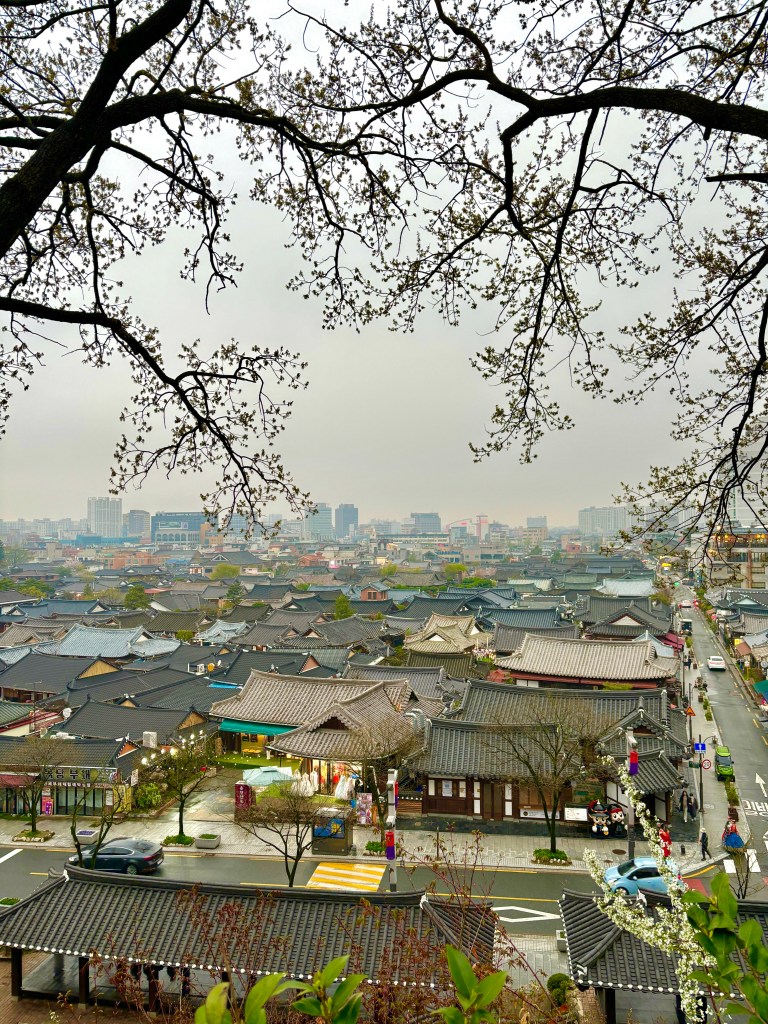
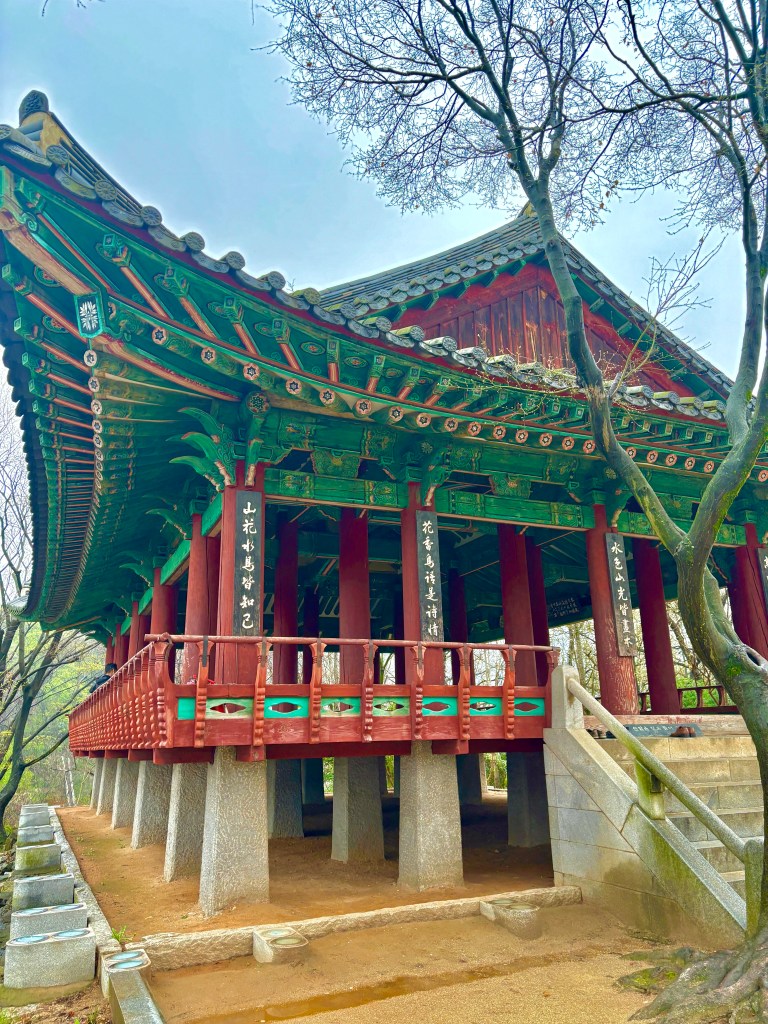
It’s a short walk up to the breathtaking views of the hanok rooftops and city buildings in the background. On the top of this hill is where King Taejo would celebrate his victory against Japanese invaders.
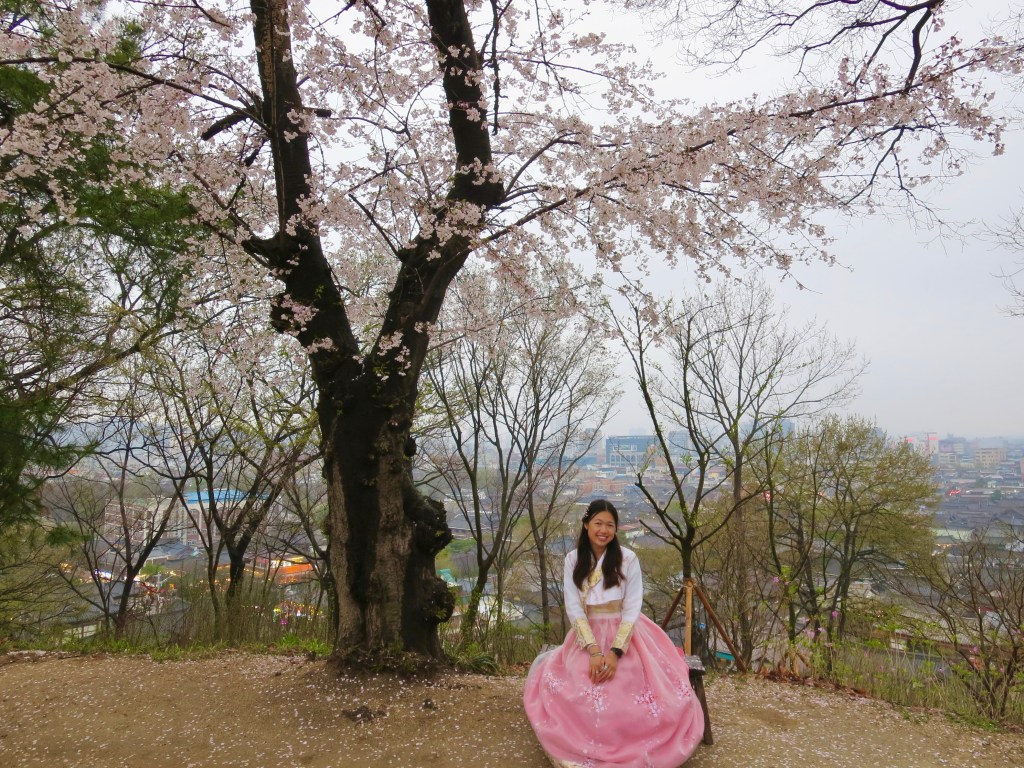
A bonus was that we were here early April so we got the chance to see some gorgeous cherry blossoms blooming here!
Hyanggyo (Confucian School)
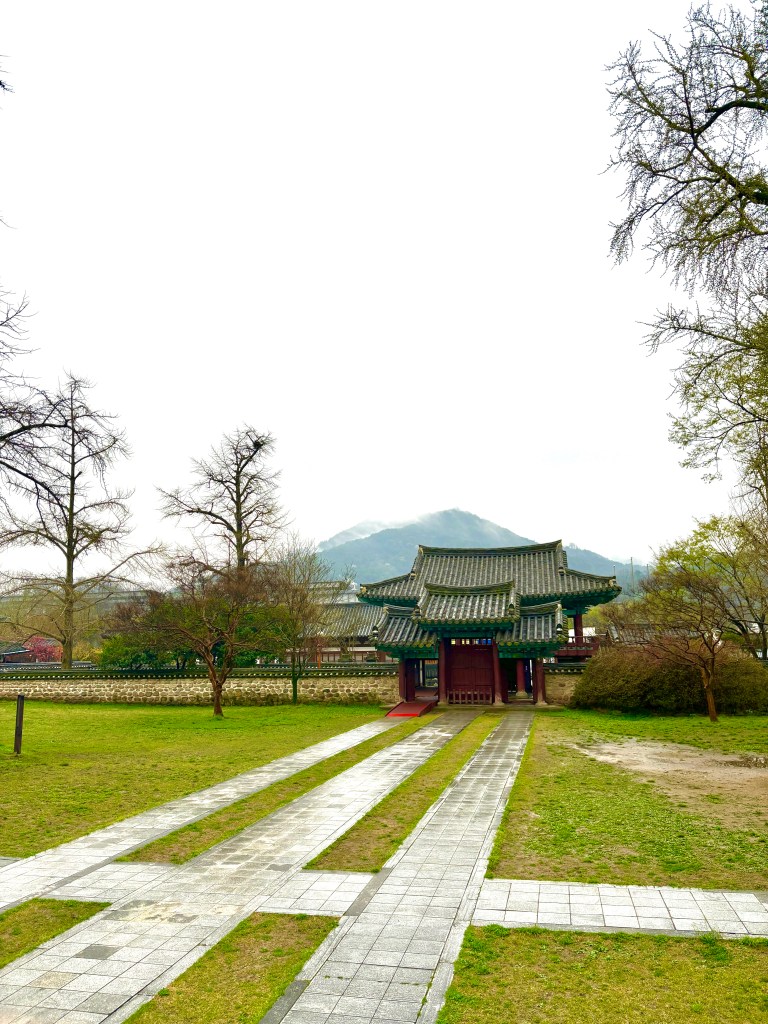
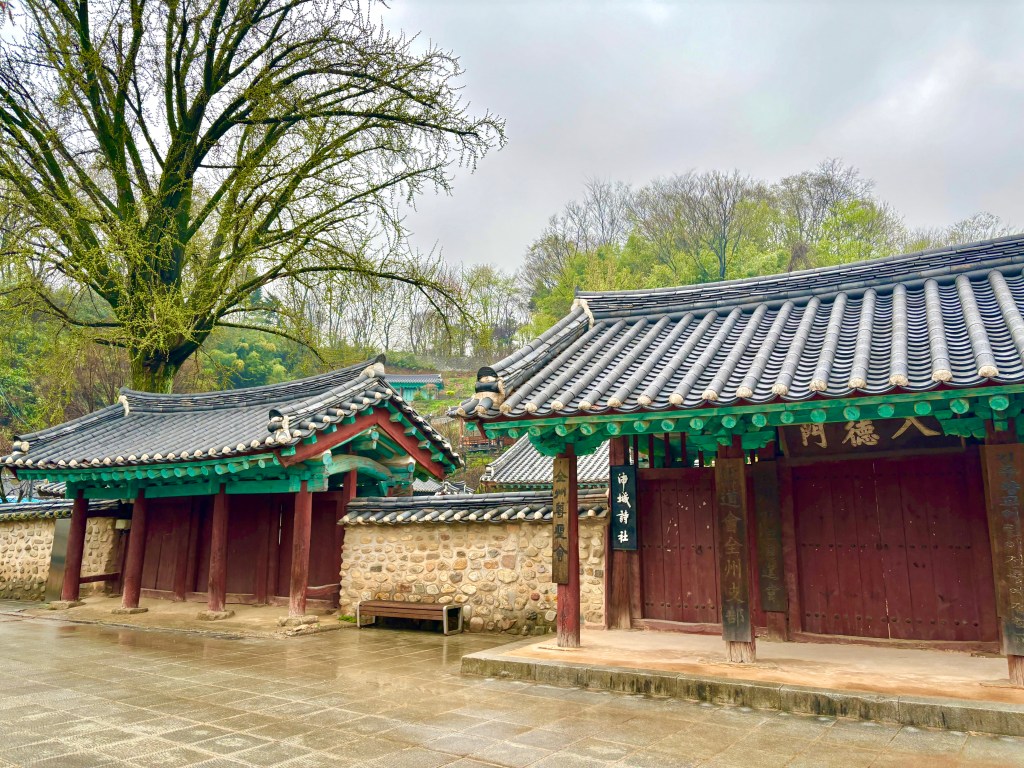
Popular because of its 400 year old Gingko trees (especially in the autumn), this area of buildings and temples is a great example of historical Joseon culture and architecture. Originally, the hyanggyo was established at Gyeonggijeon Shrine, but after being destroyed by the Japanese invasion in the late 1500s, it was moved and rebuilt in its present location.
This is another popular and free place for people to take pictures in hanbok! No on else was there when we came so it made for a peaceful and serene visit.
Bibimbop
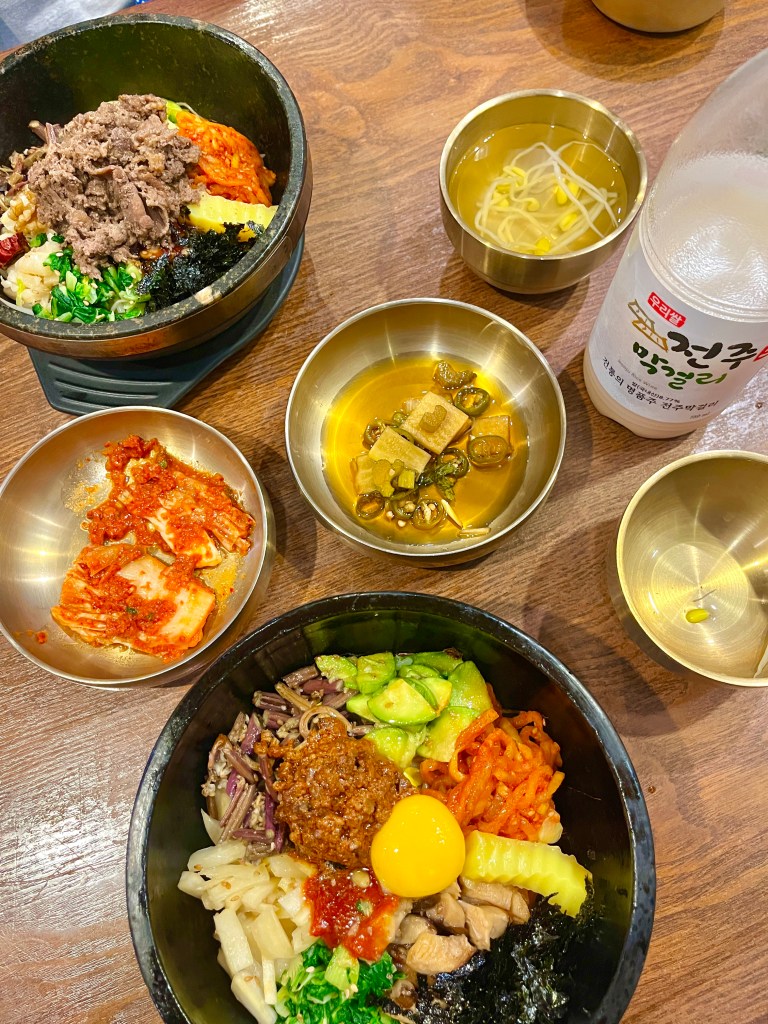
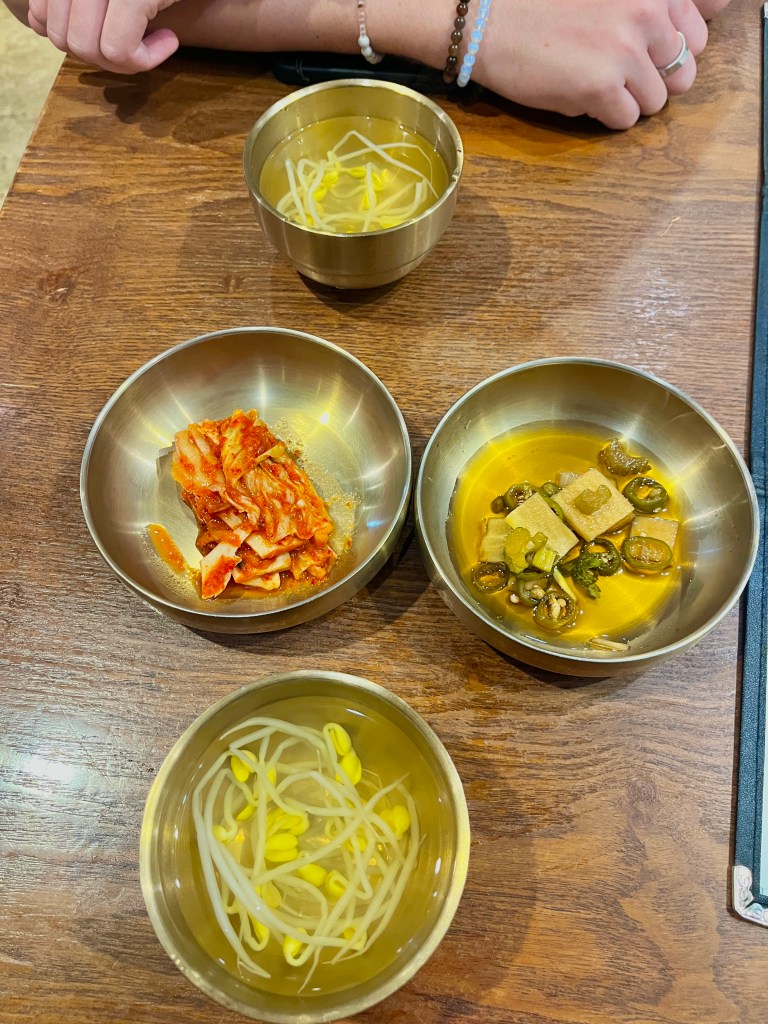
A popular national dish of Korea, Jeonju is where bibimbop started. We ordered one Jeonju style bibimbop and a bulgoli bibimbop. The ingredients include beef, rice, bean sprouts, egg, avocado, bracken, lettuce, other fresh ingredients depending on the season, with gochujang and seasame oil. Pair this with spicy kimchi and Jeonju’s famous bean sprout soup and wash it down with a bottle of Makgeolli (a milky sparkling rice wine).
Choco pie
Another famous food from Jeonju are its delicious handmade choco pies. PNB bakery opened in the early 1950s and is the best place to find these truly handmade desserts.
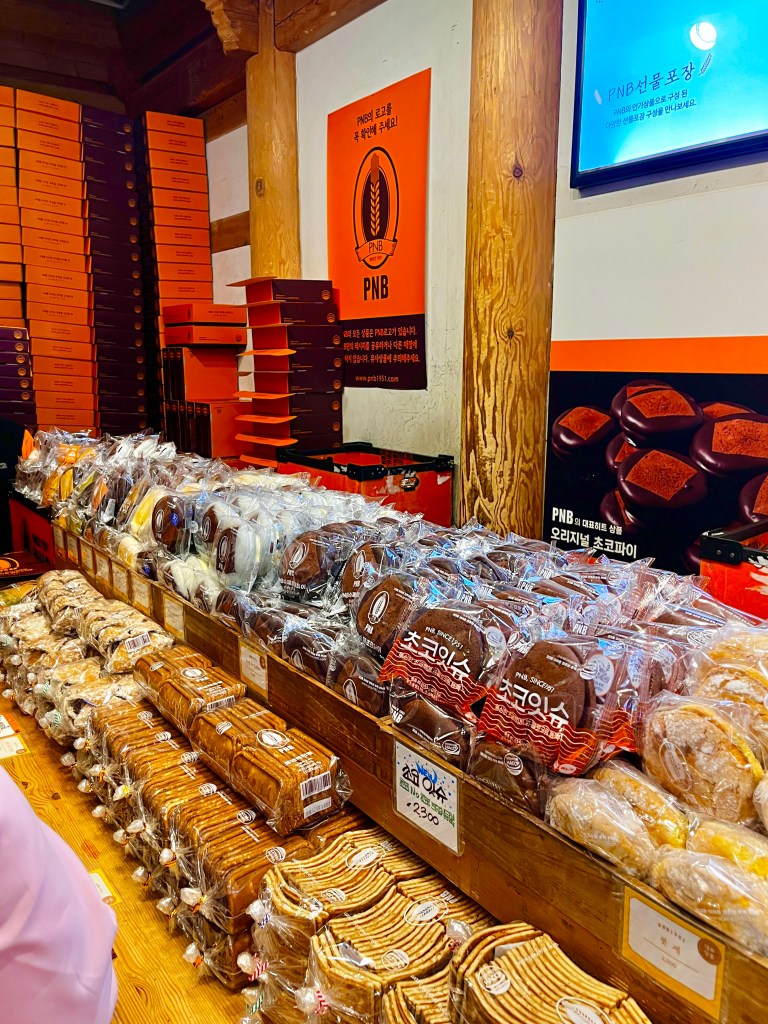
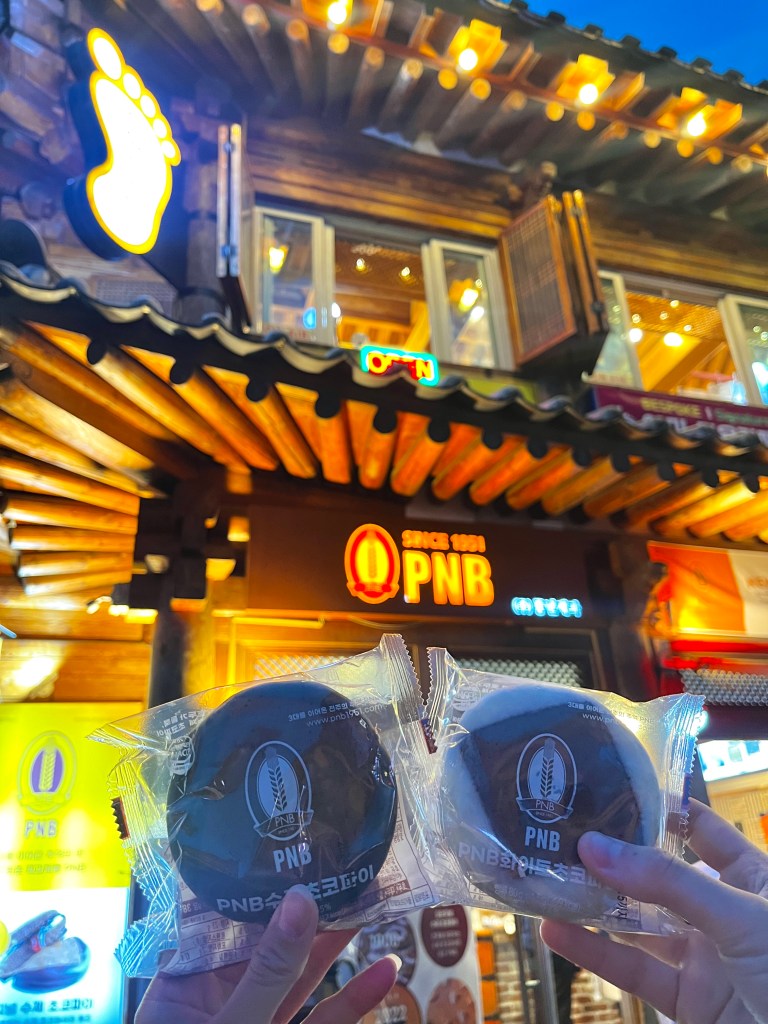
We visited the main bakery shop in Hanok Village and left with a few different flavors to try such as mocha, white chocolate, strawberry, cream cheese, and more. The classic choco pie is a must try with strawberry jam in the middle of fresh marshmallowy cream between soft chocolate cakes topped with crunchy magic shell-like chocolate.
Additional Places to Visit
Although one day was great for us to finish most of the main sights of Jeonju, there are still many more places to explore and some that we missed!
- Jaman Mural Village: Crossing the road from Hyanggyo, the streets and alleys of Jaman Mural Village are filled with colorful murals featuring popular cartoons, celebrities, anime characters, and landscapes. We unfortunately didn’t get a chance to walk around this area due to it getting dark and wanting to make it to the top of Omokdae.
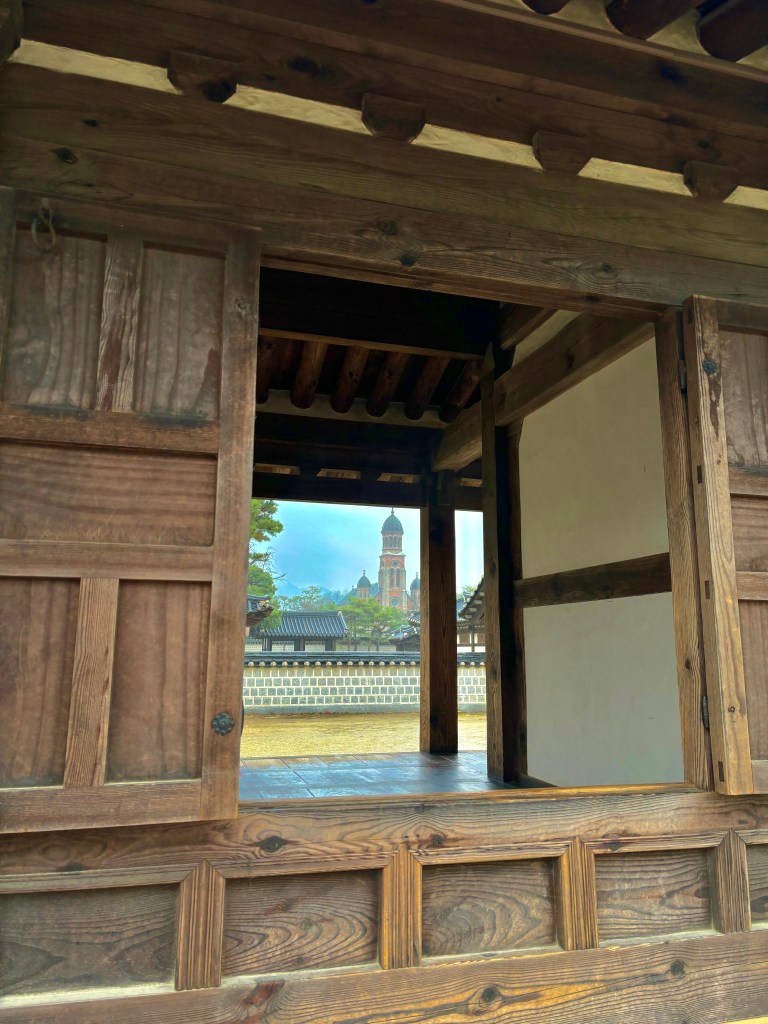
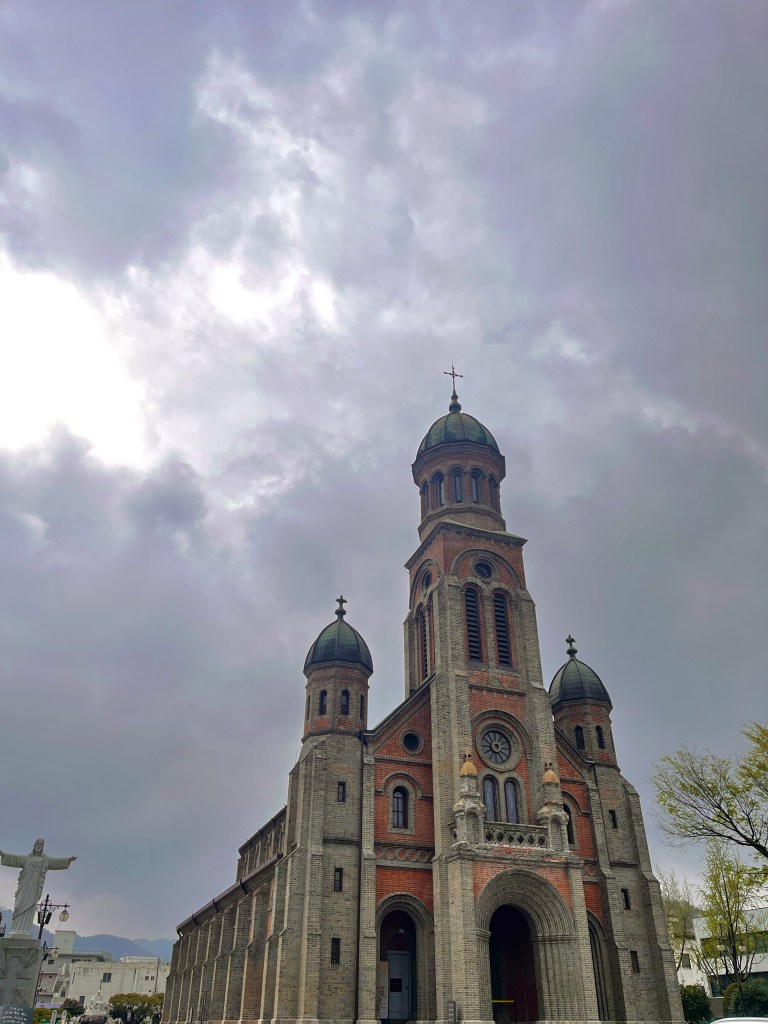
- Jeondong Cathedral: Built in the Roman-Byzantine style, this cathedral building is a unique building to be found in Korea. It’s near Hanok Village, so it’s an easy detour to view it.
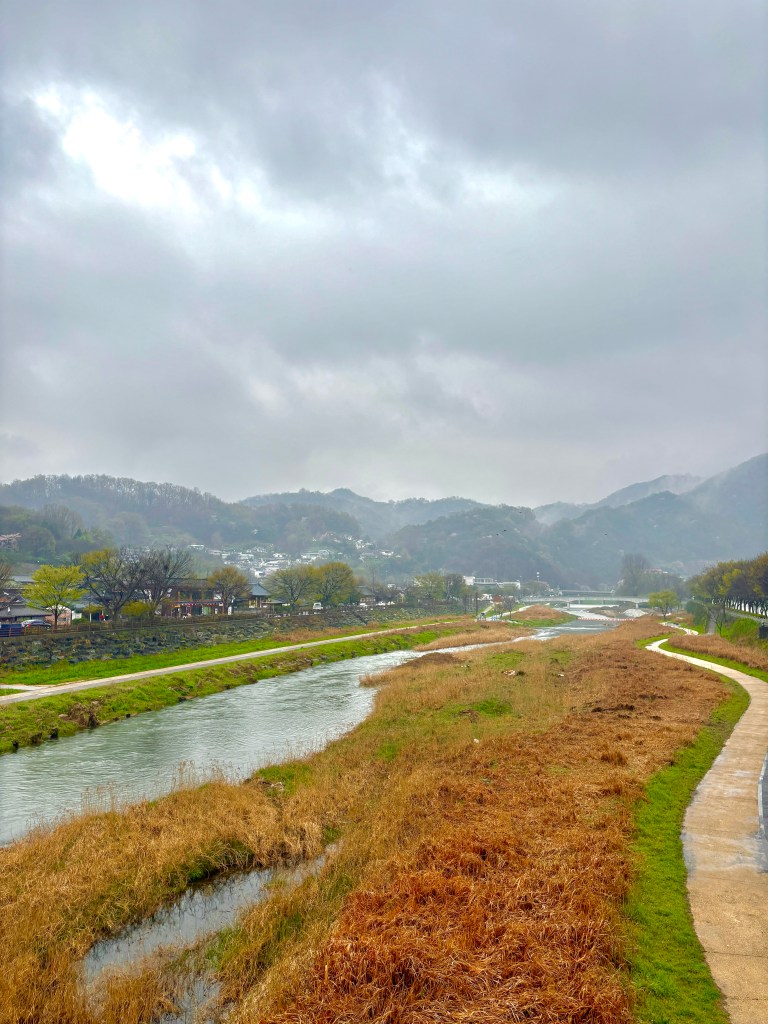
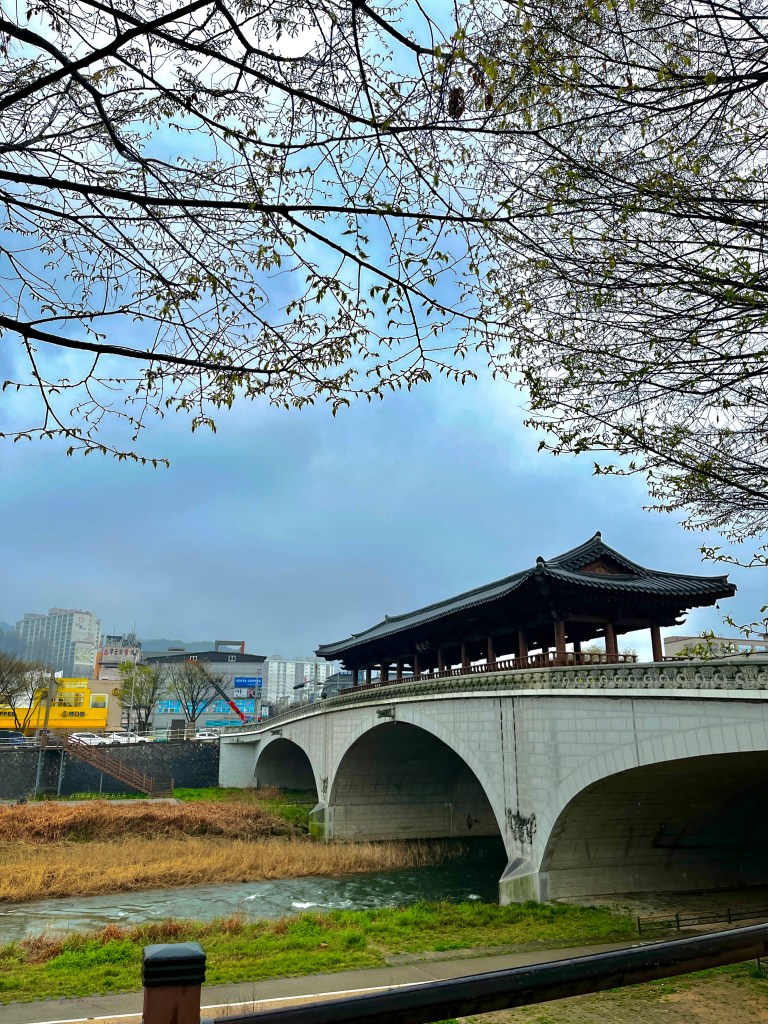
- Namcheongyo Bridge and Cheongyeollu Pavillion: This gateway to the Hanok Village offers great viewpoints of the town, mountains, and stream.
- Museums: Jeonju has endless museums but some notable ones are Jeonju National Museum, Royal Portrait Museum, National Intangible Heritage Center, Fan Culture Center, Jeonju Korean Traditional Wine Museum, and more!
- Pungammun Gate: Separating the historic Hanok Village from the rest of the city, the southern gate is a picturesque building standing with the city walls. Originally, the Jeonjuseong Fortress had 4 gates but only this south gate remains.
- Nambu Market: On Fridays and Saturdays, you can taste various types of Korean street food or shop some souvenirs at this night market.
Quick Tips
- Navigation: Google Maps essentially doesn’t exist in South Korea (which is sad because I am a huge Google Maps person). So the apps, Naver or Kakao Maps, will be your best friend here! I couldn’t really figure out Kakao Maps so my go-to was Naver.
- Getting Around: Once we arrived from Seoul by train, we took the local bus to our hotel. Be warned: local Korean buses are CRAZY – drivers whip the turns and can be nauseating. We only had one large suitcase but I’ve read that sometimes they don’t allow suitcases because of space. Uber is always a good option as well!
- Money: On average, there are still some restaurants and shops that are cash only. We find that getting money from ATMs is better bang for our buck than exchanging money and when you’re traveling as constantly as we are, we don’t have many opportunities to grab more USD when we can. Although all South Korean ATMs charge for a withdrawal, Woori ATMs worked well for us throughout South Korea.
- SIM card: Having an unlocked iPhone is so much more convenient with e-SIMs. That way, I don’t have to worry about changing my U.S. phone number each time I venture to a different country. My holy grail website has been esims.io where I can search what country I want an e-SIM for and compare plans for dollar amount per GB. It’s pretty simple and straight forward as long as you quickly Google the company you’re buying the e-SIM from to make sure the data will work well. I always opt for a data only plan since it’s not really necessary for me to have a local phone number.
Where to Next?
After our short stay in Jeonju, we head to Suncheon next on our South Korea journey!
Thanks (or kamsahamnida) for reading my little blog! 🙂 Have you been to Jeonju or planning a trip there? Send me your thoughts about what you loved the most or are most excited about! If you have any questions, feel free to leave a comment.

 mir on mountains
share your thoughts!