
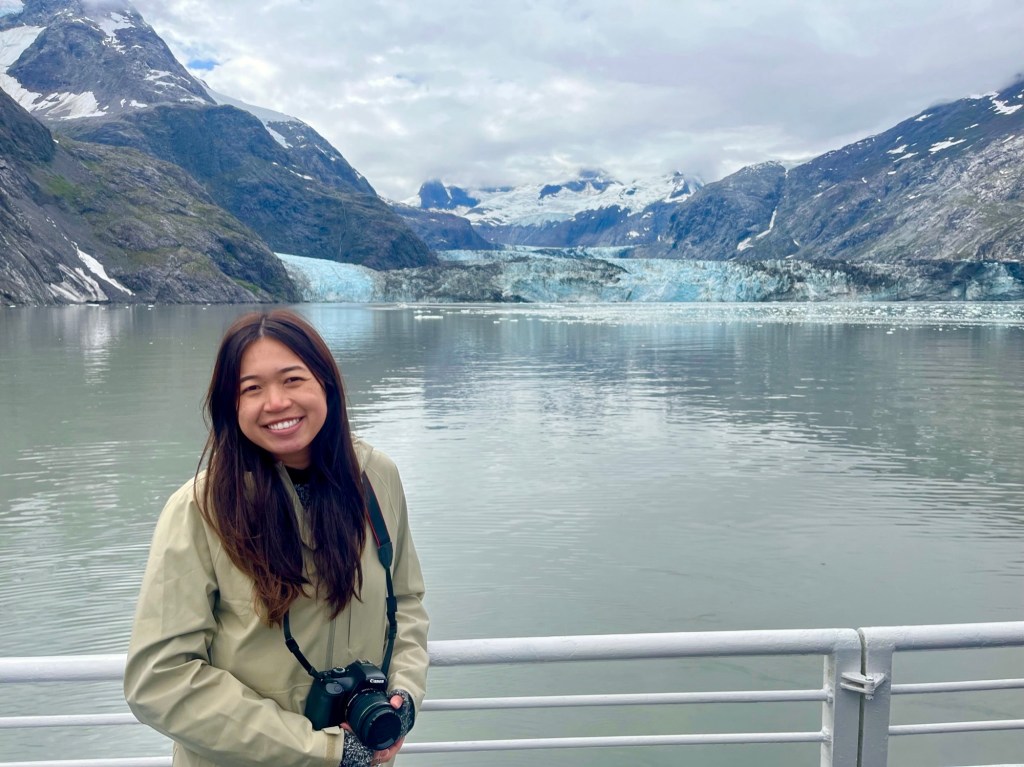
Glacier Bay National Park and Preserve is home to the most stunning scenic blue ice, diverse wildlife, and the spiritual homeland of the Huna Tlingit. Located in Southeast Alaska, this park was named a National Monument in 1925, and in 1980 became a national park and preserve. If you’re looking to get off the grid and explore the wonders of both a marine and land park, this is the place for you.
- Know Before You Go
- Why Take a Tour with the National Park?
- Glacier Bay Lodge Boat Tour
- Tlinglit Point
- Heading Back
- Other Things to Do in Glacier Bay
- Where to Next?
Know Before You Go
How to Get to Glacier Bay
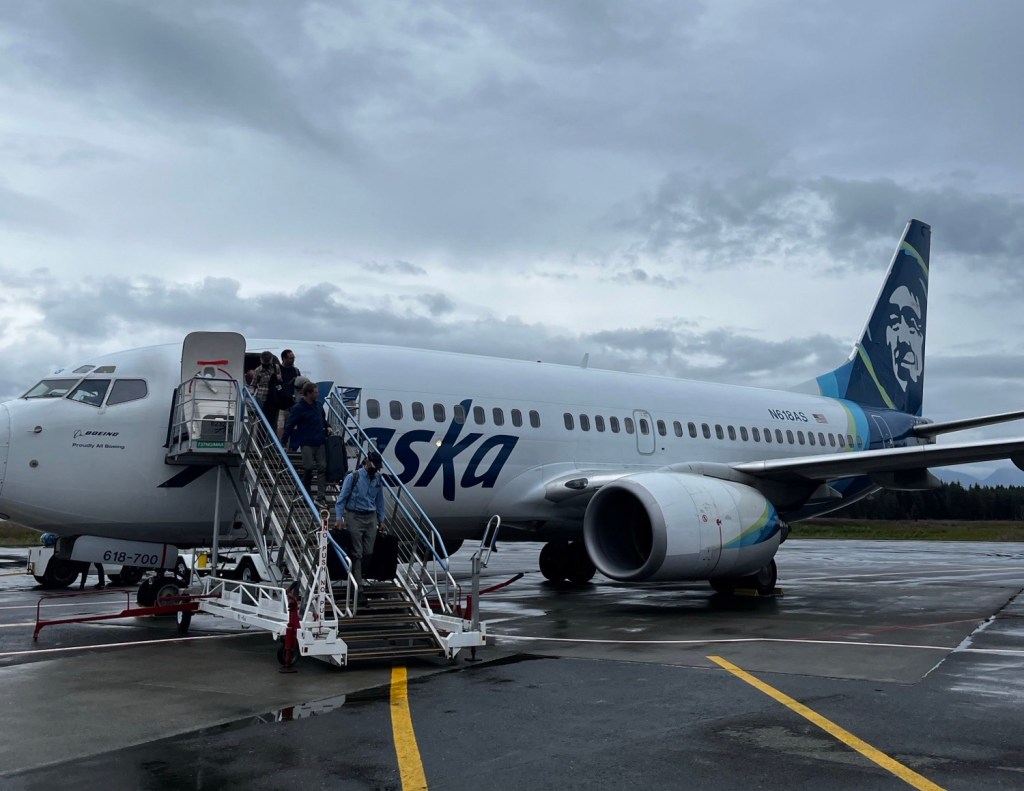
Lying west of Juneau, Alaska, the only way this park can be reached is by plane or boat. While the Alaska Marine Highway ferry provides regular service from Juneau to Gustavus (if you’re wondering how to pronounce it like I was, it’s “gus-stave-us”), it runs only two days per week. Since we were only planning to visit Glacier Bay for a few days, we decided flying would be our better option to avoid waiting around half a week for the next boat.
Our flight was the quickest flight I have ever been on. Immediately after take-off once we were settled in the air, the pilot announced for the flight attendants to prepare for landing already! The whole process of taxiing, flying, and landing took about 30 minutes total. The crazy thing is that even though this was a flight that was over in the blink of an eye, it was still a full-sized 737 plane.
Where to Stay
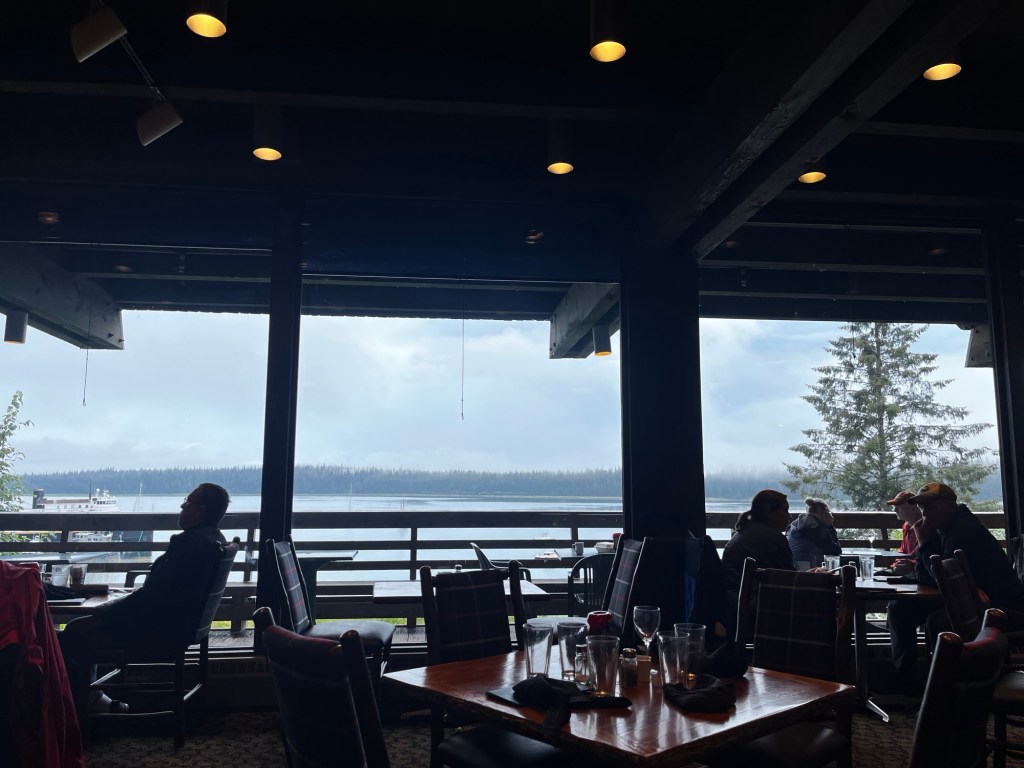
I would recommend staying at Glacier Bay Lodge, because it’s connected to the national park. This makes it so much easier to book the boat tour with them and not need extra transport. Their boat tour allows you to get as close as possible to the glaciers, unlike cruises and other tours that have to stay over hundreds of feet further away!
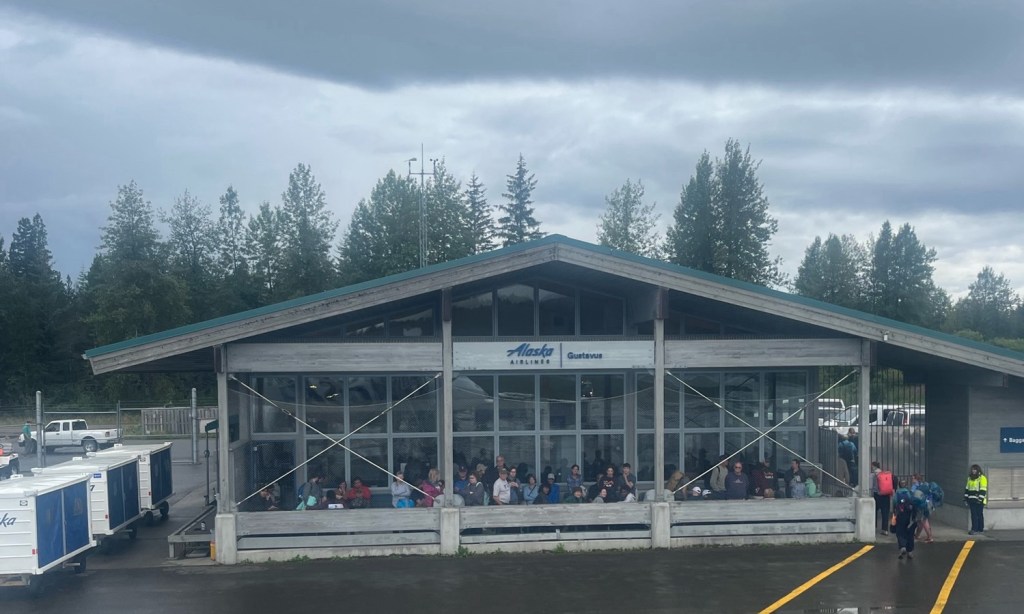
Once we landed and were off the plane, a Glacier Bay Lodge employee was waiting for us with a sign for us to load on a school bus to take us to the lodge.

The town of Gustavus is super small. As we drove in our little school bus, we passed only a few random houses and buildings. It took us about 20 minutes to get from the airport to the lodge and the actual town was probably only about 5 minutes of it!
Is there food/cell service/etc.?
Food, yes, Glacier Bay Lodge offers a restaurant that serves both food and drink. Cell service, no. They have wifi in their main lodge area and lobby to hang out in, but that quickly drops once you get to your room. After all, you’re in a super remote location and probably better to get off the grid here anyways!
What is a Glacier?
I feel like this is a question that every tourist has asked at least once, including myself. Since they are so gigantic and impressive, and they are located nowhere near where 99% of people who visit Alaska live, glaciers are a big highlight for most visiting the state!
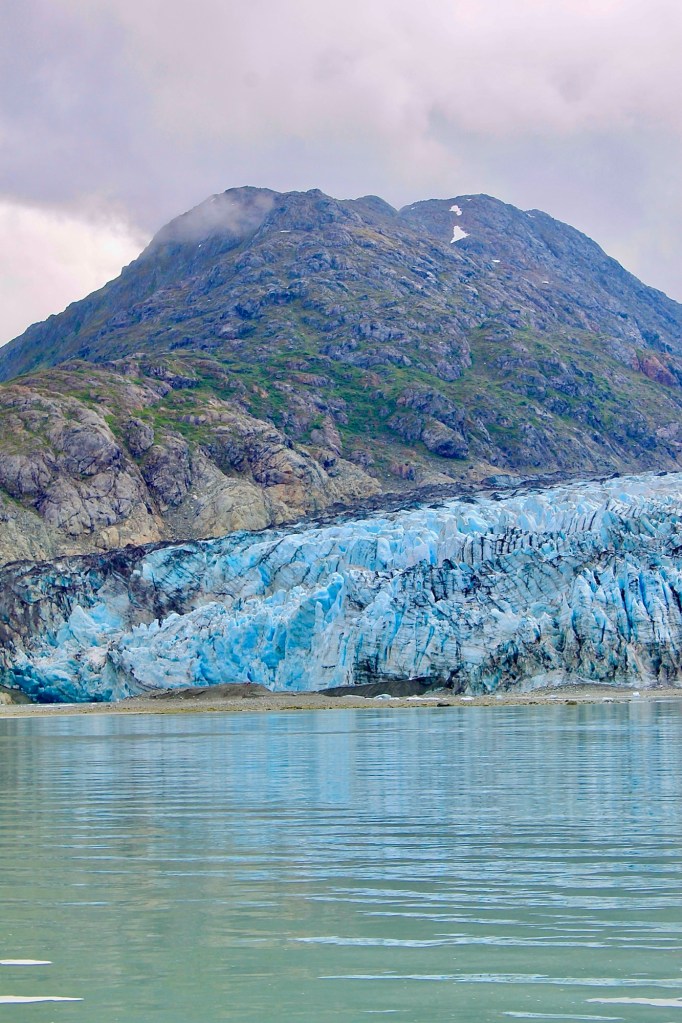
Glaciers begin in places where more snow falls in the winter then melts in the summer, typically in high mountain regions or polar areas. Over time, each year’s snowfall layers over the previous year’s snow. As snow keeps accumulating over time, the weight of the upper layers compresses the layers beneath it. The snow stops being powdery and begins to form a more compacted version of snow. Then, over time becoming more and more dense, expelling more air, and over decades to centuries, transforms into solid and dense ice.
Once a glacier reaches a “threshold” level of thickness, gravity causes it to start flowing downward, eroding landscapes, picking up rocks and sediment, and changing the landscape.
What type will I see in the park?
On a Glacier Bay tour, whether in a boat or in the air, you will typically see two types of glaciers, tidewater glaciers and mountain (or alpine) glaciers.
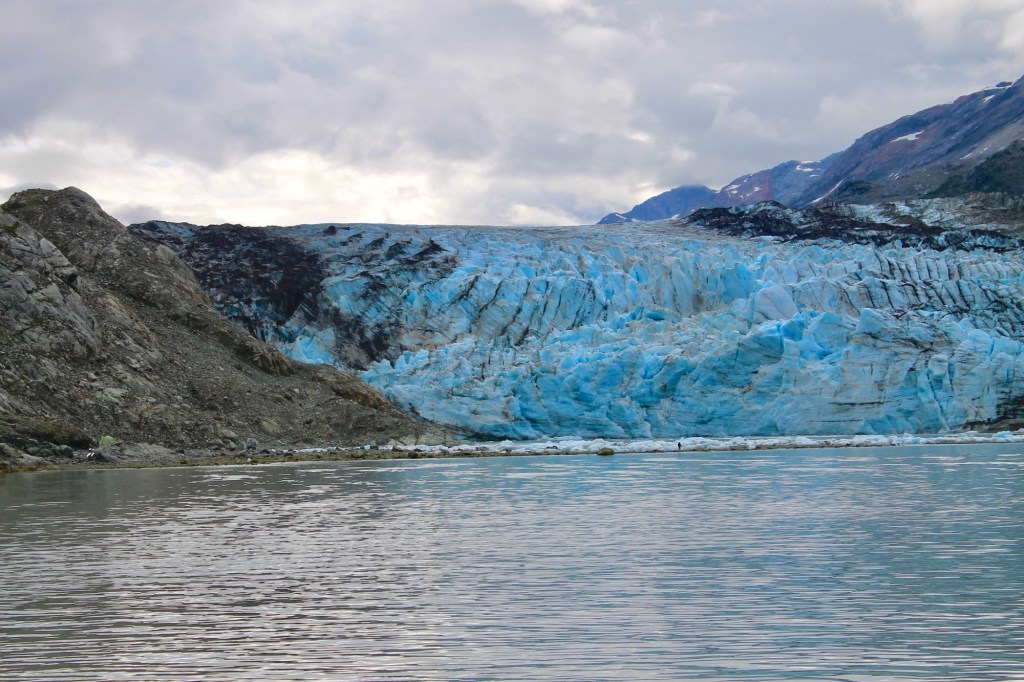
Tidewater glaciers flow directly into the sea, where their ice fronts meet the ocean water. These types of glaciers are most famous for their calving events, where huge chunks of ice break off the glacier and into the ocean, creating some unbelievable sounds. Some tidewater glaciers you will likely see on your tour are Margerie and Johns Hopkins Glaciers.
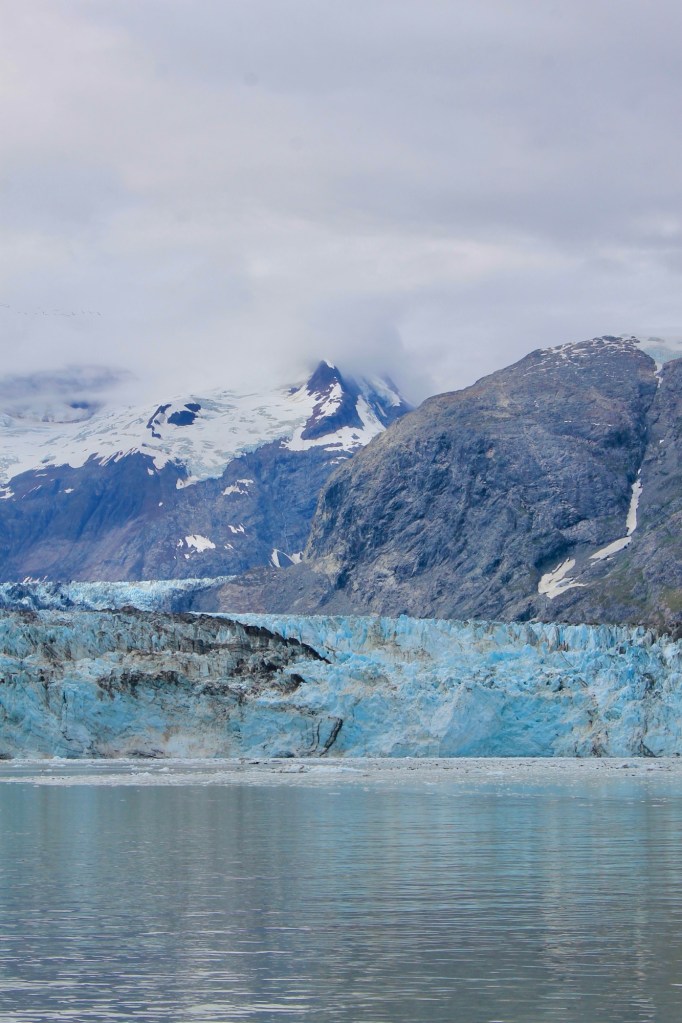
Mountain glaciers form in high mountain valleys and are smaller than tidewater glaciers, flowing down from the mountain slopes but stopping before they reach the ocean. Within the park, these glaciers are located in the Fairweather Range and other mountain areas, but these are typically viewed from a distance on a boat tour, and more up close if you are on a flightseeing tour.

What is a Fjord?
A fjord is a long, narrow inlet of the sea between high cliffs or steep slopes, typically formed by the glacial erosion of valleys. Fjords are common in regions with a history of glaciation, like Norway, New Zealand, Alaska, and parts of Canada.
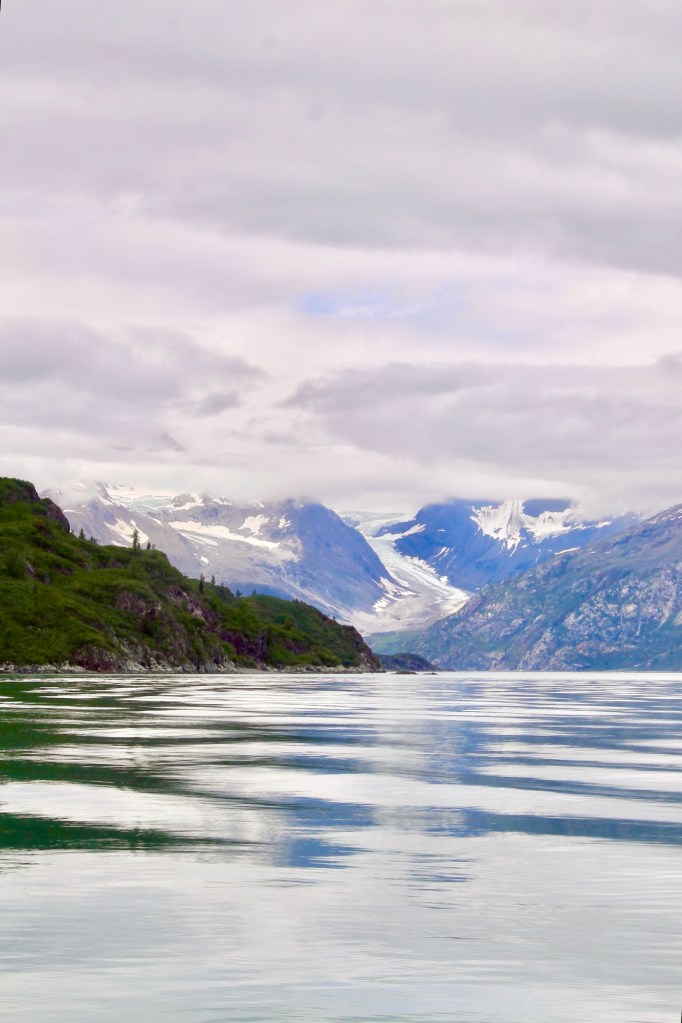
Over time, fjords are formed by glaciers through a process of intense erosion. As a glacier moves slowly down a valley, it erodes the landscape beneath it. The glacier grinds against the rock below, picking up rocks and sediment, deepening and widening the valley below it. Glaciers create deep, steep-sided U-shaped valleys, creating high cliffs that you see throughout the park. Later in the warmer seasons, the glacier retreats, melting and pulling back, and seawater floods the valley, creating a fjord.
It is also interesting as fjords are typically very deep when compared to the shallow waters at the entrance and outside the fjord, due to the actions of the massive glacier that carved the valley deeper and deeper through its movement.
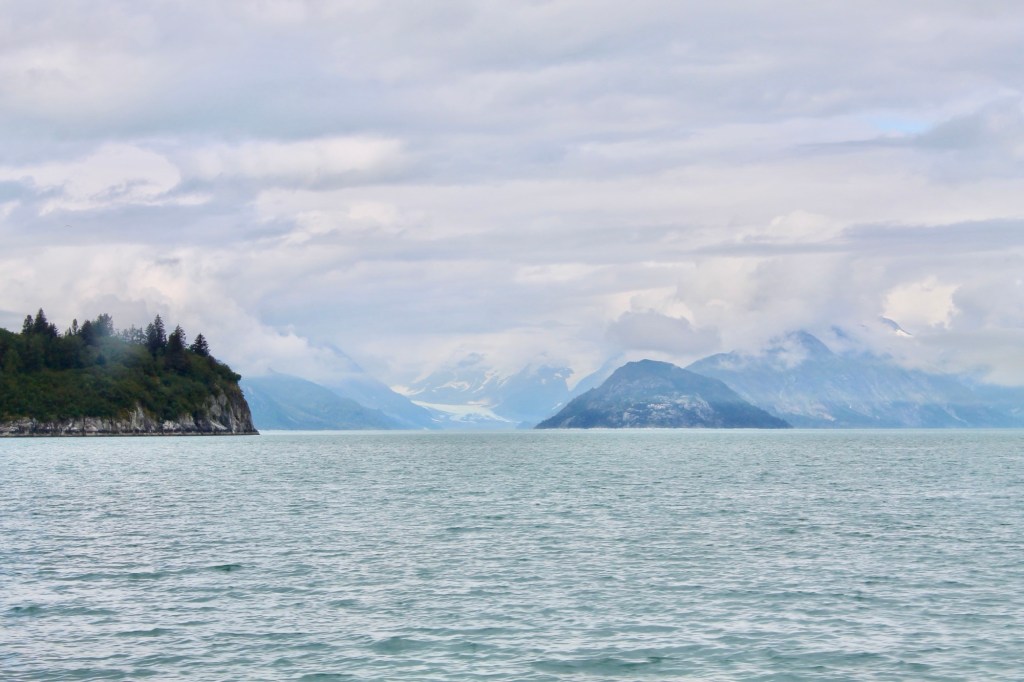
What wildlife can I expect to see?
There are honestly too many animals to mention here, but here are ones we think are the most exciting to see! You won’t necessarily “focus” on wildlife during the tour. You’ll definitely see tons of wildlife on the way, but unlike a whale watching tour, you may not necessarily spend much time “observing” wildlife except for potentially orcas and humpback whales.
Also, keep in mind that your guides and the captain will point out the wildlife you see, explain what they are, and their role in the Glacier Bay ecosystem. It’s also fun as everyone on the boat works together, passengers and guides, to point out any wildlife they may see so that everyone can see the most wildlife they can!
- Whales: Their incredible behavior, such as breaching and spy-hopping, never gets boring to watch. You likely won’t be seeing them in the numbers that you would see in Juneau or somewhere like Eastern Australia during their migrations, but we still had some great sightings of humpbacks while we were randomly looking over the water and saw them breach suddenly in the distance. While less common, orcas (killer whales) can be seen patrolling the waters, especially closer to open ocean areas.
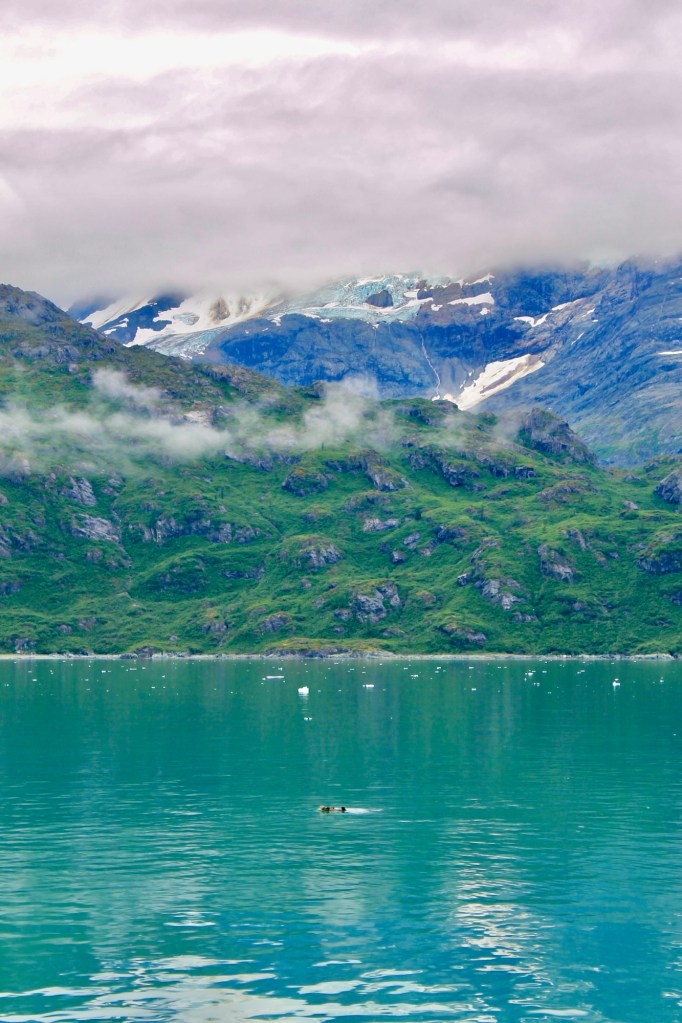
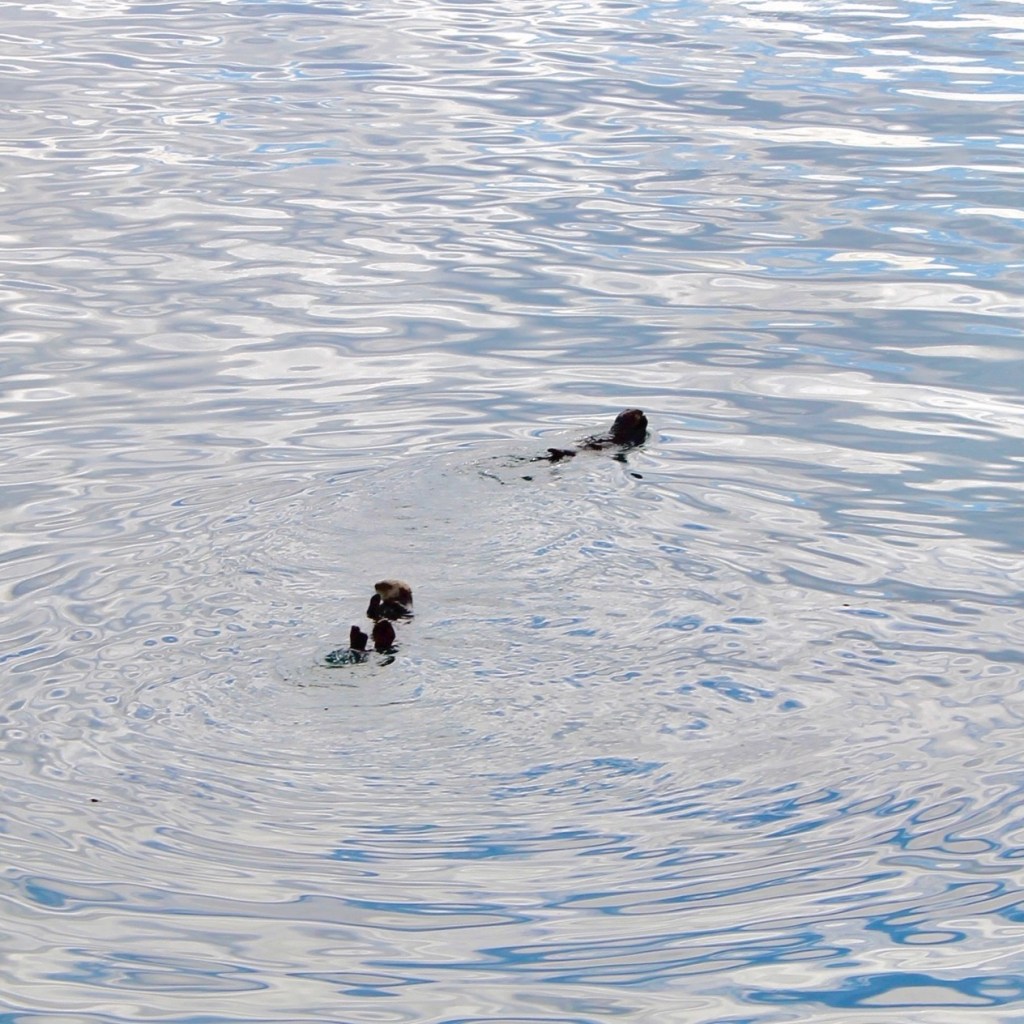
- Sea Otters: You will definitely see these things everywhere, and they are extremely cute. Sometimes you will see one by itself, potentially a mother and a baby by themselves, smaller groups, and then even gigantic groups of them. The locals in more populated places like Homer think that these animals are more like pests, for breaking into oyster farms and other areas, but in Glacier Bay, it never gets old to watch these little guys hang out in the water on their backs.
- Harbor Seals: These seals are commonly floating on the ice around glaciers. If you’re lucky, you will likely even be able to see the seals swim in the water near the boat or jumping on and off the little ice they are floating on.
- Steller Sea Lions: These sea lions, much larger and noisier than the harbor seals, usually are found sunbathing on rocks in large groups. They are super smelly, and similar to the harbor seals, they are always found hanging out on the same rocks.
- Bald Eagles: You definitely will see some flying overhead and most likely hanging out in their nests along the coastline and river areas, even as we were approaching the dock at the end of our tour by the boat.
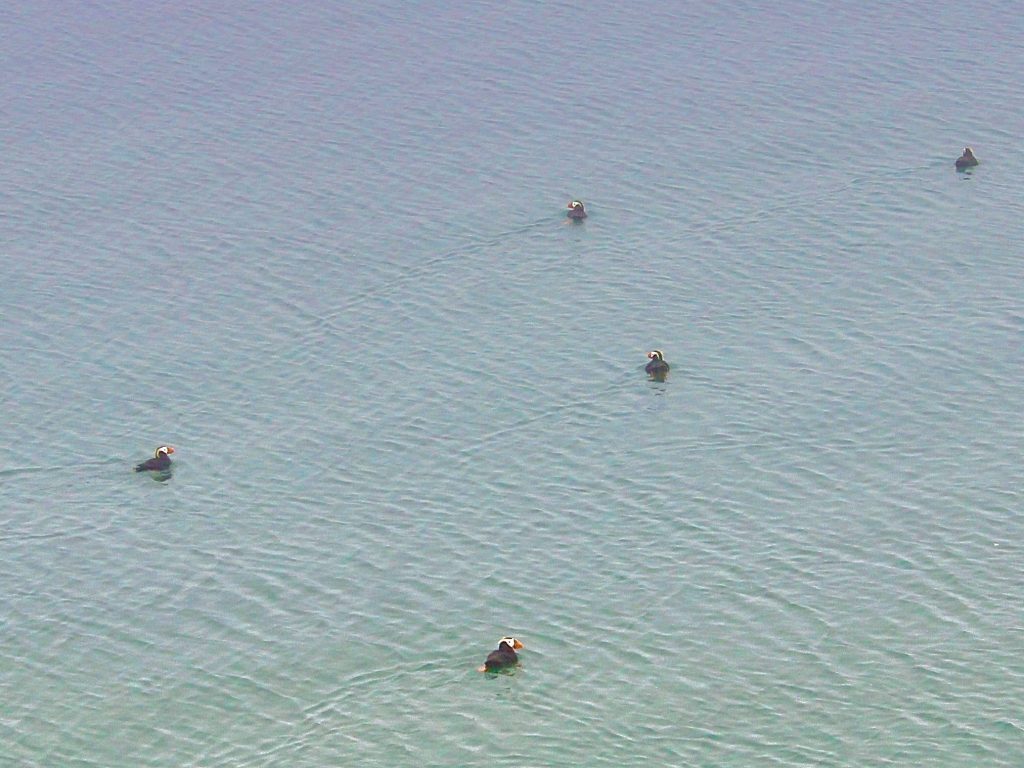
- Puffins: Both horned and tufted puffins live here. They stick out like crazy with the colors of their beaks. Similar to otters, we would typically see these guys in smaller groups floating in the water, as well as flying in the air and diving to the ocean. These were for sure some of the animals we were most hoping to see as we had never seen them before and we saw tons!
- Kittiwakes, Gulls, Terns, Cormorants, and Murrelets: We are not necessarily huge bird people in general, but it was really cool to see some larger colonies of these birds, as well as watch the cormorants dive into the ocean for food.
- Grizzly and Black Bears: It’s common for bears to travel throughout the park on the (very rocky) beach, as it is typically easier for them to travel without many trees in the way versus directly through the land.
- Mountain Goats: You may not be able to see them up close, but at least they stick out well with their white coat that is easy to spot amongst the darker colors on mountain ridges and cliffs. You are most likely to see these once you are entering the fjords to see the glaciers themselves.
- Moose, Wolves, and Coyotes: These animals all certainly live in the park, but are much more rare to see, at least from a boat tour. However you never know what you’ll find, every tour is different!
Why Take a Tour with the National Park?
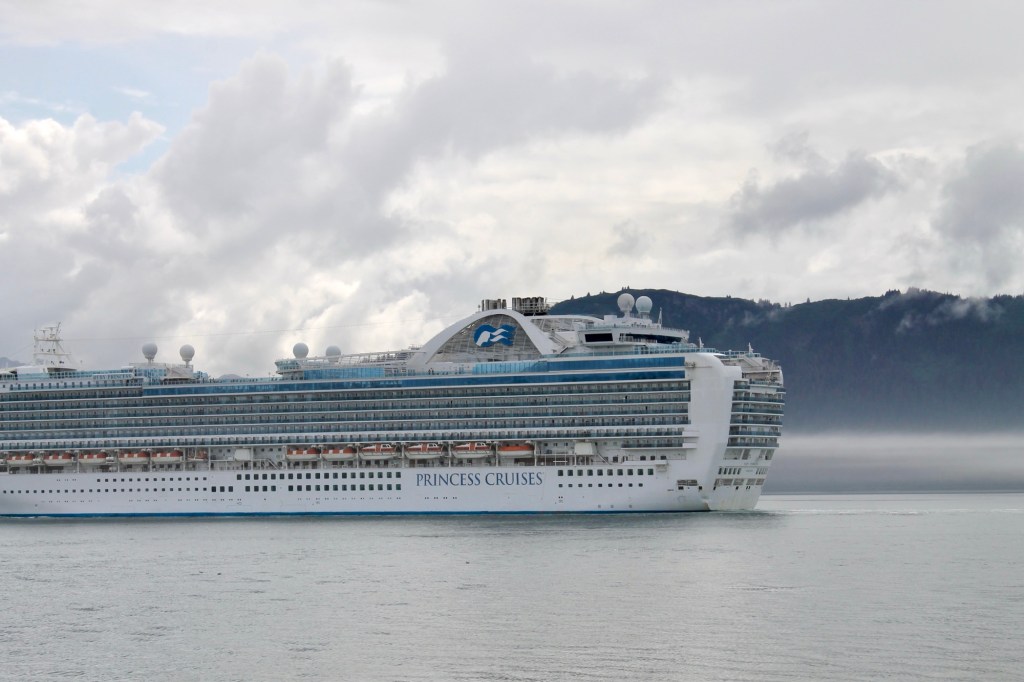
The majority of people visiting Glacier Bay National Park spend most of their time on a boat cruise, whether through the National Park Service on a catamaran or one of the many larger cruise companies like Princess.
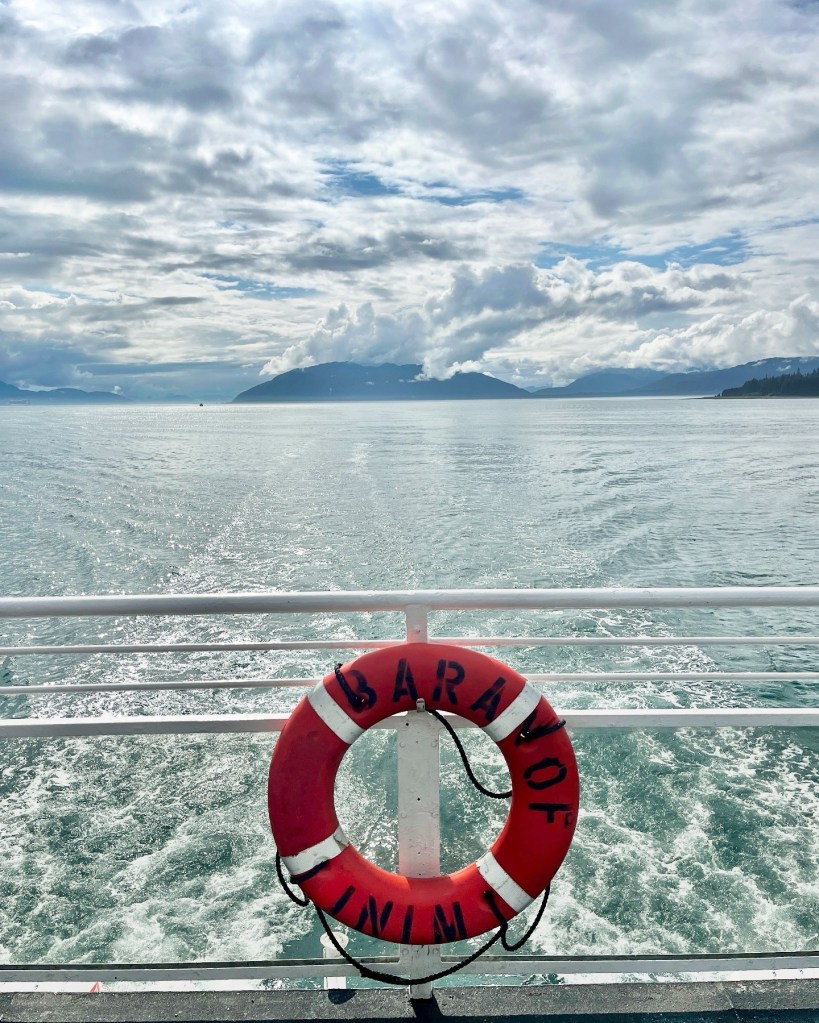
To put it more simply, there aren’t any other tour companies to see the park with anyway! Glacier Bay Lodge & Tours is the national park’s commercial partner and is the only one allowed to run tours within Glacier Bay so it’s well worth it.
What makes this boat tour so special is that we were able to get within 1/4 of a mile close to the glacier, whereas cruise ships are not allowed hundreds of miles to the glacier due to its size.
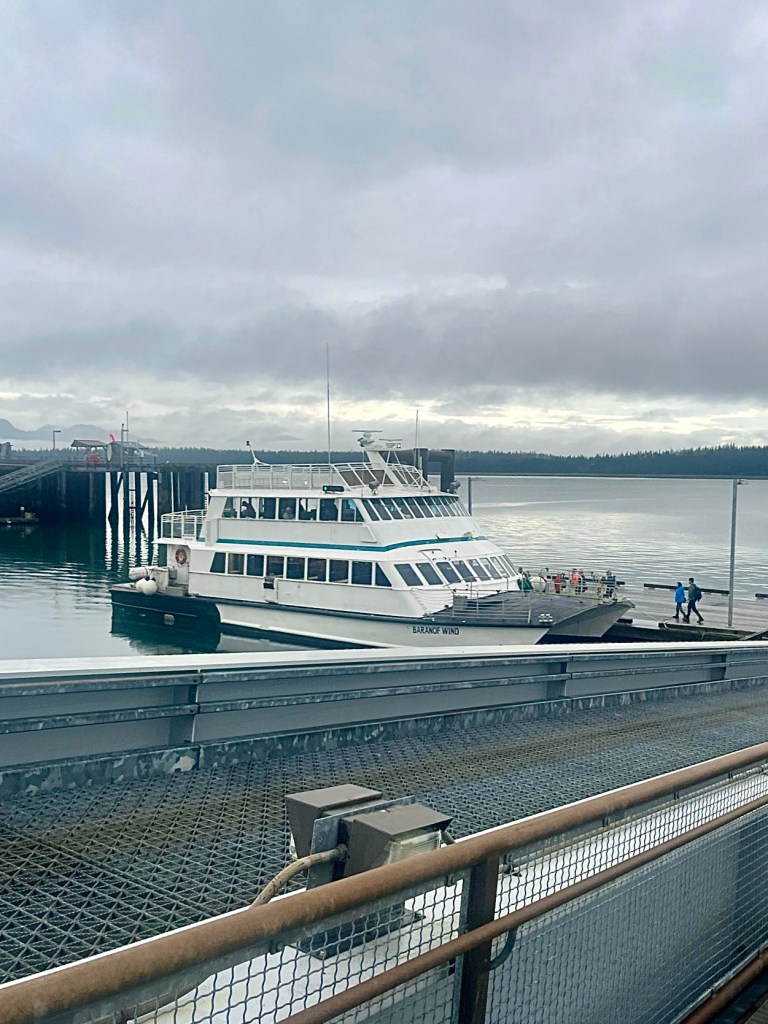
Reservations are highly recommended. You can book on the Glacier Bay Lodge & Tours website for a day tour that lasts from 7:15 AM to around 3:30 PM. Currently, adult tickets are $271.61 per person while children are $141.90 per person. Lunch and a beverage are included with the price, as well as complimentary tea and coffee for the early morning!
Cruise Tours Comparison
I’m not trying to be biased because there are other options to see the park, include the larger “typical” Alaskan cruises (depends on your specific itinieary) or smaller, more “boutique” cruises. In our case, due to us exploring the rest of Alaska, we ended up taking the day boat, and arriving to Gustatvus (the gateway town for the park) by flight.
Number of Passengers
The NPS boat tour usually accomodates a relatively small amount of passengers, typically around 100 people or less. This can be nice for easier access to onboard talks with rangers, wildlife, picture opportunities, and general crowdedness.
Larger Ships
Cruise lines like Princess, Holland America, and Norwegian often run much larger vessels, carrying thousands of passengers. There is likely more viewing space on the boat than the NPS boat and certainly more amenities on these ships, but it can feel more crowded at the main sightseeing spots on the trip such as any wildlife that may pop up.
Tour Focus and Onboard Education
All ship options include NPS rangers, who would board larger cruise ships or be included on all of the NPS day boats. The rangers on larger cruise ships would likely speak on a loudspeaker and are likely to be less personalized than the presentations on the NPS day boat. Topics on both include the parks ecology, glaciers, history, and wildlife, depending on what specific wildlife you see or route you take.
Access to Glacier Bay and Time Spent in the Park
The main reason we recommend the NPS boat is that it navigates much, much closer to the glaciers within the park. This increases the possibility of witnessing close-up calving events of the glaciers. Seeing the glaciers alone (especially up close) is amazing—but to witness the unbelievable sight and sound of a glacier calving is a once-in-a-lifetime experience.
Additionally, Glacier Bay is typically only a few hour stop for the larger cruises, which is much shorter than the ~8 hour day NPS boat tour. The lower amount of time spent within the park is an important consideration as well when deciding between a cruise and the day boat.
Overall, if you’re looking for an in-depth experience focused on education, close-up views, and wildlife, the NPS tour is the better choice. If you want to enjoy Glacier Bay within a broader, more comfortable cruise experience that includes other Alaskan destinations, then a larger cruise ship may be more suitable. Both offer fantastic views of Glacier Bay’s famous glaciers, though the NPS tour brings you closer to the heart of this incredible wilderness.
Glacier Bay Lodge Boat Tour
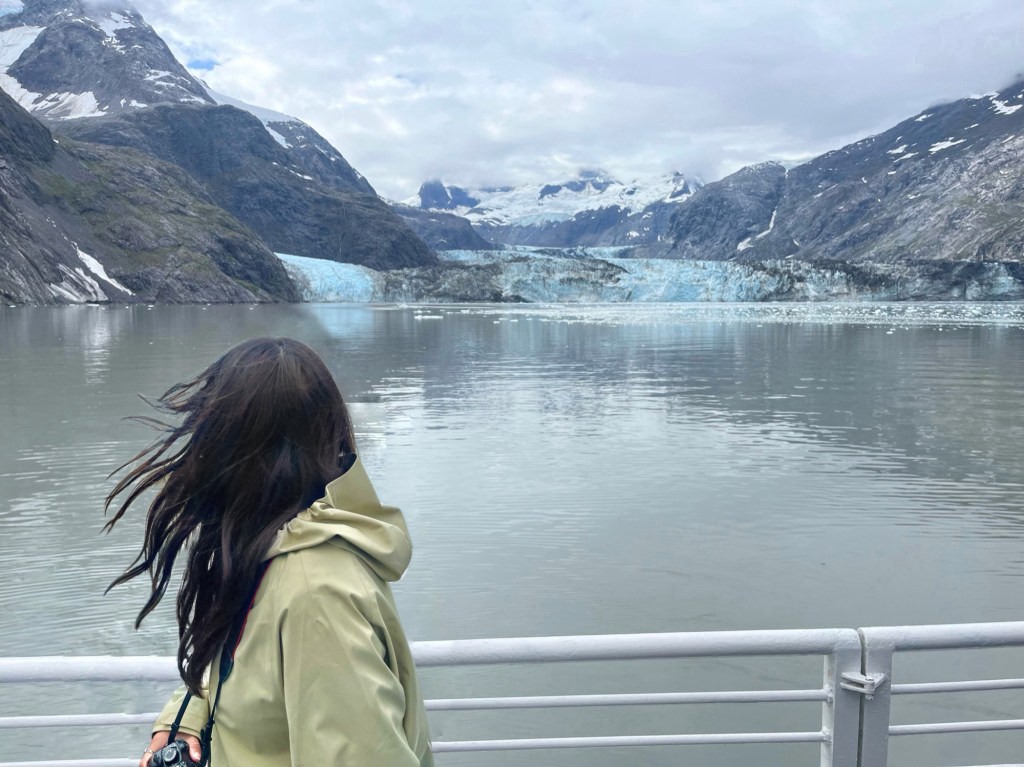
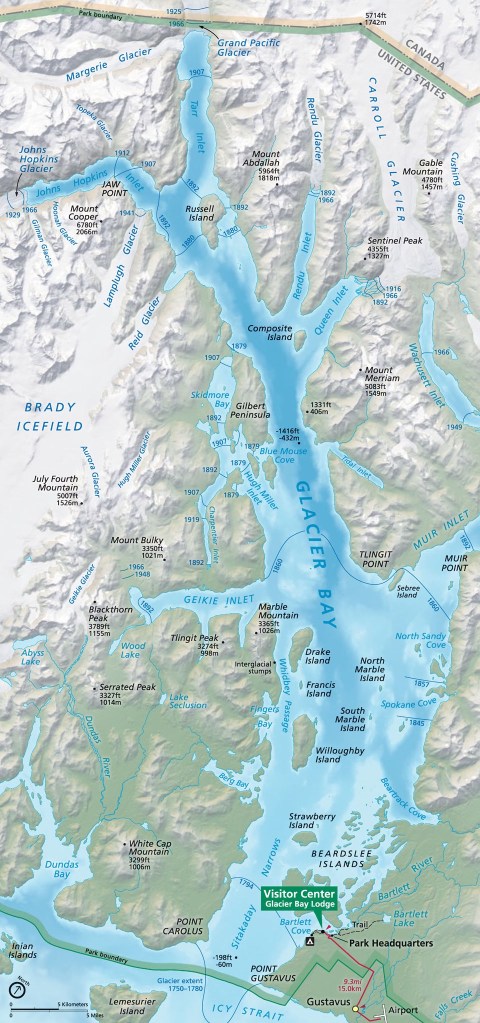
The boat tour takes you up Glacier Bay to view glaciers, mountains, and wildlife. While it is a full day tour, it absolutely flies by with how much wildlife and beautiful scenery you’ll see. The boat travels the entire length of the West Arm of Glacier Bay National Park & Preserve to the face of many tidewater glaciers. There will be two routes you can take to see the main three tidewater glaciers: left to John Hopkins Glacier or right to Margerie Glacier and Grand Pacific Glacier. We went left!
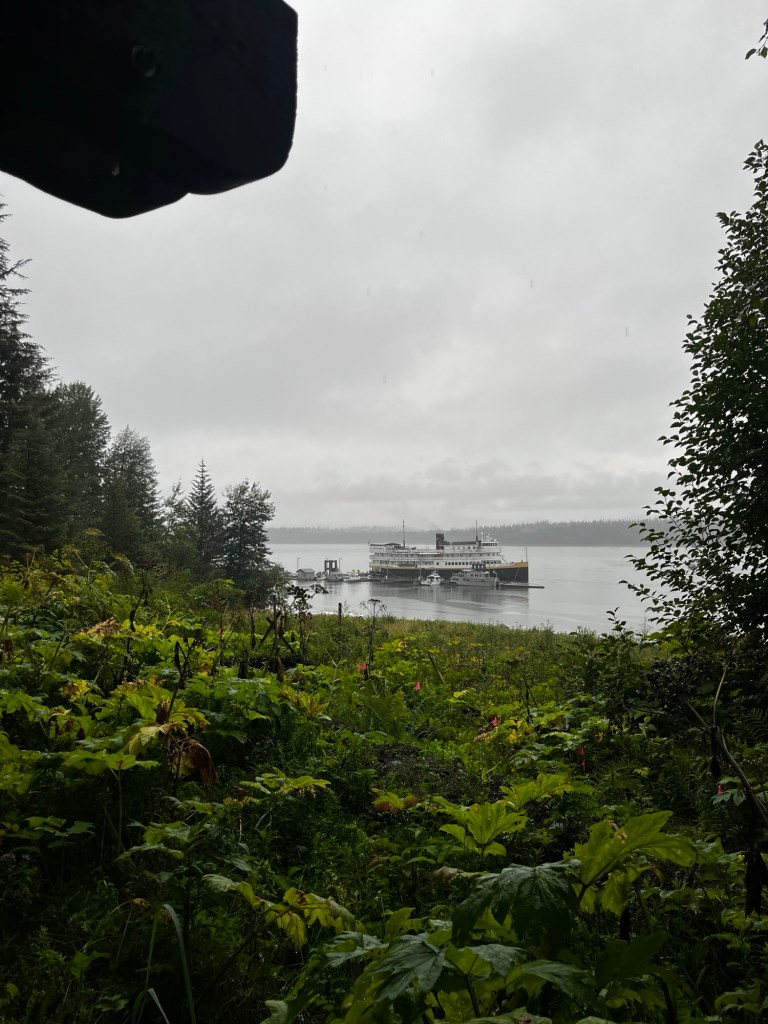
Bartlett Cove
We began our tour bright and early by getting to the Bartlett Cove dock at 7 am. Still blinking away sleep, the boat provided us with complimentary coffee, tea, and hot chocolate.
As we sailed up into Glacier Bay at the Sitakaday Narrows, the views As we sailed up into Glacier Bay at the Sitakaday Narrows, the views were unfortunately all fog. While it was discouraging to see only fog around us, our park ranger tour guide reassured us that this was common and that we would have better visibility soon for the glaciers and wildlife. We didn’t see anything until we reached South Marble Island, about an hour into our tour.
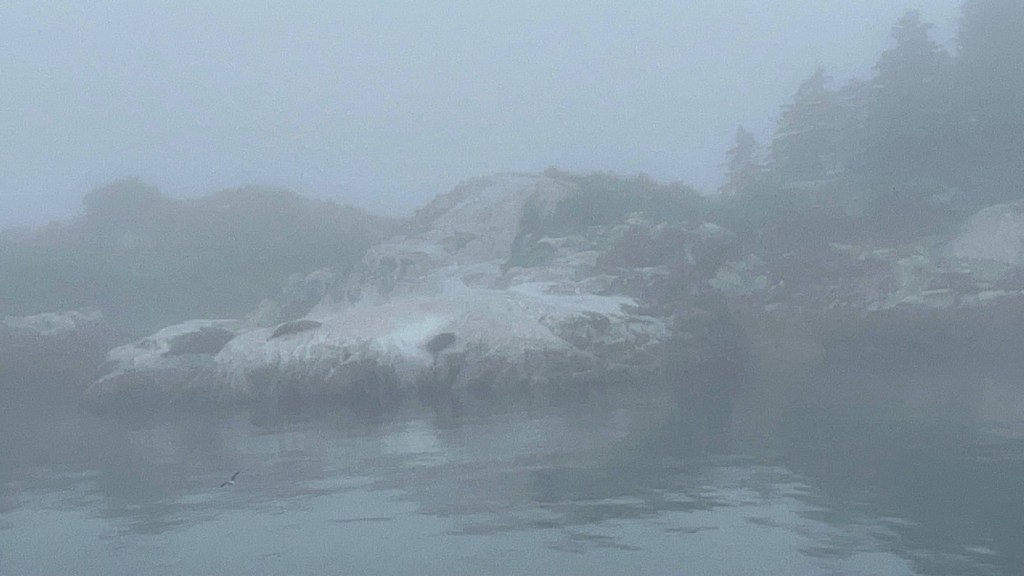
South Marble Island
To our dismay, South Marble Island was still a bit gloomy and rainy, so it was hard for us to see more than a giant lump with smaller lumps. We could hear the grumbles of the sea lions on the island and could make out vague shapes but unfortunately, it was too hard to see them clearly. We kept our hopes up for more wildlife though!
Passing more semi-foggy islands, we could hear the loud callings of seagulls and a new bird we haven’t seen before – puffins! These orange tipped birds were in a group just floating around in the ocean.
Tlinglit Point
After South Marble Island, the next destination was Tlinglit Point. Here, the guides taught us about the history of the park. From the inhabitation of the Tlingit people, to John Muir’s visit, to the establishment of the national park, it was great to hear how this beautiful park came to be and how they cooperate with the indigenous people to preserve its beauty.

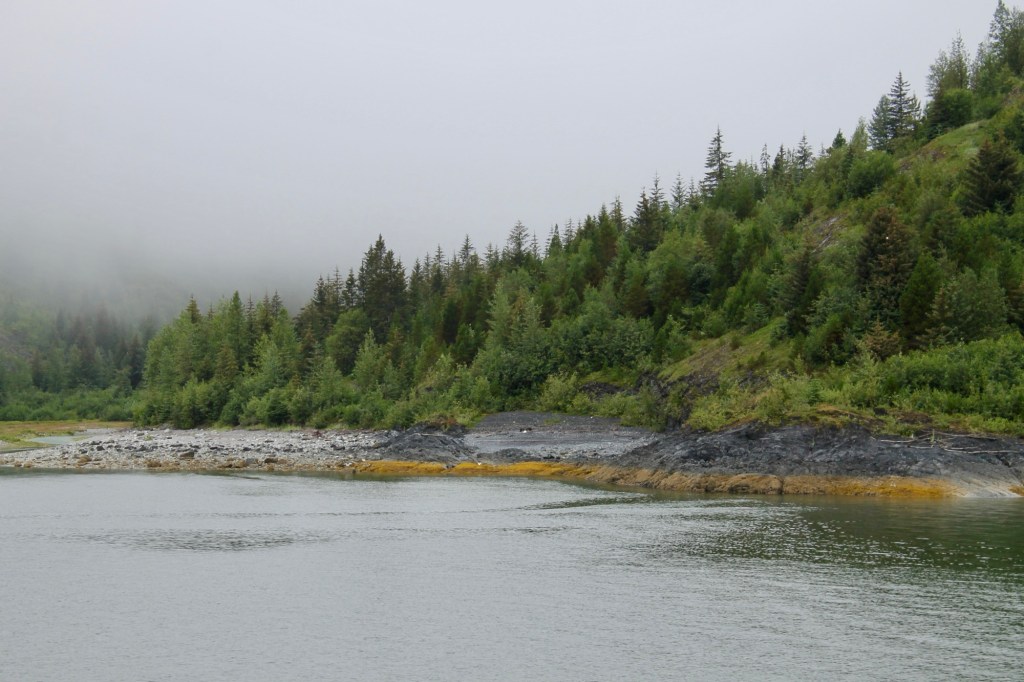
At Tlingit Point, the fog was beginning to clear a bit and we were able to see the stunning rock formations along the coastline. Here, we saw our first sea otter floating along in the water, as well as a sea lion in the distance jumping out of the water at a bird!
As mentioned in the wildlife section above, we spotted a grizzly bear walking along the rocky coast! I unfortunately forgot to bring my long lens for this tour, so all you can really see is a bear-shaped brown lump. 🙂
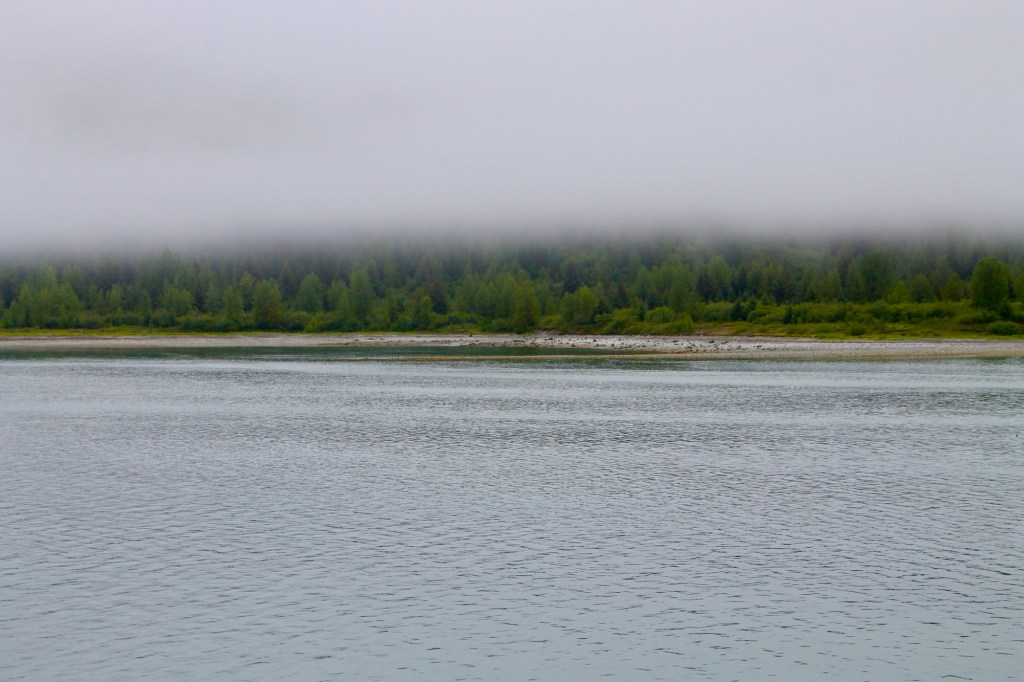
Around this time, we also saw a humpback whale breaching in the distance. Once again, not a very good photo but helps with the memories!
Reid Glacier
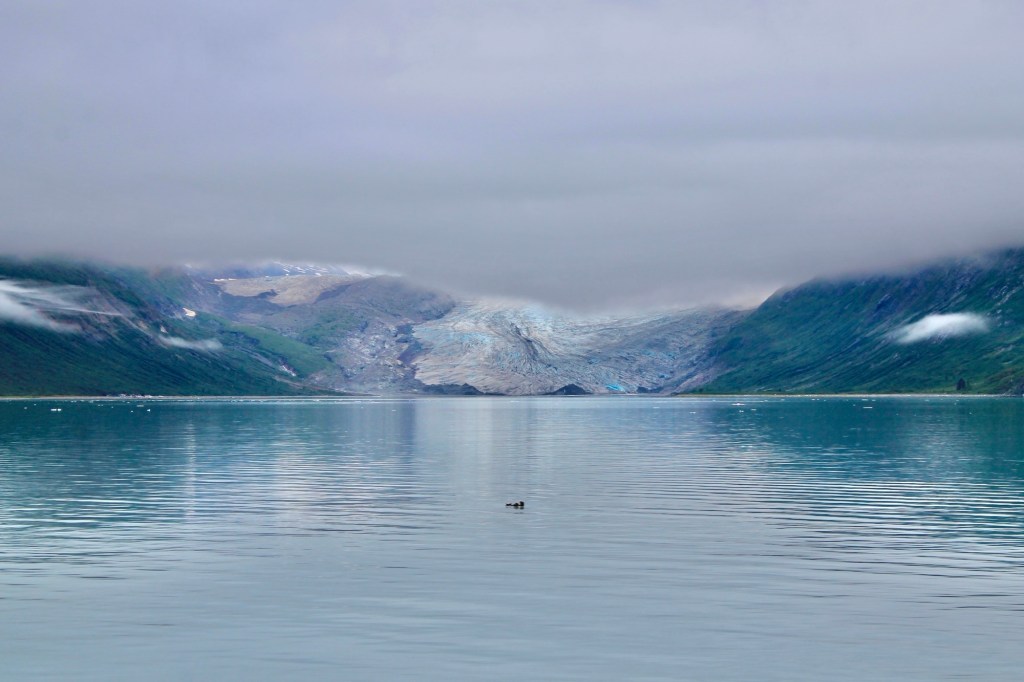
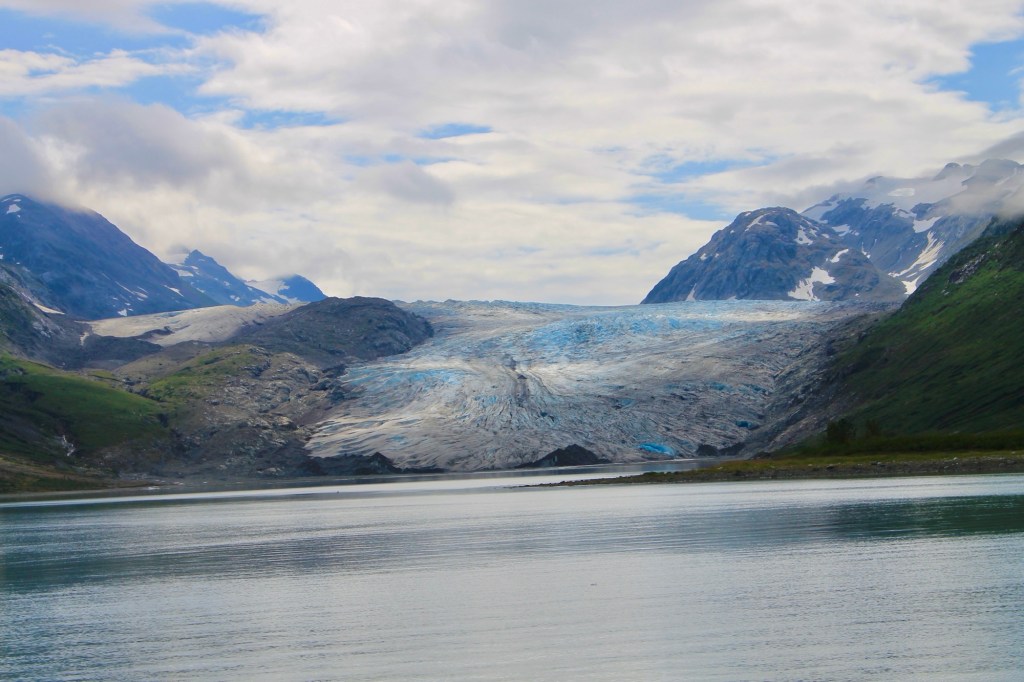
We have finally arrived to our first tidewater glacier! Although we weren’t going to be approaching the face of this glacier as close as the final ones, this glacier is a sight to see at a distance. It originates in the Brady Icefield and its main characterization are the deep crevasses you can see running down.
Lamplugh Glacier
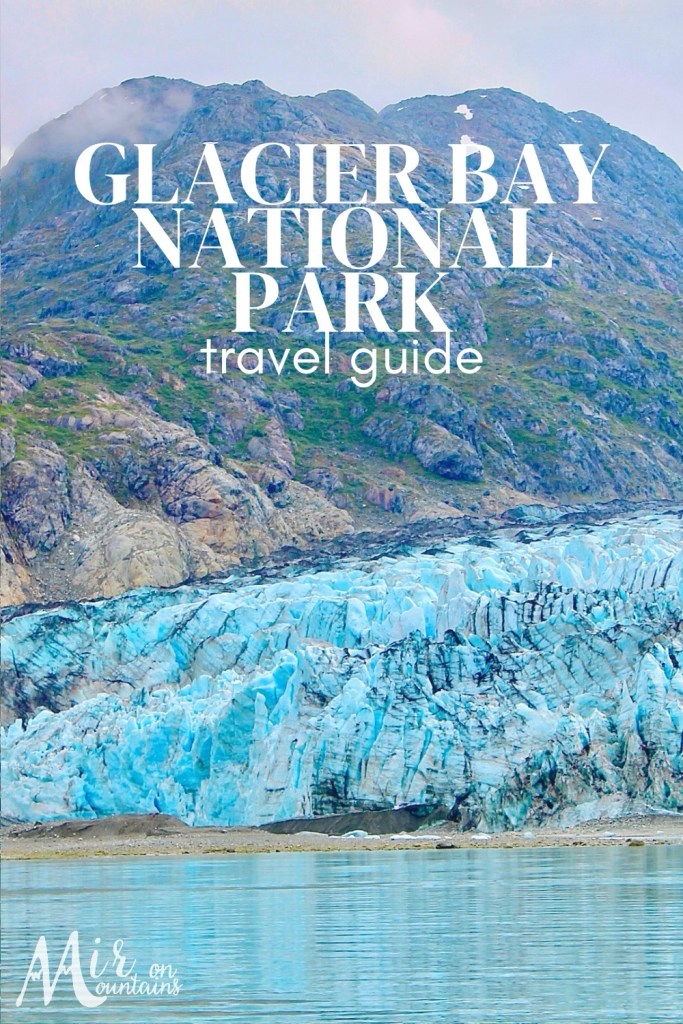
Like Reid Glacier, this glacier is fed by the Brady Icefield and is 8 miles long. In my opinion, the glacier cliffs on top of the water of Lamplugh Glacier look a lot more prominent than Reid Glacier.
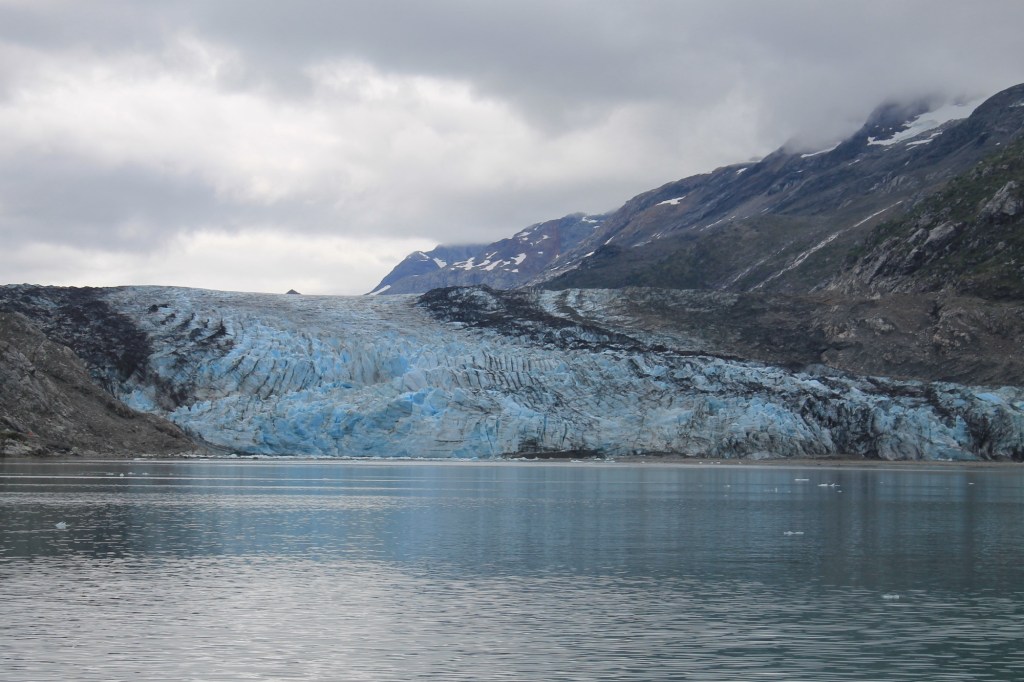
Johns Hopkins Glacier
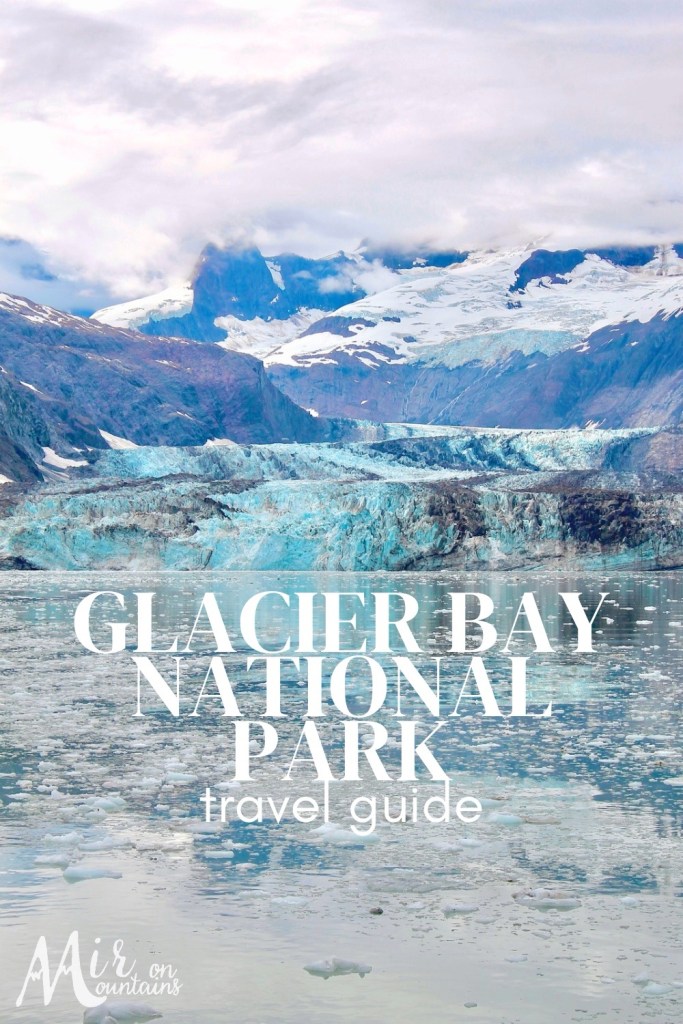
The main star of our show, Johns Hopkins Glacier, is a 1 mile wide and 225-300 feet high tidewater glacier.
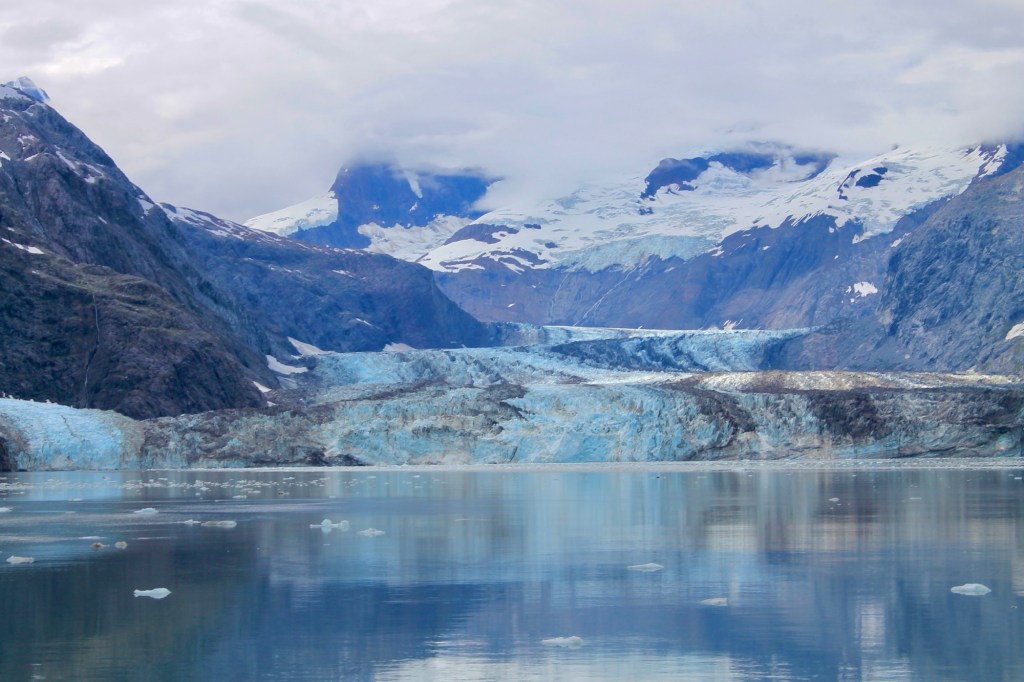
It is characterized by submarine calving, which is calving below the water surface from ice breaking off of what is called an “ice foot” at the base of the glacier, rather than above the surface. With black bands and zigzag flow down the valley of the glacier, I could definitely have stayed at this one forever!
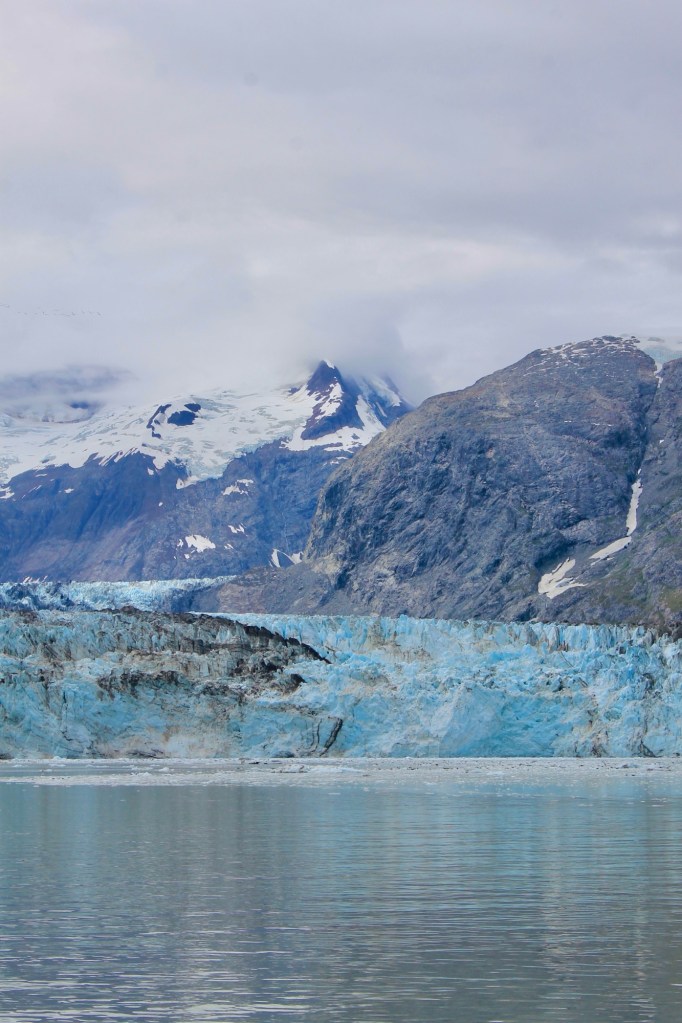
I had hundred of pictures of Johns Hopkins after this that I had to go through!
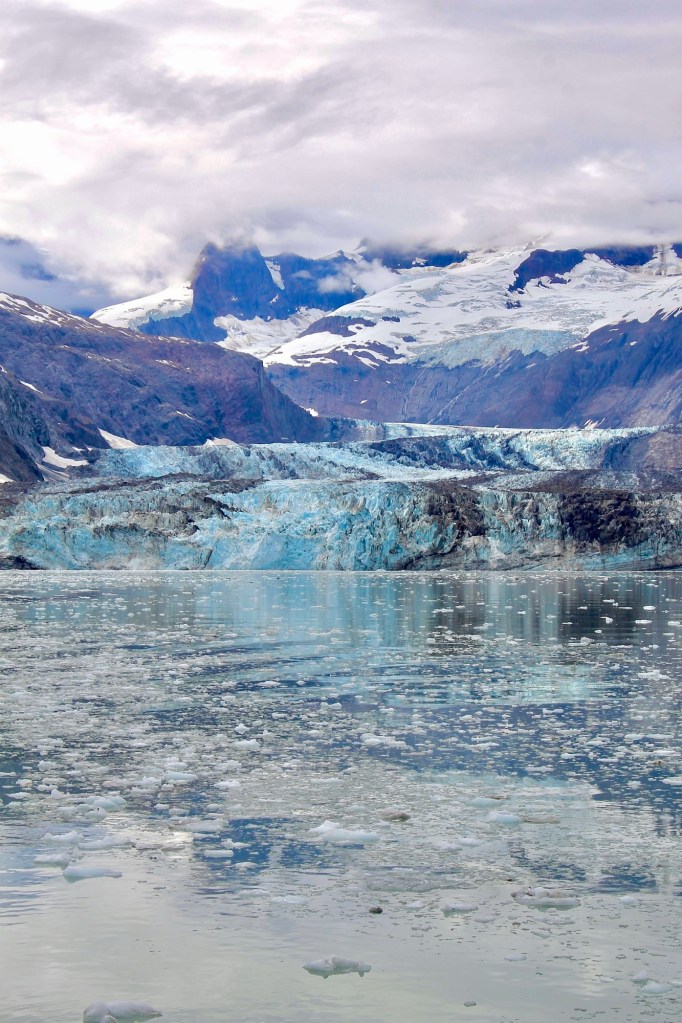
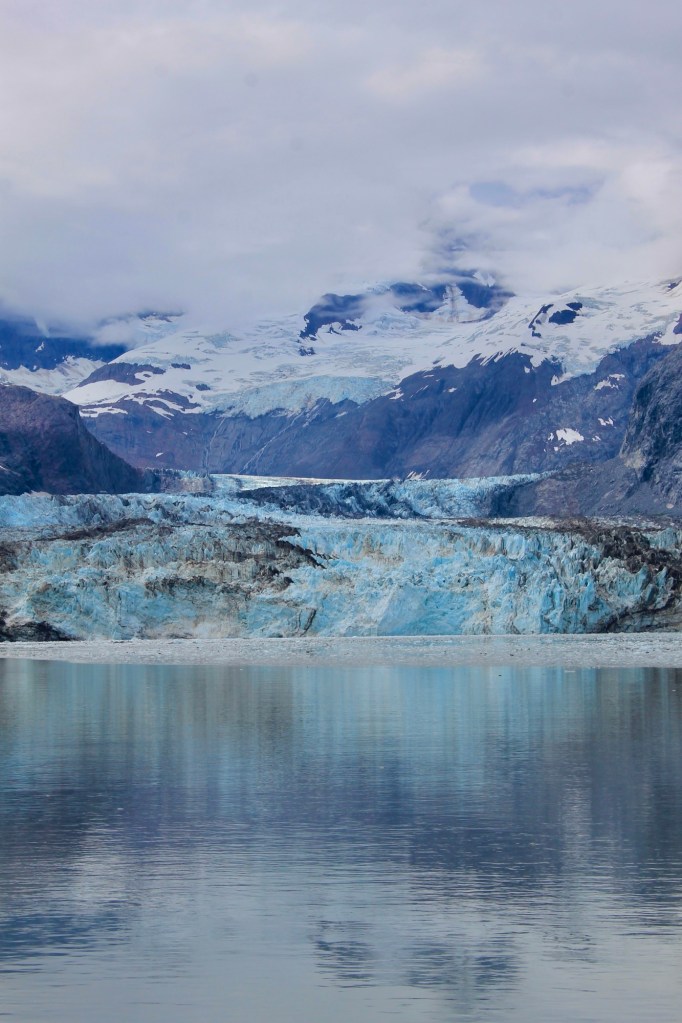
As you drift around in this inlet, it’s hard to decide what to admire. While there’s obviously the stunning tidewater glacier in front of you, there are also glaciers running down from the mountains around you.
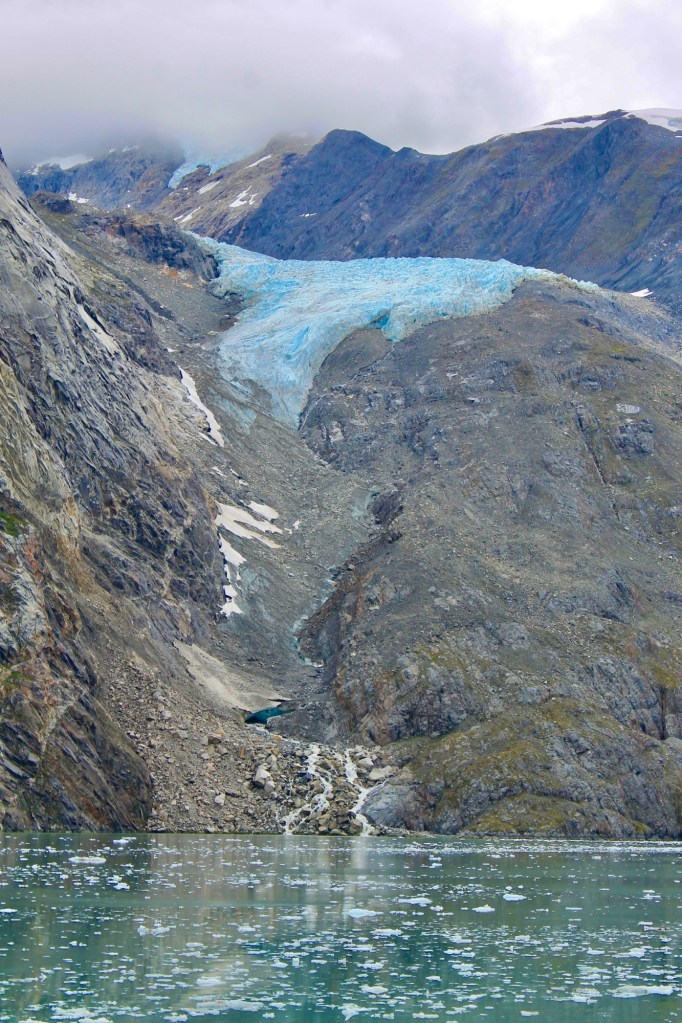
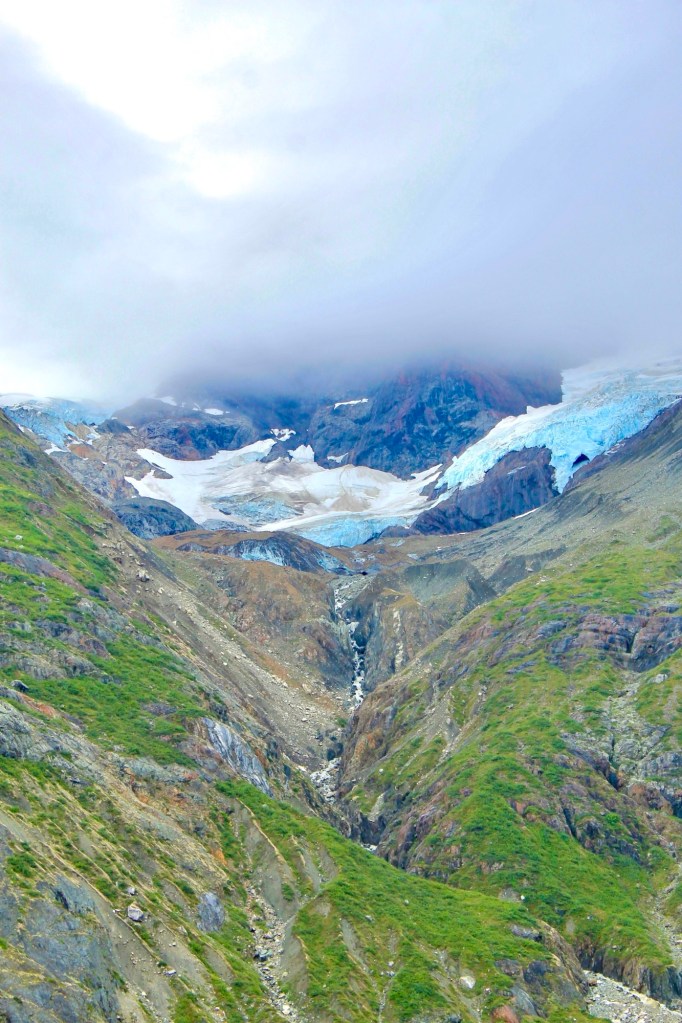
Pictures speak a thousand words but it’s just impossible to illustrate the sheer size of glaciers! Similar to how mountains can give you weird depth perception, so can glaciers.
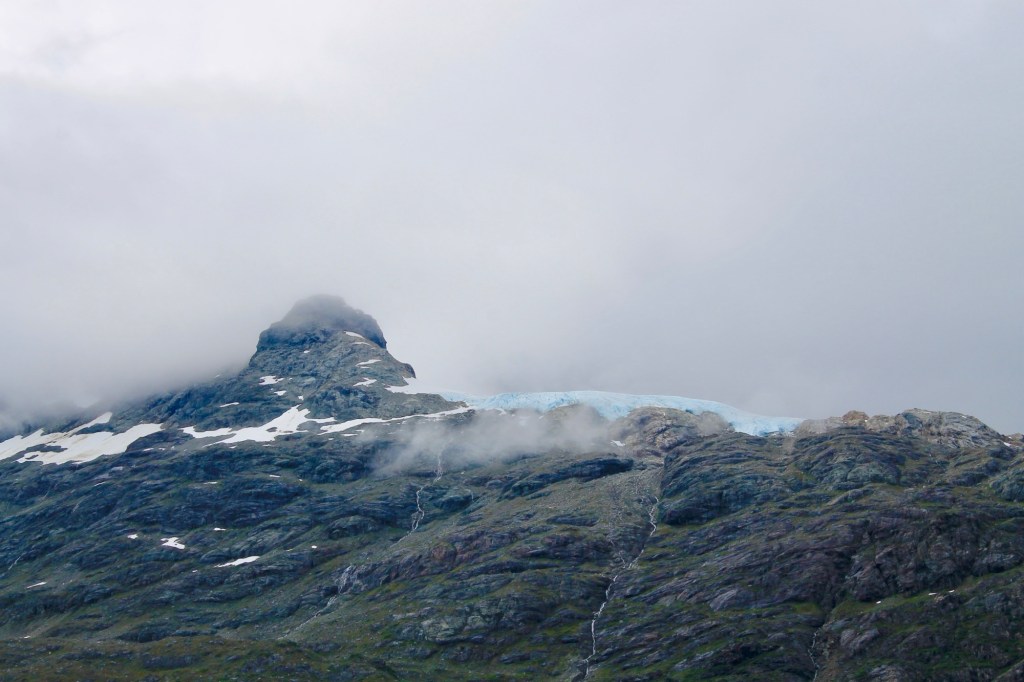
Harbor seals typically live closer to the glacier and as we were about to head out of the fjord, we saw one swimming by!
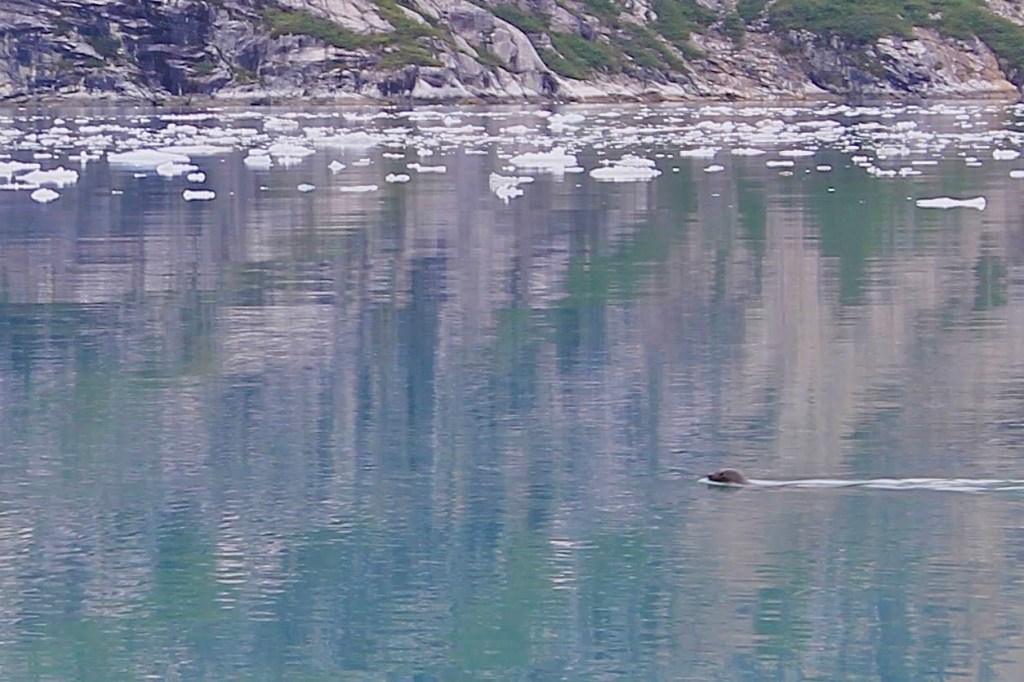
Depending on various factors, you might not go to Johns Hopkins Glacier and instead visit Margerie Glacier and Grand Pacific Glacier, which are two glaciers in the other inlet! Whichever way you go, I have no doubts it will still be amazing.
Heading Back
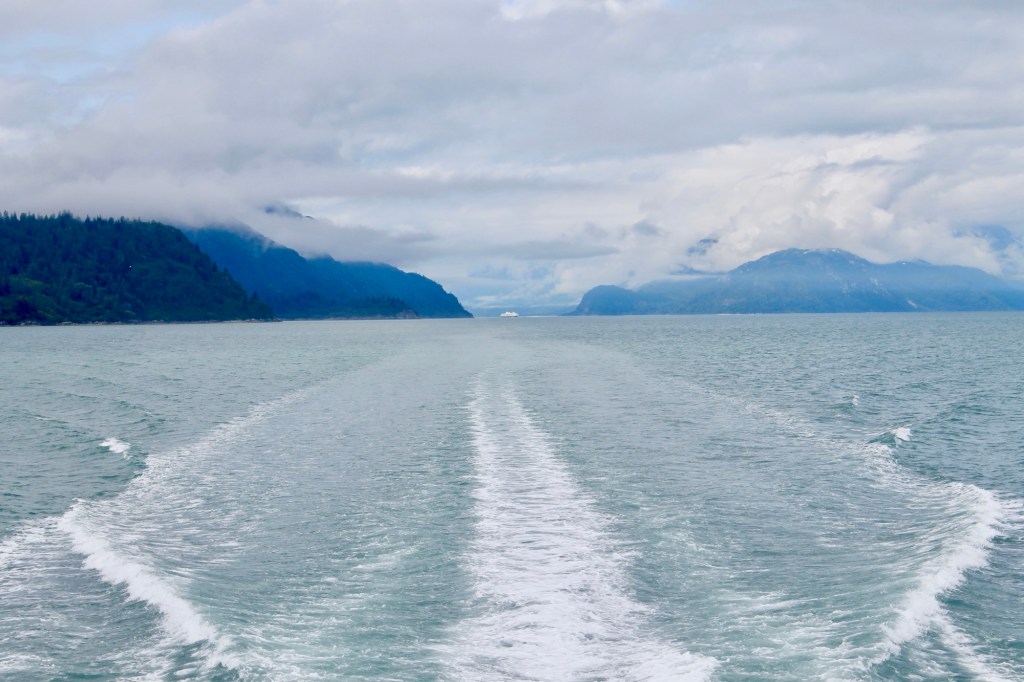
Since there’s only one way, we have to leave back the way we came! Thankfully, the sun had come out and all the fog was cleared, so we were able to see the previous glaciers and islands in perfect clarity.
We even were lucky to see a few more (maybe a bit more than a few) sea otters floating by!
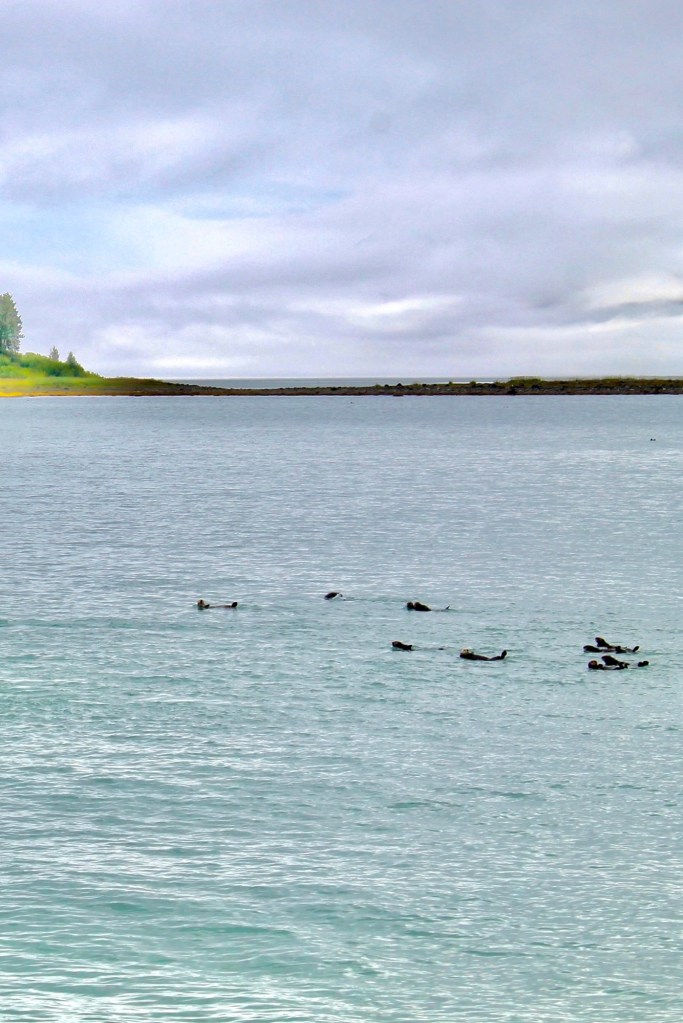
Overall, it was an exhilarating day with the National Park service! It is truly hard to put into words how extraordinary seeing a glacier is, especially so close up. You just gotta go and see yourself!!
Other Things to Do in Glacier Bay
Kayaking
Kayaking in Glacier Bay National Park is a popular way to see the park itself without having to be on a cruise. One advantage of kayaking is that you are able to get up closer to the glaciers themselves than even the smallest boats are able to reach. You can also explore the area around the main visitor center and lodge, potentially get closer to wildlife, and even have the ability to do more longer-term backcountry kayaking and camping trips. Like many national parks or places in Alaska, there really are no rules, as long as you have enough expereince and don’t push your limits!
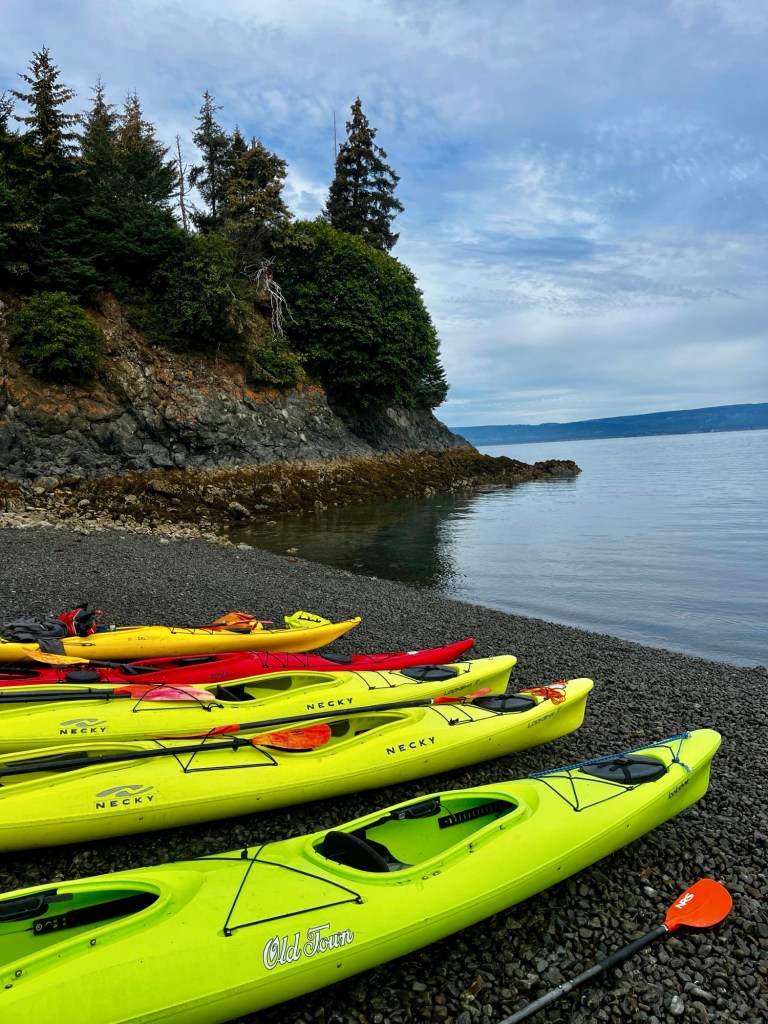
For beginners, it is probably best to go on a guided kayak tour! You are with a qualified guide that helps make sure you are all set with your equipment and understand safety procedures. As some of the areas you kayak in require a boat to access, these tours are very common for most people outside of the Bartlett Cove area. You also learn a lot about the history, geology, and wildlife of the area while on the tour as well!
Kayak rentals are available at Barlett Cove as well. I am personally not familar with how difficult it is to kayak the area around the visitor center area, but I am sure the rangers would be very helpful as far as tips and conditions. This is definitely more cost effective than going on a guided tour, but you would not be able to access the more remote areas of the park unless you know someone with a boat to take your out there.
Popular Day Trips to Kayak
Bartlett Cove: The primary area for kayaking in the park! It is much easier to access and has relatively calm waters. You may not be able to see the mountains and tidewater glaciers from this location, but you still get to get your blood pumping on the water and see a different view of the park than you would on a ship! If you have the time, from a more price-conscious perspective, we would for sure recommend renting a kayak at Bartlett Cove. We did not have the chance ourselves, but we did go on a kayak tour in Homer, Alaska, and even just seeing the otters up close just lounging in the water was more than worth the trip!
Muir Inlet, Tarr Inlet, and Johns Hopkins Inlet: All 3 of these places are ones that are only accessible by boat—as far as reaching the inlet and kayaking spot. You likely will visit one or multiple of these on the typical boat cruise tour, but the depth of the inlet you can reach fo closeness to the glacier is limited by the boat that you are on, and further limited by the fact that you are on a boat at all! With a kayak, you are able to get much closer to the glacier, which is amazing on its own, but on top of that, you are able to feel the true “scale” of the glacier much more as well.
Backpacking Kayaking & Camping
It may not be what we (or the average visitor to Glacier Bay) may do, but backcountry kayaking and/or camping is a more adventourous way to visit the park. In fact, during our NPS day boat tour, we actually went to a couple of seemingly random (to us) small islands in the park to pick up and/or drop off some people who have been camping out there for a few days. We heard some crazy stories from them about seeing wildlife, even many bears on the island with them!
It is very cool and unique to be able to purchase (for a relatively small fee of $50-$100 or so) this “pick up” or “drop off” service from the NPS if you are interested in backcountry camping or kayaking. Many campers combine kayaking with camping on remote islands, as kayaks are probably the best way to explore some of the more isolated parts of the park and allow you to explore on the water without needing tons of permits and a boat.
As you’d probably guess, Glacier Bay’s camping is entirely primitive, with no designated campsites, amenities, or facilities. Most will camp on a beach or near a forest edge on one of the small rocky islands in the park. Campers are required to bring bear-resistant food containers (available at the visitor center) and follow strict guidelines for food storage and waste disposal.
Safety
As you would imagine, it is not for the faint of heart or inexperienced to go on a backcountry camping trip like this! It is very important to have good navigation skills especially if you are hopping between different islands. There are also many tide changes within the park, so this is important as well for selecting your campsite and getting around. The water in the park is consistently cold year-round, so make sure that you have gear to help prevent any issues from that, espeically while kayaking in the water.
It is also requred to have a permit for any backcountry camping and attend an orientation on backcountry safety. But for those who are okay with roughing it a bit somewhere remote, I’m sure it would be an incredible experience!
Flightseeing Tours
Flightseeing tours in Glacier Bay are another great option for things to do in the park! While the daily boat tour may last around 7-8 hours, a typical flightseeing tour would last 1-2 hours and be able to cover the same, if not more, ground as the boat tour! The flightseeing tour also allows you to see more remote areas that are inaccessible by boat or by foot (unless you are a mountaineering expert).
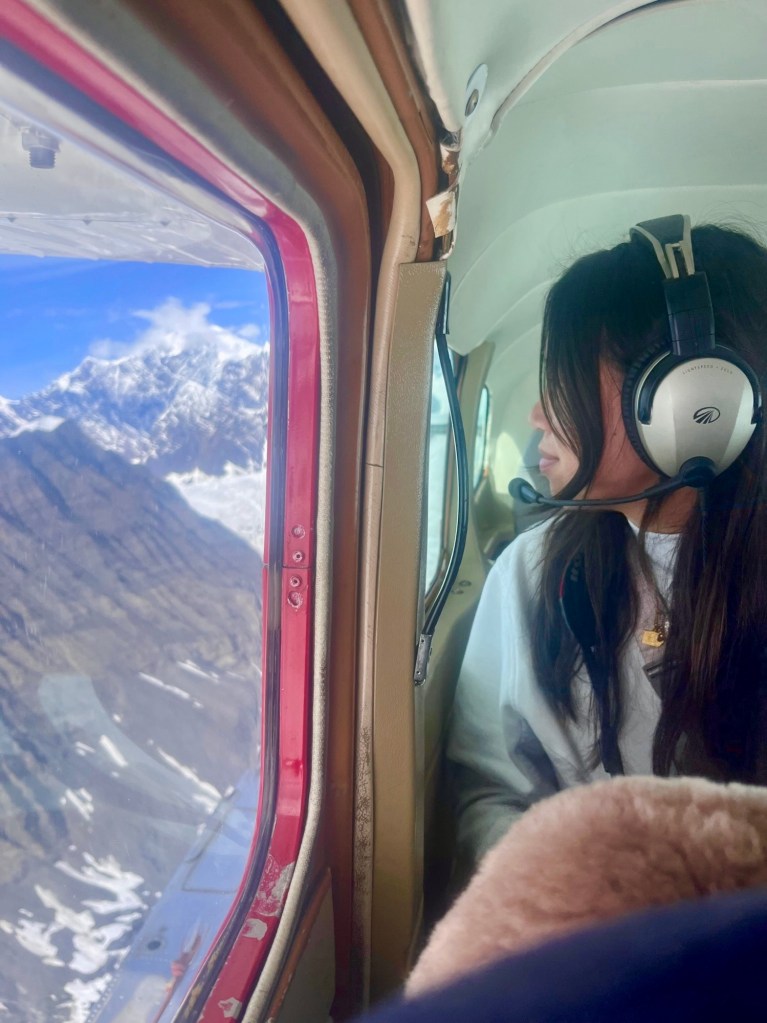
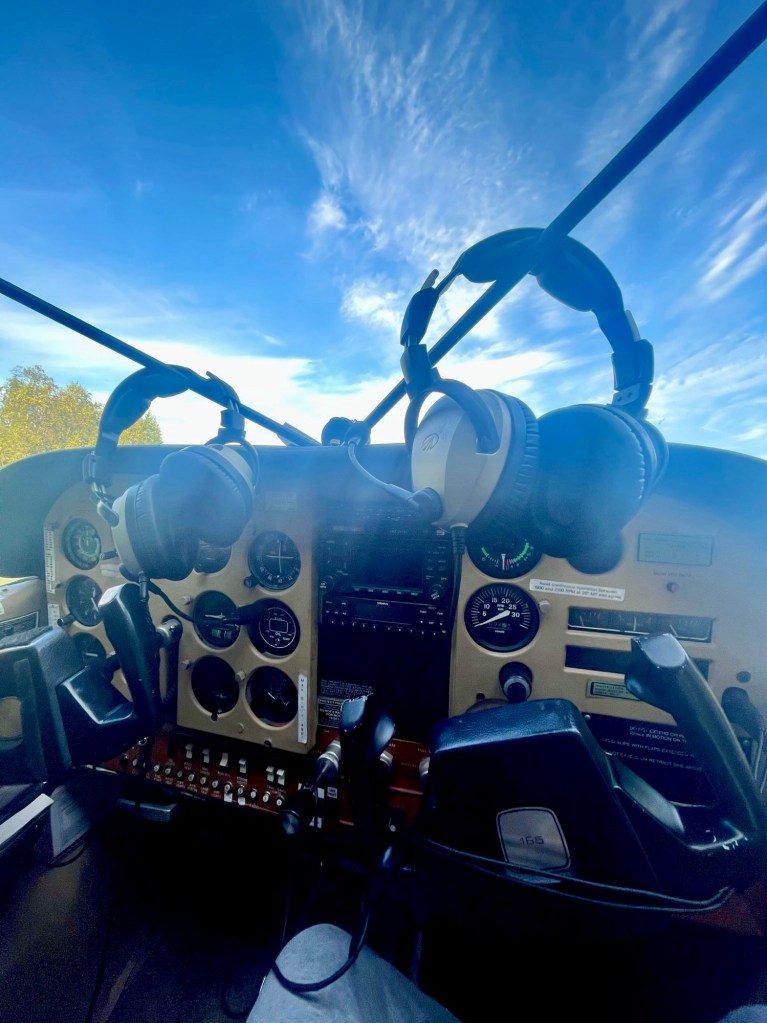
From the air, you’ll be able to see some of the same glaciers you’d see from the boat and at a differrent angle, such as Johns Hopkins Glacier, Grand Pacific Glacier, and Margerie Glacier. These glaciers are much longer than what you are able to see at the face from the water and there is no way to feel that true scale unless you are on a plane or helicopter.
You also are able to visit the Fairweather Mountain Range on your tour, which contains some of the largest mountains in all of Alaska, such as Mount Fairweather. This is an area that you are not able to access via a boat tour, and is next level remote when compared to the glaciers mentioned above.
What aircraft will I be on?
Plane tours are typically more affordable and able to cover more ground during your tour length. However, helicopter tours allow you to get closer to most sights and also likely will include landing options on the glaciers themselves. Both the planes and helicopters are equipped with large windows to maximize visibility, and pilots often circle key areas, making sure both sides of the plane can take in the views.
When do the tours run and are they impacted by weather? Do I need to book in advance?
Flightseeing tours are most common from May to September, matching the typical Alaska tourist season. One unforunate aspect of the flightseeing tours is that they are much more dependent on weather than the boat tours. The weather itself could impact your views and pictures or lead to cancellation/rescheduling of your trip. Obviously, everyone has limited time on their vacations and it is not easy to get out to Glacier Bay, but the weather is unpredictable. Anything you can do to have a “buffer” day (or two) for a potential reschedule would be very helpful to ensure you can get out on your tour!
Lastly, it is recommended to book in advance, especially during peak tourist season. Flexibility in scheduling can be helpful, to help have some “back up” days in the case of any cancellations.
Boat vs. Flightseeing?
From our experience in Glacier Bay on the main National Park Service boat and speaking to those who did the flightseeing tour plus doing our own flightseeing tour in Denali, we would recommend at least first prioritizing the tourist boat over any flightseeing tours in Glacier Bay.
That is not to say that the flightseeing tours are not worth your time or money, but we think that the boat tour is great to get a more “real” feel of the park. The boat tour will likely be 7-8 times longer than the flightseeing tour, at a relatively similar price, but allows for a slower place, where you are able to learn more about the park itself from the many rangers on the boat. You also have more chances to see wildlife, and for the majority of wildlife, much more up close than you would in the air.
It is also much less likely for the daily tour boat to be cancelled due to weather. It is nearly impossible (especially for tours booked somewhere like Alaska) to predict the weather more than a few days in advance, so it is for sure worth the “backup time” if you are doing the flightseeing tour, or having the boat in general to have a more “for sure” chance of heading out into the bay.
However, if you have the time and money, it would be amazing to do the flightseeing tour as well, if not at Glacier Bay, but anywhere in Alaska. It is for sure on the pricier end, especially considering the length, but it is an amazing experience that we reccomend everyone to have while in the state. Whether that is near Juneau, Wrangell-St. Elias, Denali, Glacier Bay, Lake Clark, or wherever! We chose to do our flightseeing trip in Denali, but Glacier Bay would be great too if you can fit it in!
Where to Next?
The only logical way back out of Glacier Bay is back to Juneau. After taking our super quick flight again from Gustavus to Juneau, we’re staying in Juneau for another night before take our car back on the ferry to hit the Klondike highway again. Our next destination is Anchorage, which will be our home base for the next month!
Thanks for reading my little blog! 🙂 Have you been to Juneau or planning a trip or cruise there? Send me your thoughts about what you loved the most or are most excited about! If you have any questions, feel free to leave a comment.
Pin my Glacier Bay National Park itinerary for later!

 mir on mountains
share your thoughts!