
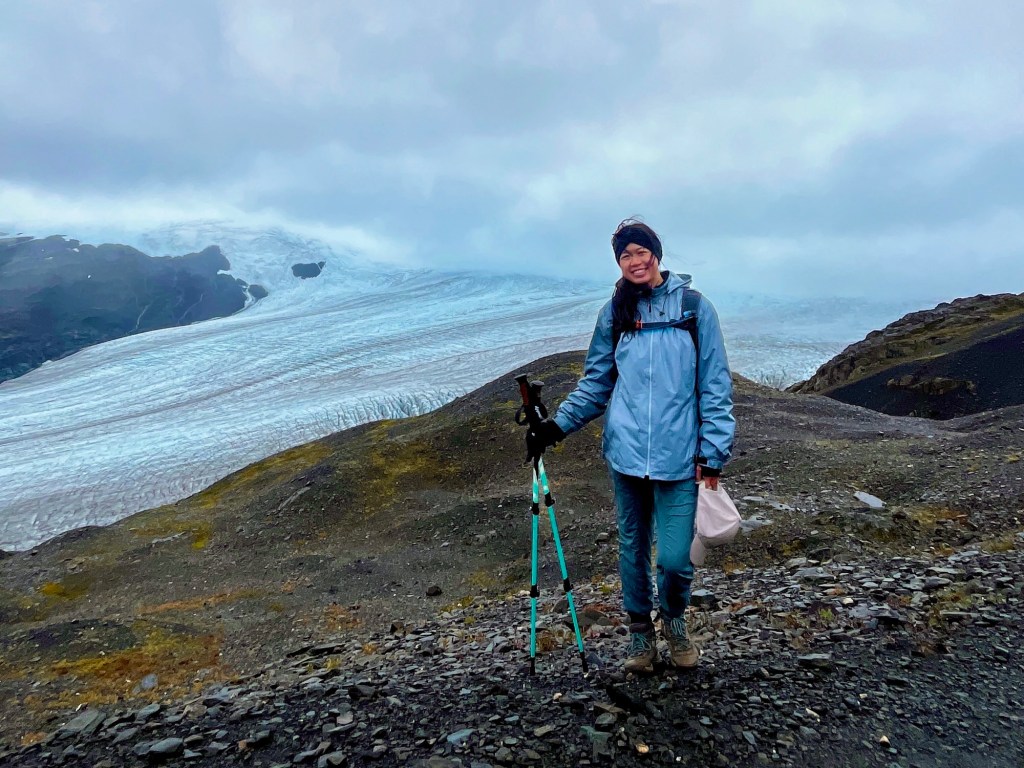
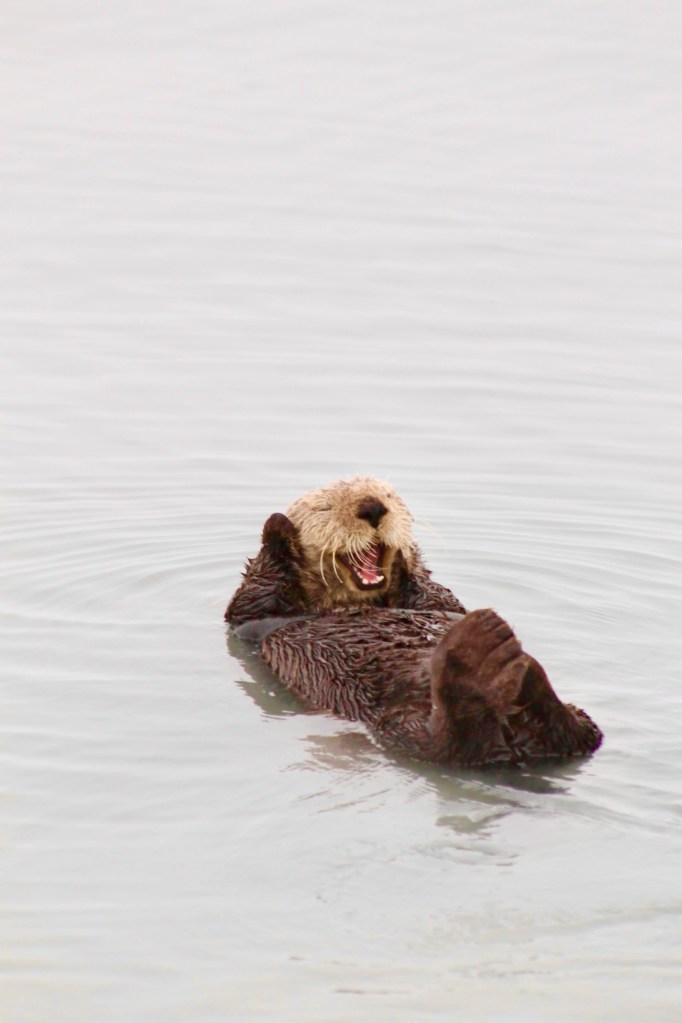
Home to Kenai Fjords National Park, Seward is where the mountains meets the sea. This little harbor town between the Kenai Peninsula and Resurrection bay offers sea and wildlife excursions, towering glaciers, and breathtaking hiking trails. One moment you could be watching sea otters float by in the harbor, the next you’re standing at the foot of Exit Glacier, waiting for a piece to fall off and echo like thunder. We visited Seward and its surrounding area twice during our time in Alaska and left with unforgettable memories.
- About Seward
- Know Before You Go
- Kenai Fjords Boat Cruise
- Seward Town
- Hiking
- Iditarod Trail
- Dog Sledding
- Seward Highway
- Fishing Charters
- Things We Missed
- What’s Next?
About Seward
About a two and a half hour drive (125 miles) from Anchorage sits Seward at the very end of the scenic Seward Highway. For many visitors, it’s the jumping-off point for Kenai Fjords National Park, but the town has plenty more to offer: colorful harbor life, accessible hiking trails, and history that dive back to its railroad and fishing roots. What struck us most was the wildlife and glaciers with mornings on a boat chasing puffins and orcas and afternoons hiking one of the most challenging trails I’ve encountered.
Know Before You Go
Getting There
Likely by car. The Seward Highway is one of the most stunning drives in Alaska. It is about a 2.5 hour drive from Anchorage. You can also arrive by train on the Alaska Railroad for a slower but equally scenic options (but pricier).
When to Visit
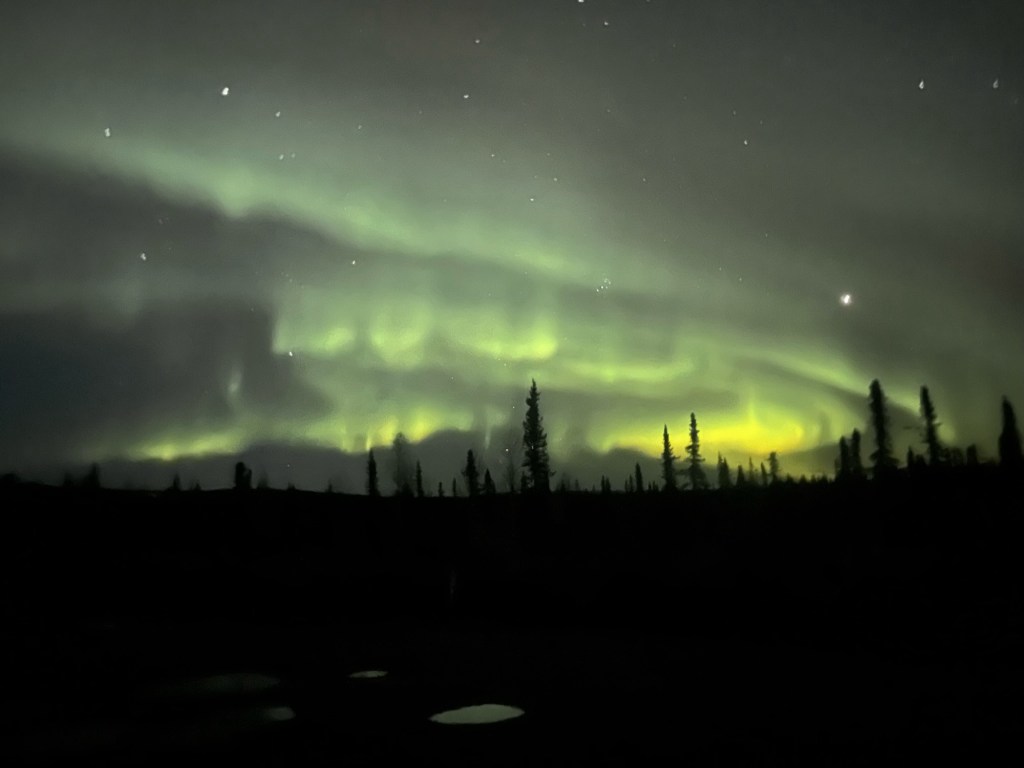
Summer (June-August) is prime season in Alaska with long daylight hours. Shoulder season (May and September) is also great for fewer crowds, cooler nights, and you might get a chance of seeing the Northern Lights if you’re lucky!
How Long to Stay
At the very minimum, 2-3 full days (but I almost would recommend 3-4). Many travelers make the mistake of visiting Seward as a quick stop on a cruise or road trip. Taking a boat tour takes a full day, as well as hiking Harding Icefield. To truly enjoy all that Seward has to offer, it definitely deserves a few days of its own. If you love the outdoors, you could easily fill a week.
Where to Stay
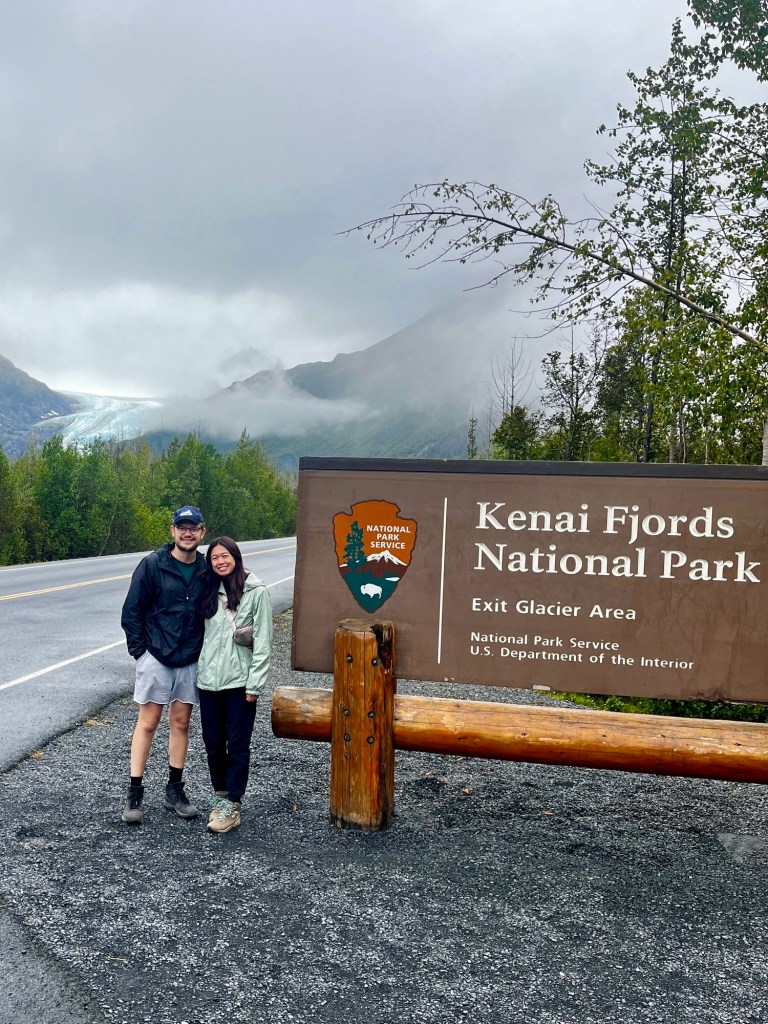
We were car camping, so we stayed right outside the entrance of the park at the Seward KOA Holiday. However, there are many options to stay within/near the town of Seward itself. From waterfront hotels to rustic cabins to budget-friendly hostels, there is lodging for all.
What to Pack
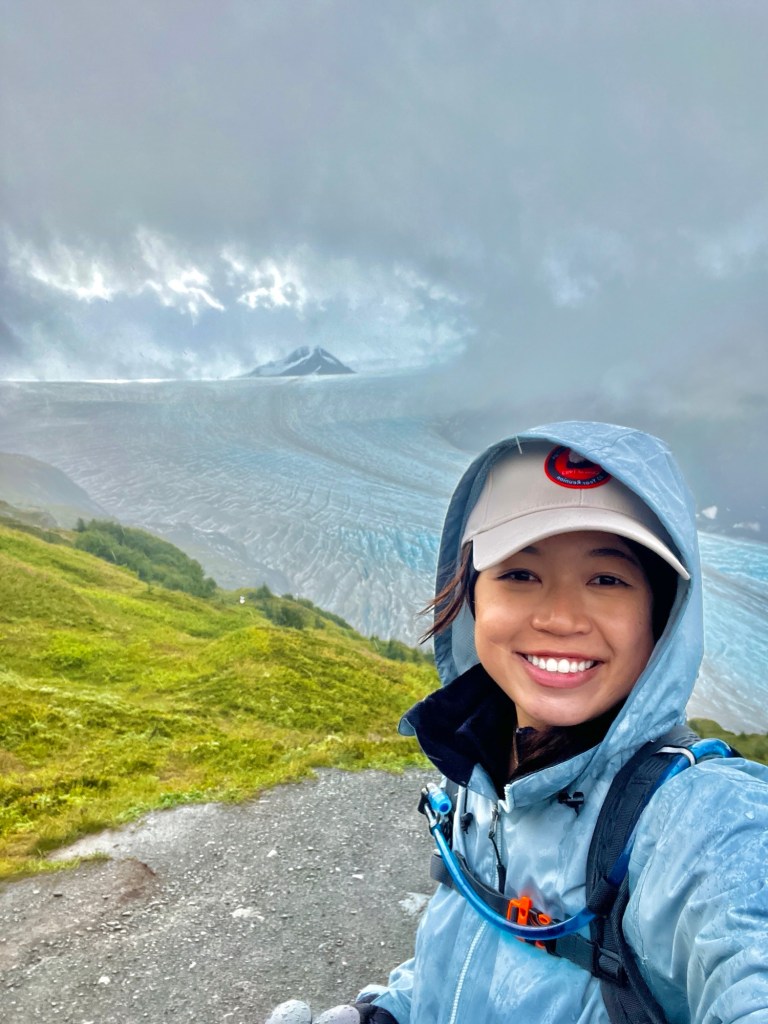
Layers are absolutely essential. Seward’s weather can shift from sunshine to rain in a matter of minutes. Waterproof shoes or boots are helpful for hikes and don’t forget a rain jacket, hat, and gloves, even in July. If you’re going on a boat tour, bring binoculars for wildlife and motion sickness medicine just in case.
Kenai Fjords Boat Cruise
A boat tour in Kenai Fjords National Park, in my opinion, is a must-do when visiting Seward, AK. It was one of my favorite experiences while in Alaska because we were able to see the a wide variety of wildlife, very close up. Boats leave from Seward’s small boat harbor traveling through Resurrection Bay out to Aialik Bay or Northwestern Fjord.
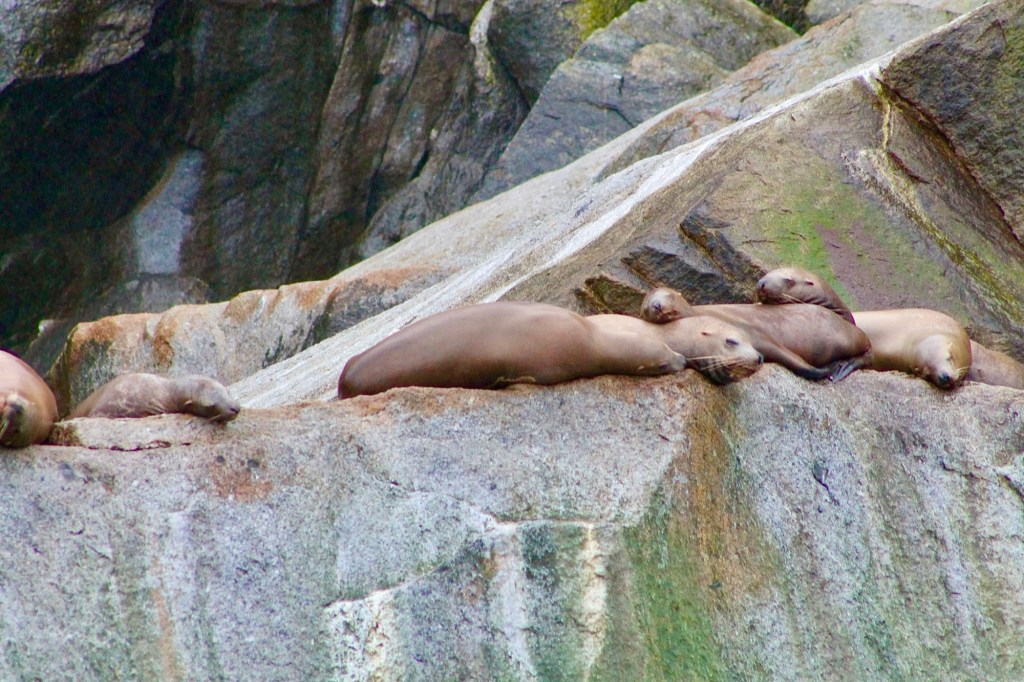
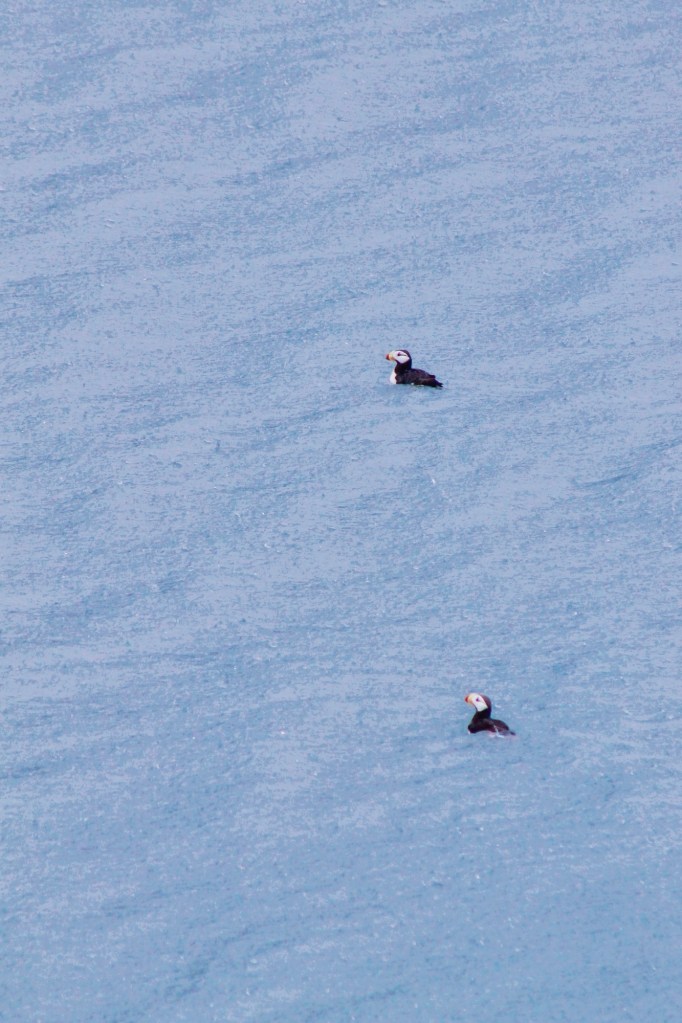
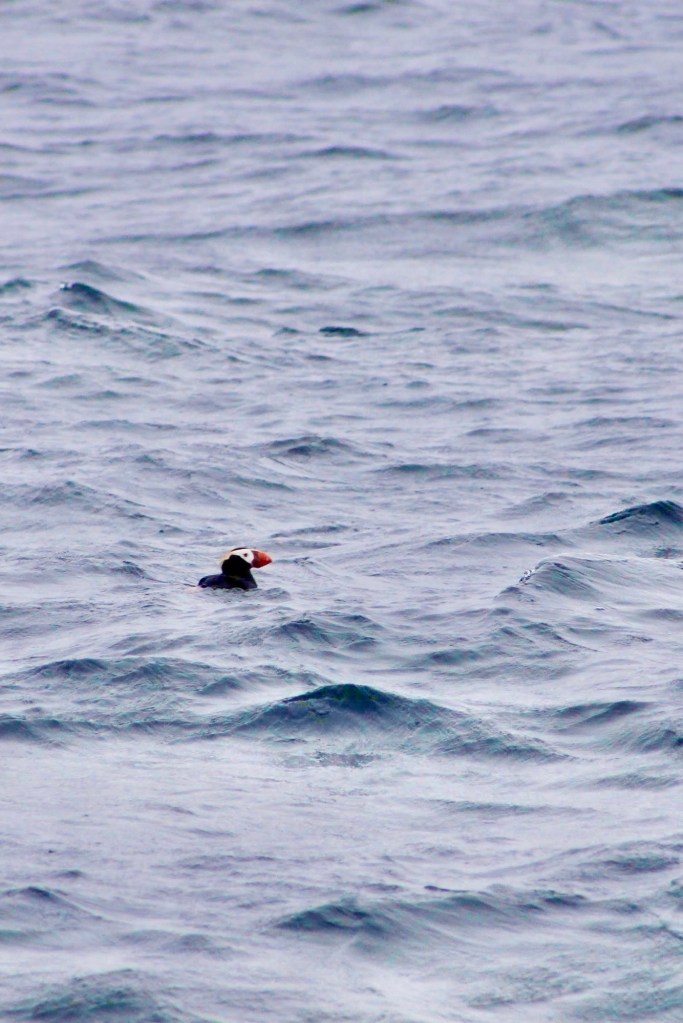
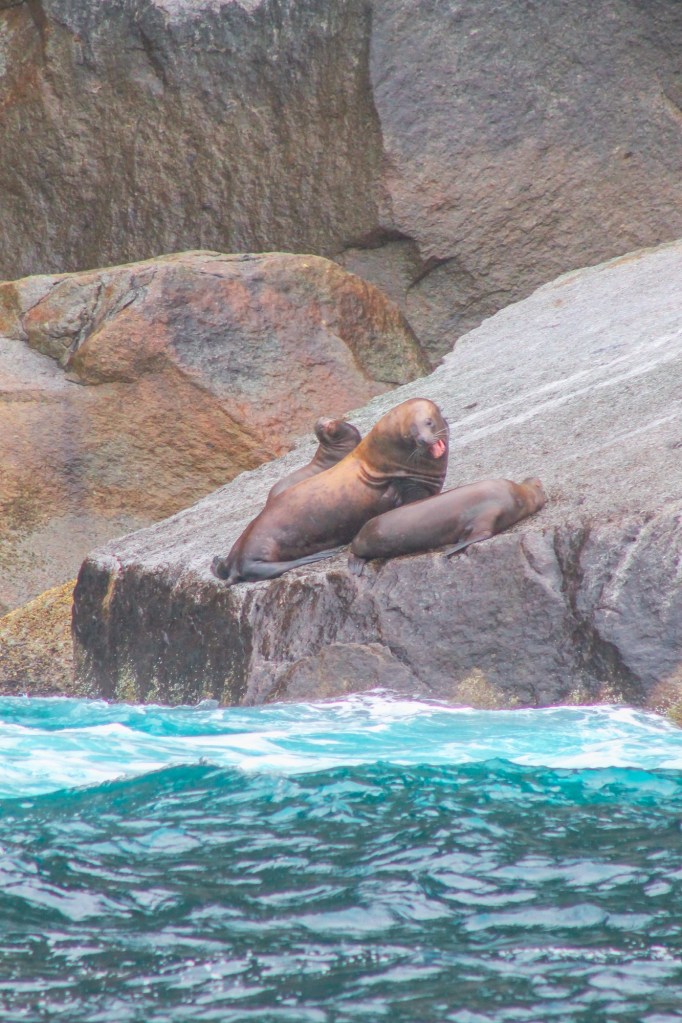
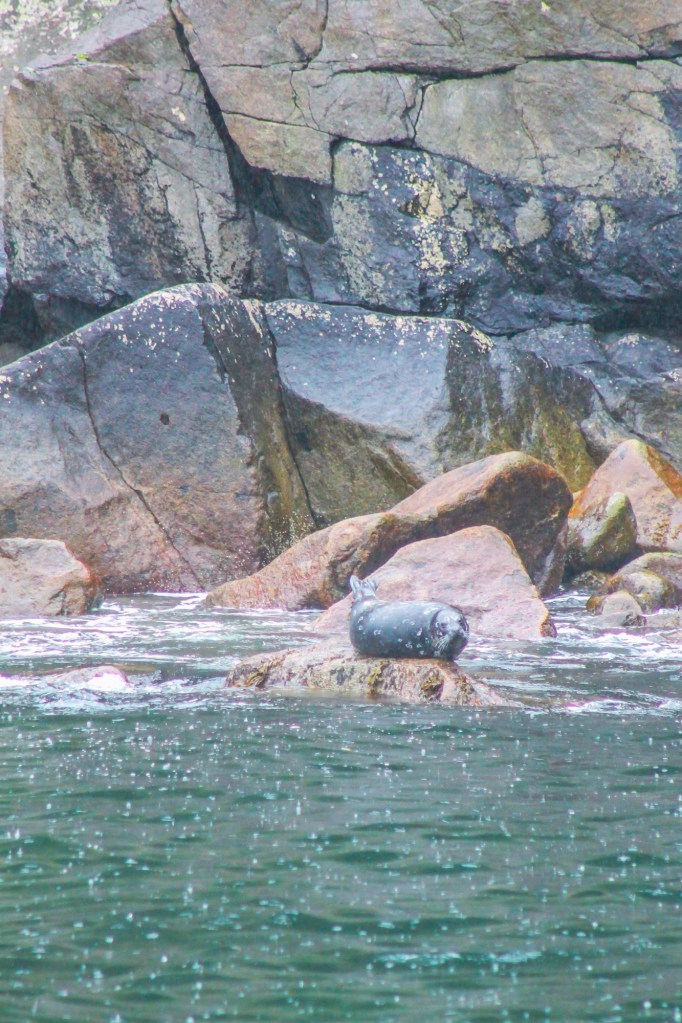
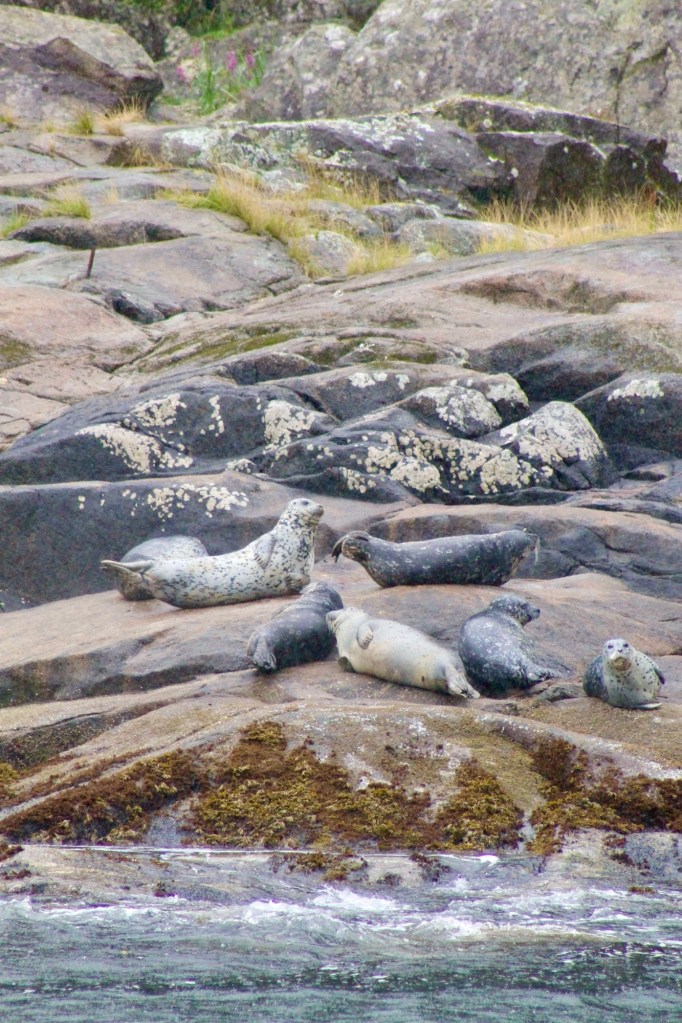
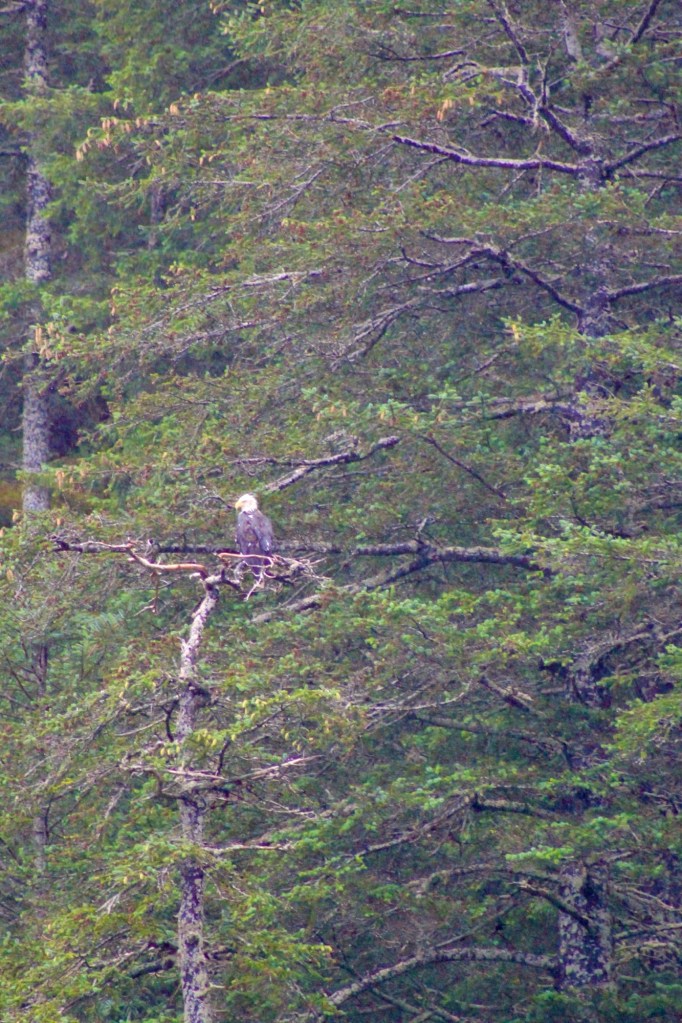
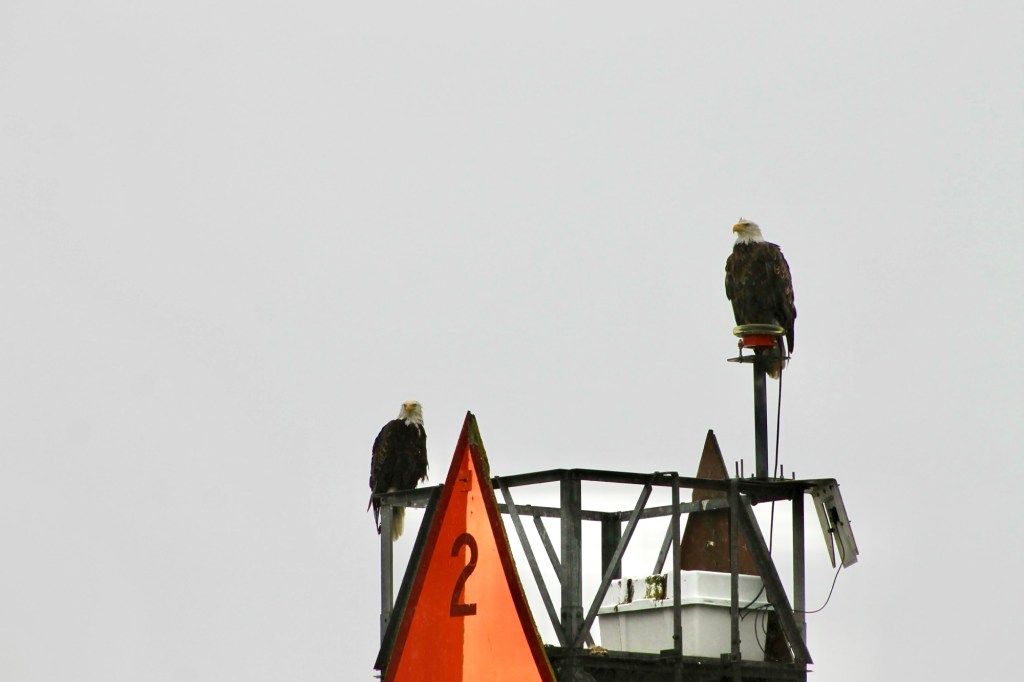
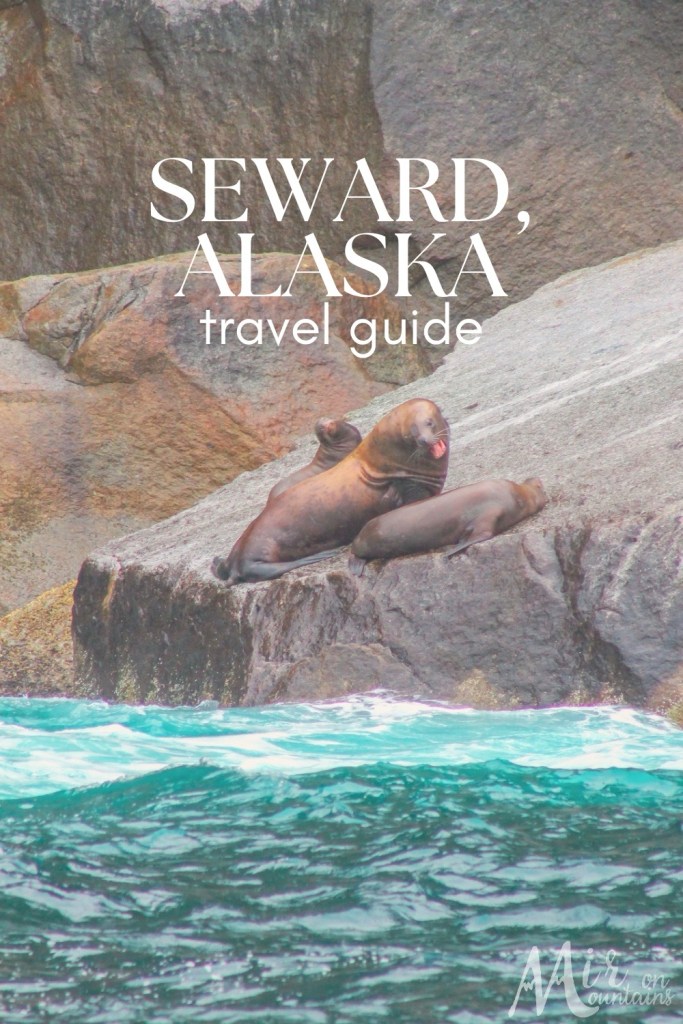
We did a 6 hour tour with Major Marine Tours, which also included lunch and complimentary tea and coffee. Throughout the journey, we saw sea otters, sea lions, harbor seals, porpoises, puffins, bald eagles, and even orcas!
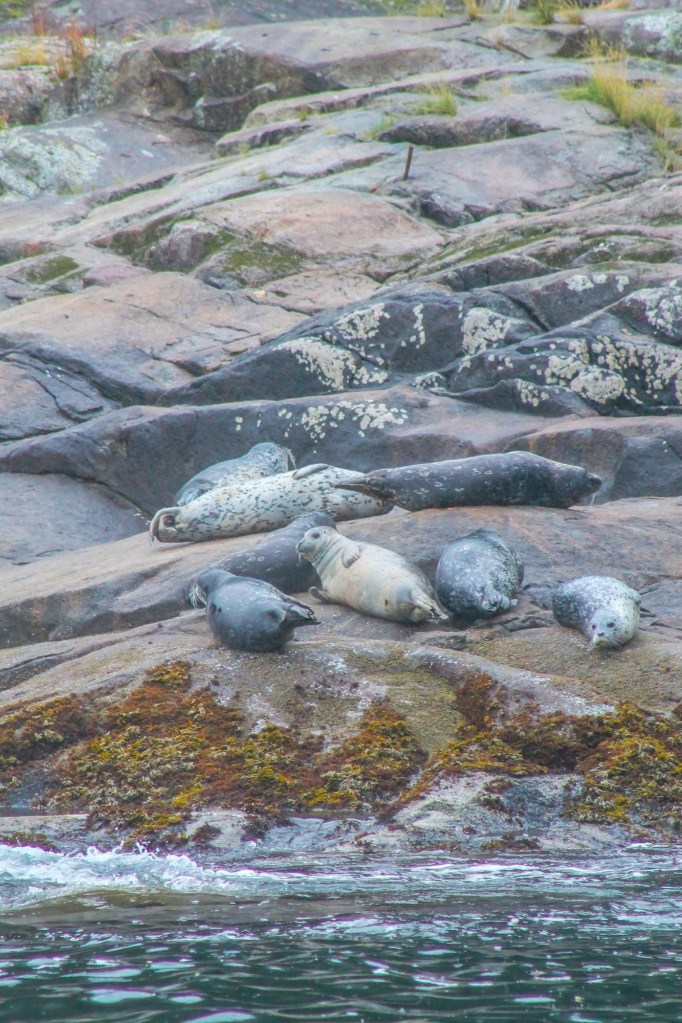
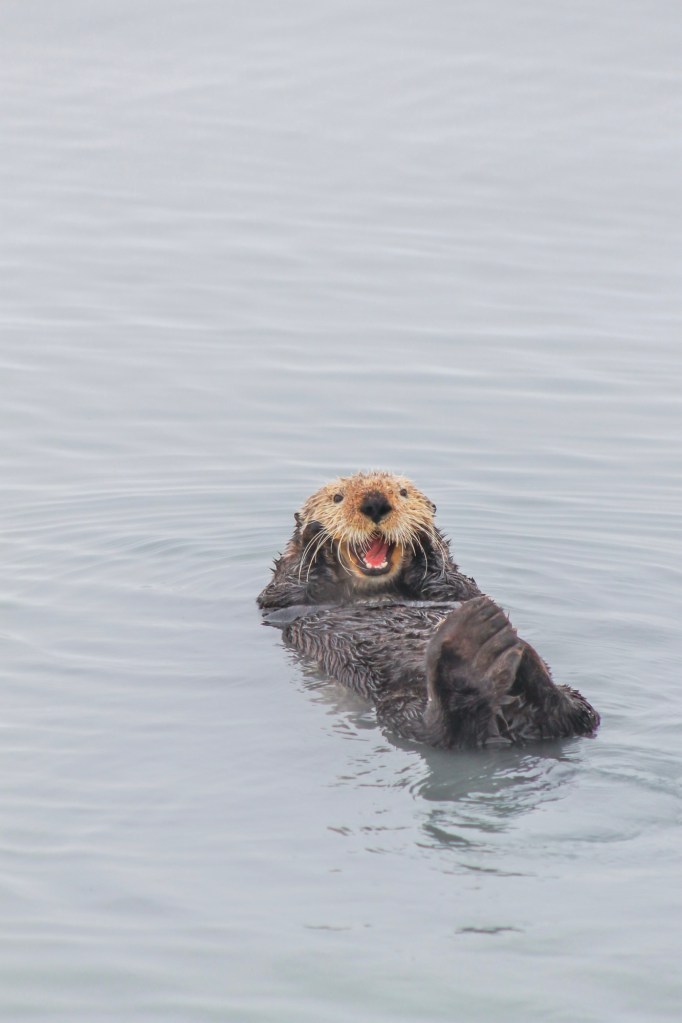
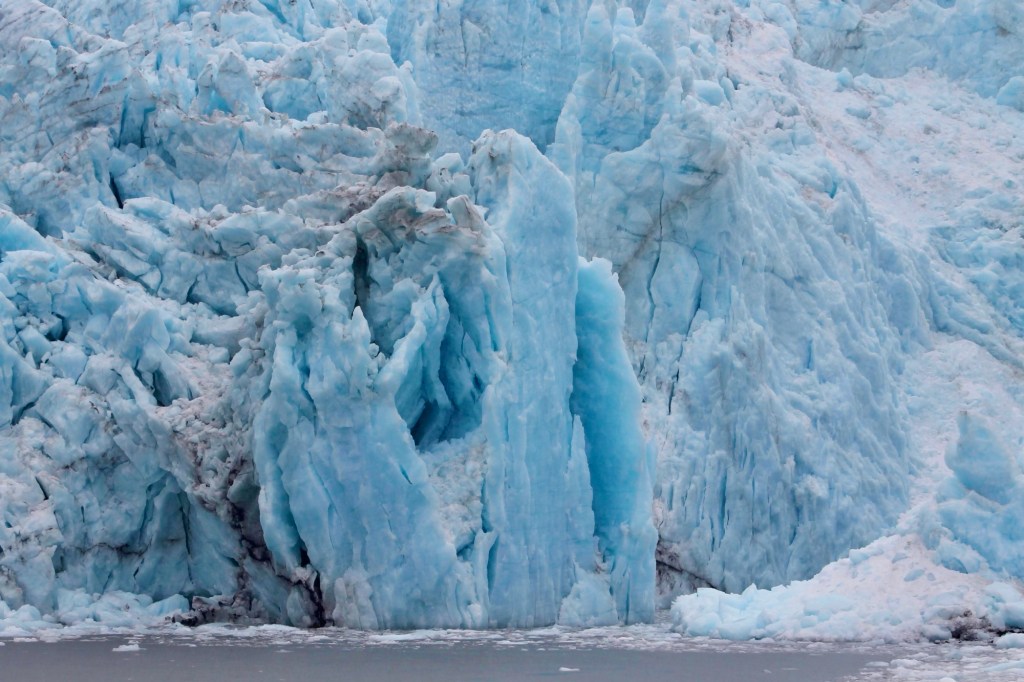
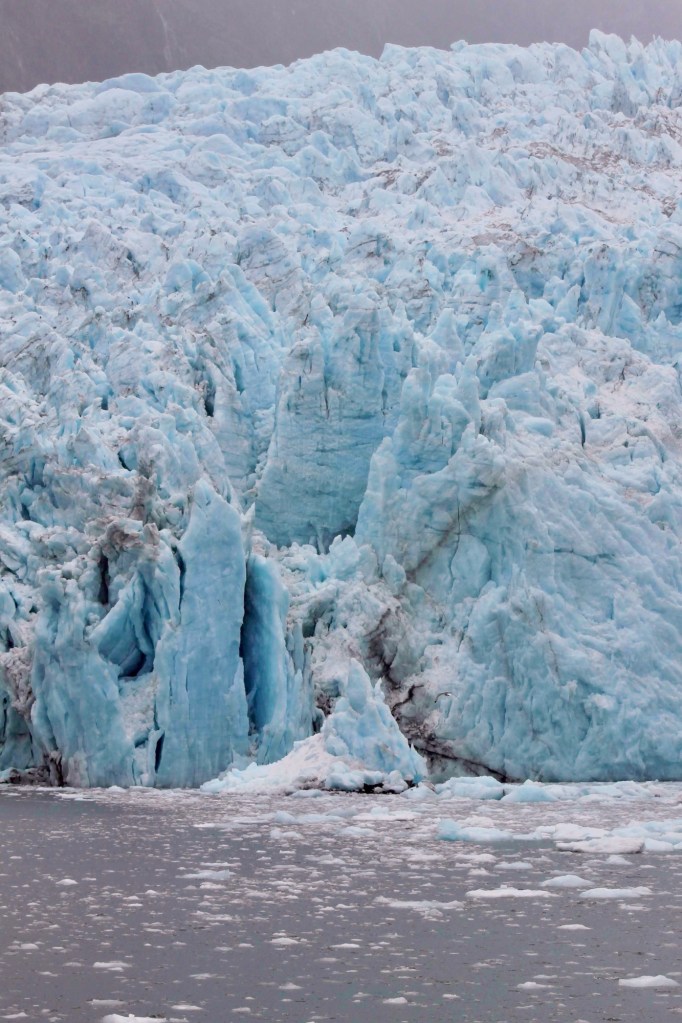
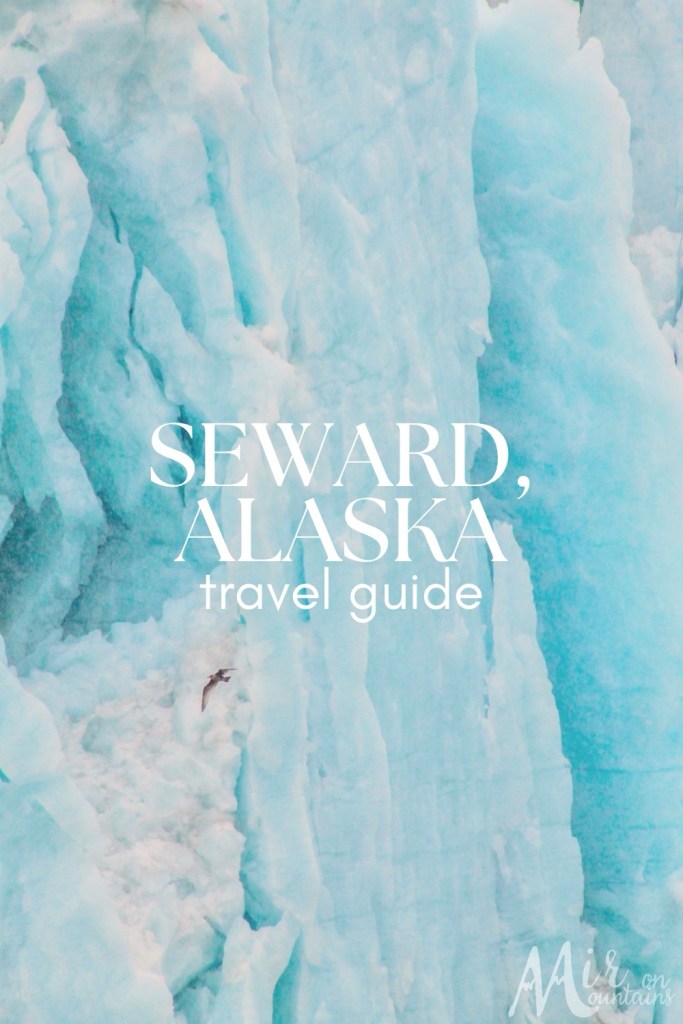
The tour company usually writes down what animals the boat on the previous day saw and we were unbelievably lucky. The ultimate destination is the Holgate Glacier which we stopped and admired the expanse and watched for calving for 30-45 minutes.
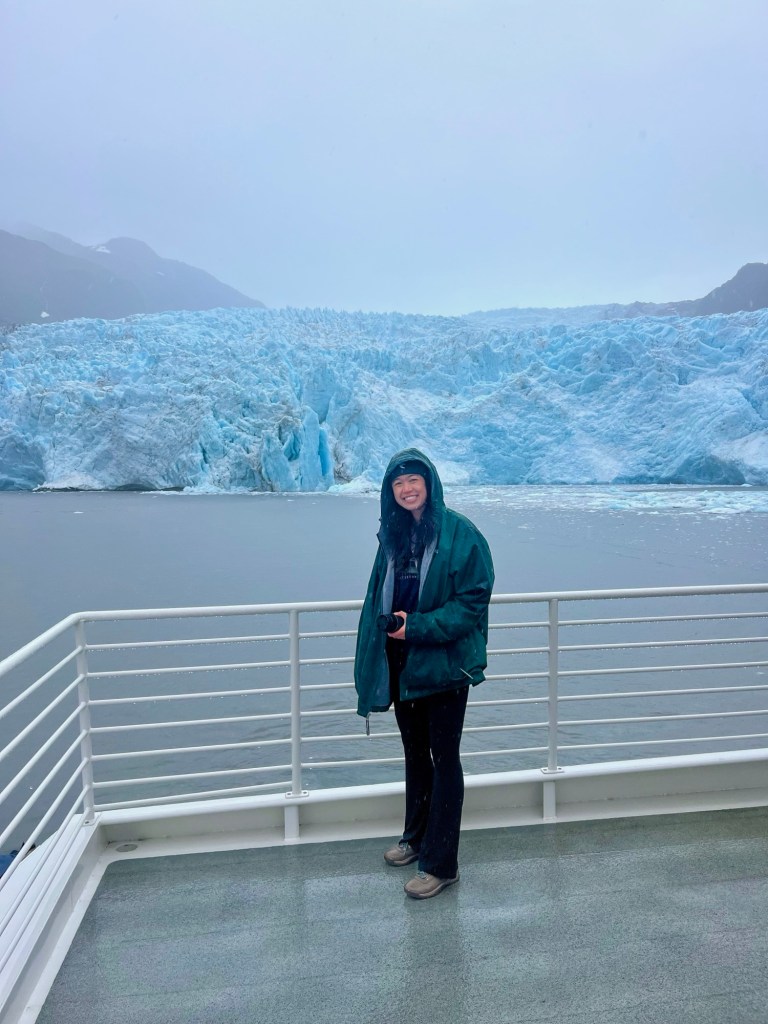
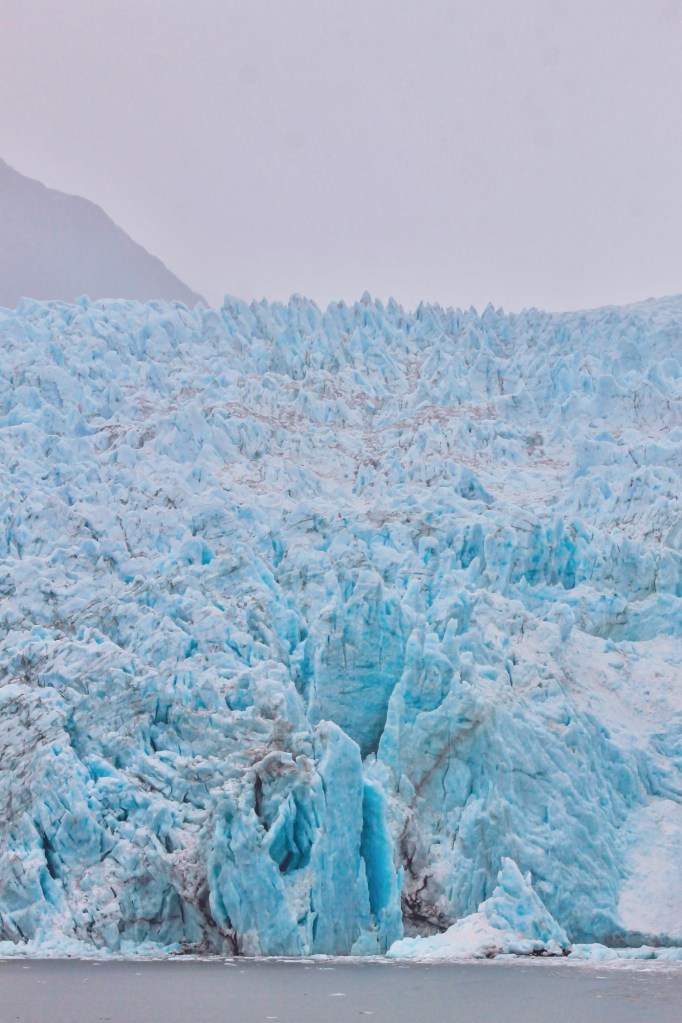
All of these wildlife sightings are not guaranteed, but for some of the more rare sightings, such as orcas and whales, our boat captain coordinated with some other tour groups, which caused us to drive as quickly as possible to a pod of orcas outside of our typical tour path, where we saw a pod of 7 orcas! It was amazing to watch the baby orcas play with their moms, and the larger bull orcas with their gigantic dorsal fins.
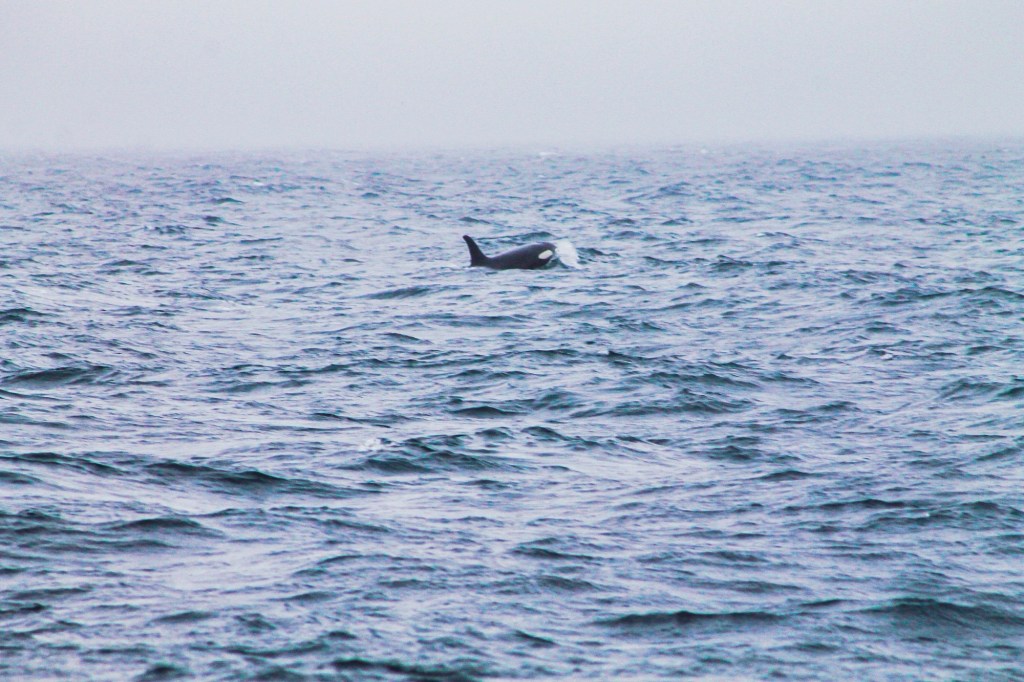
The tour was amazing and very worth the trip, but one word of advice: make sure to have (or be prepared to buy) motion sickness medication. Unlike the boat tours in Glacier Bay, the tours within Kenai Fjords national park from Seward traverse through the Gulf of Alaska , which has rougher seas, and can be more sensitive to someone with motion sickness. From the beginning of the tour, the staff are super helpful for people that do have issues with motion sickness, and will help you with any problems whether small or large. However, there still were a good amount of people, even with lower amounts of swells in the water that day, who had trouble with motion sickness. We think the trip was totally worth it, and a lifetime experience, but we recommend that people who are sensitive to motion sickness to be careful and take any preparations you could for the tour.
I don’t get sea sick, but I would brave it for the exhilaration of seeing so many aquatic wild animals!

Seward Town
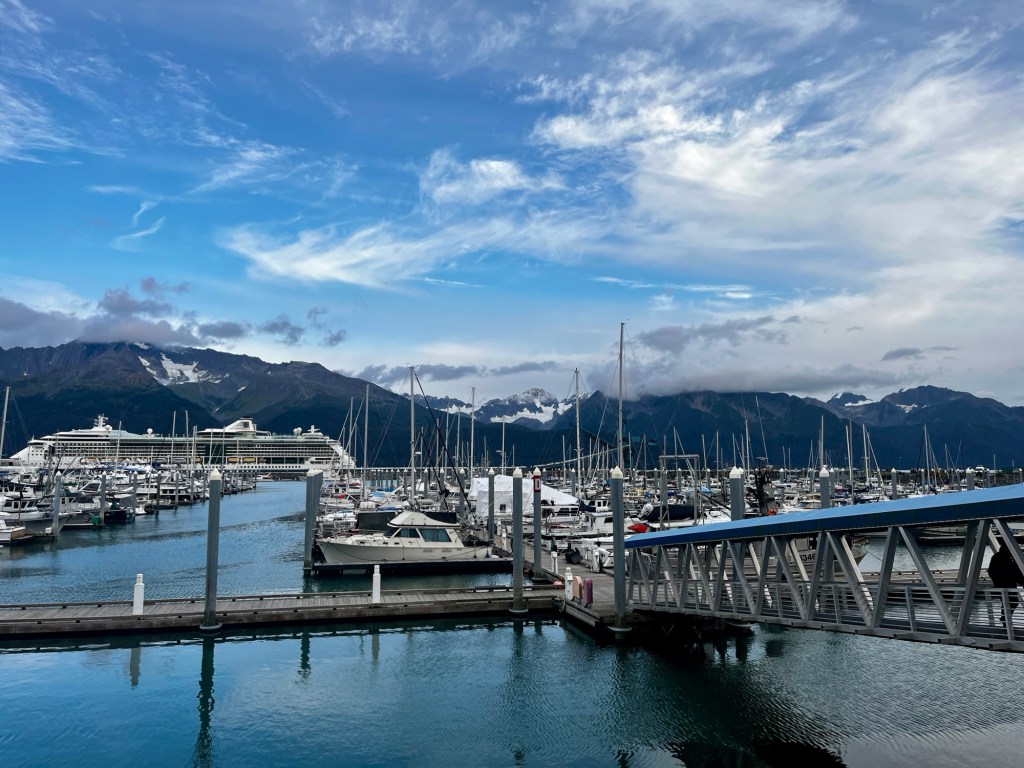
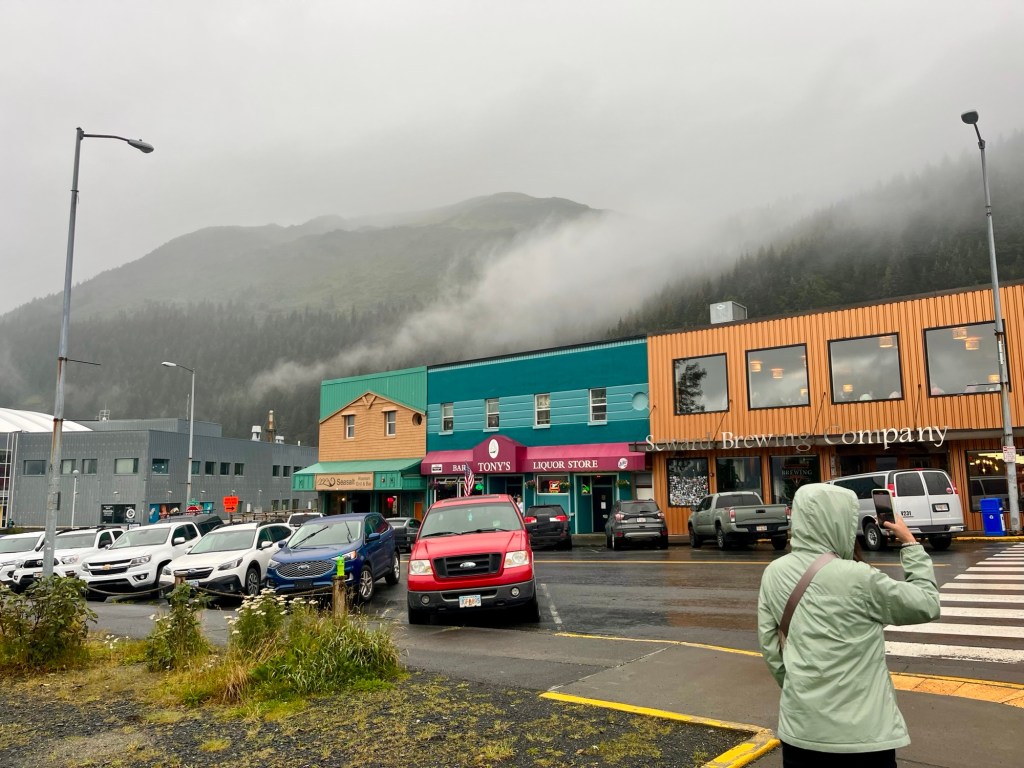
Seward isn’t just about wilderness. The town is cozy and inviting, with the harbor bustling with fishermen unloading the day’s catch, restaurants serving up fresh local halibut and salmon, and murals covering the walls of the buildings.

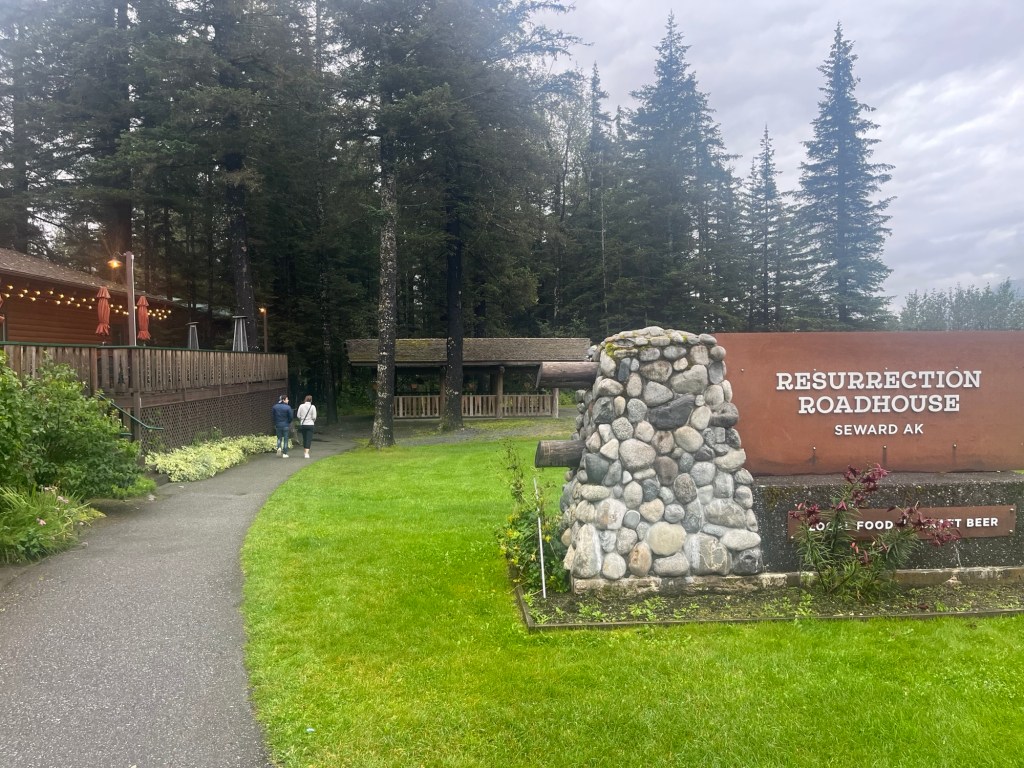
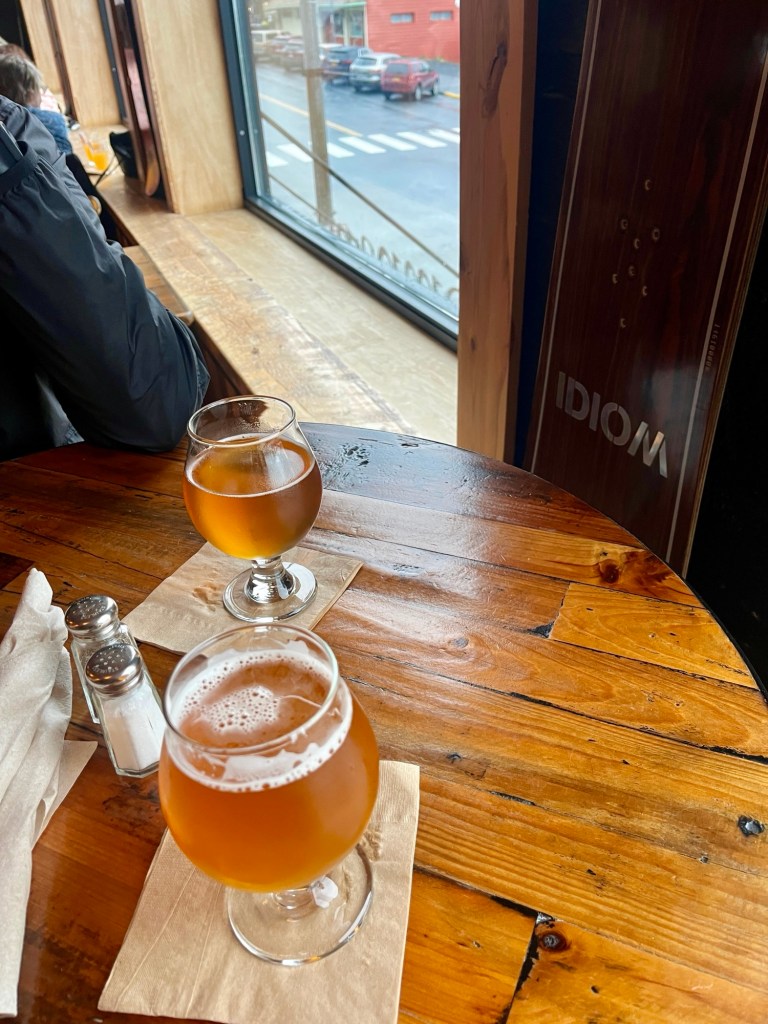
A few of our favorite places were, Resurrection Roadhouse, Seward Brewing Company, and The Highliner Restaurant.
Hiking
Harding Icefield
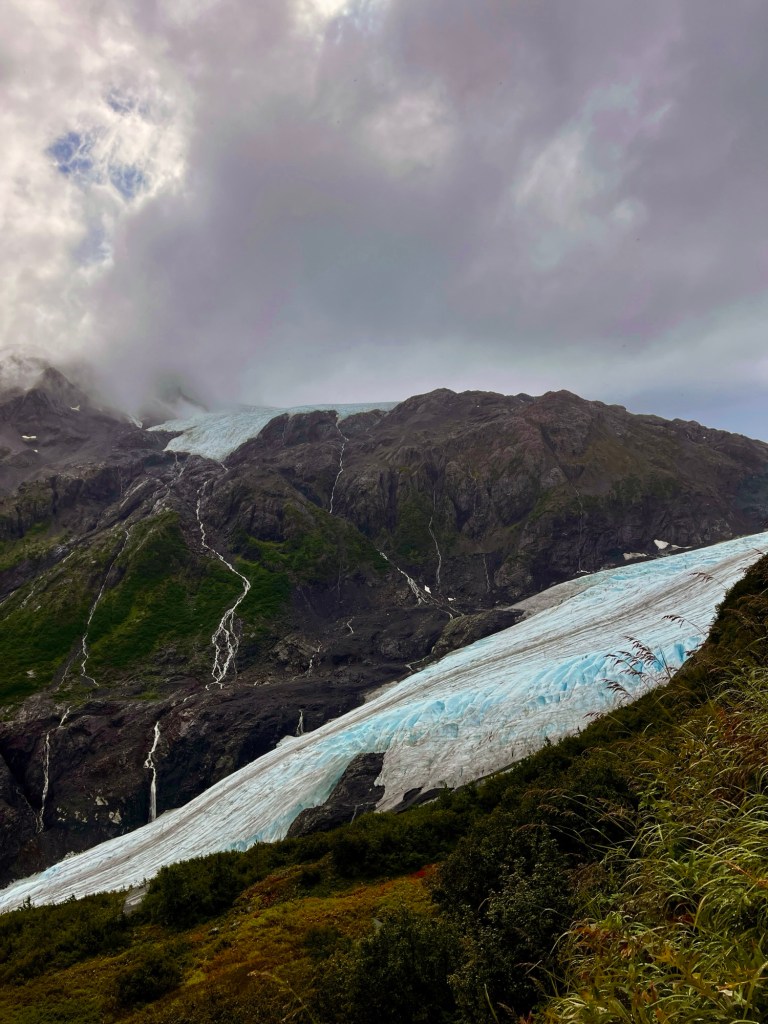
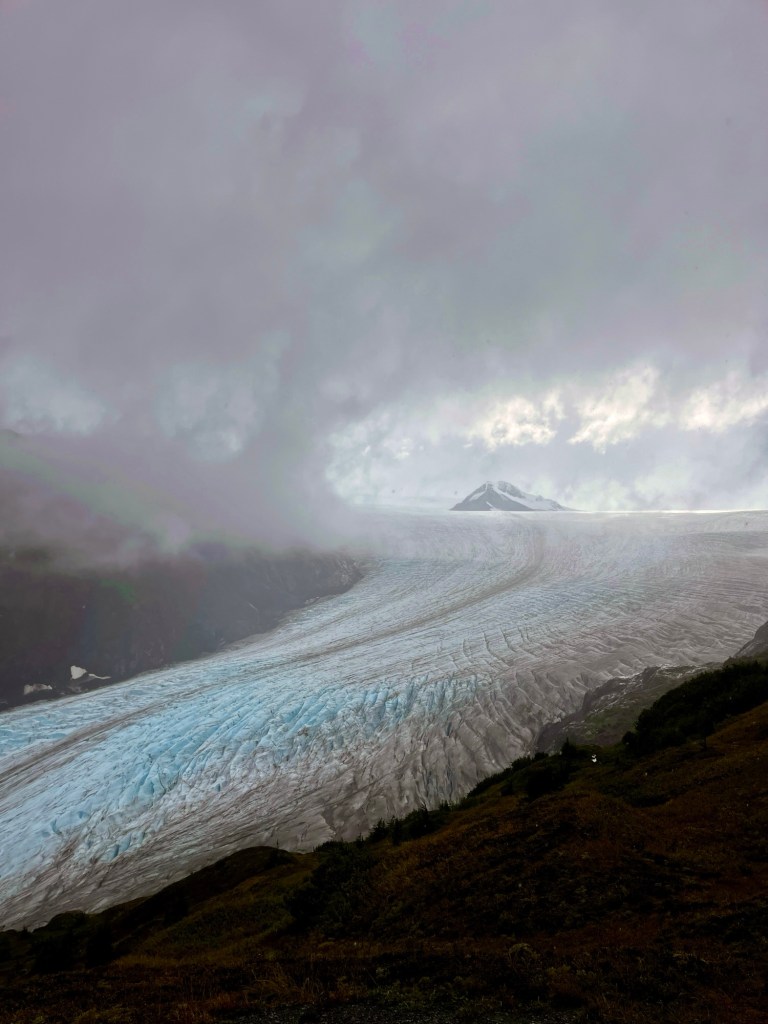
Within Kenai Fjords National Park, Harding Icefield is a 8.6 mile out-and-back trail with a ~3,200 feet elevation gain.
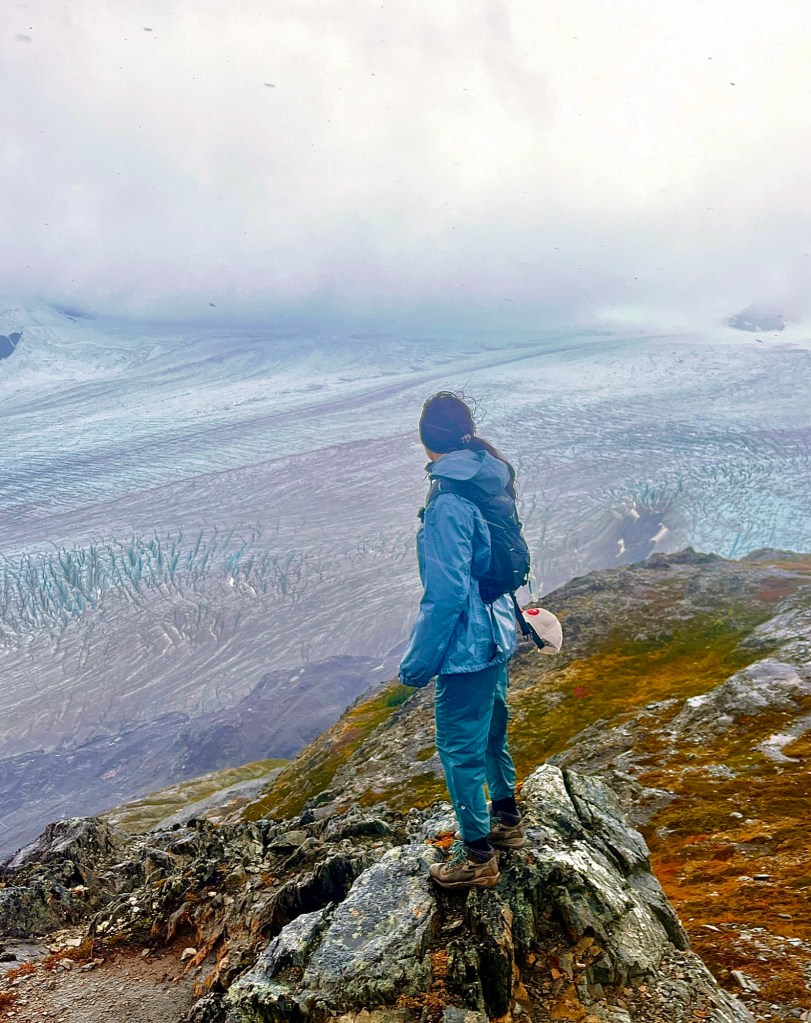
It is not certainly not an easy hike, but the views of the icefield at the end is the jaw-dropping. We started our hike around noon and allotted the whole day for us to slowly complete the trail, which took us around 7-8 hours with stops. We did not see any wildlife outside of artic ground squirrels and marmots, but it is common to see black bears on the trail, so make sure to bring your bear spray. This trail provides a panoramic view of the Harding Icefield, the largest icefield contained completely in the United States, with a total area of 700 miles.
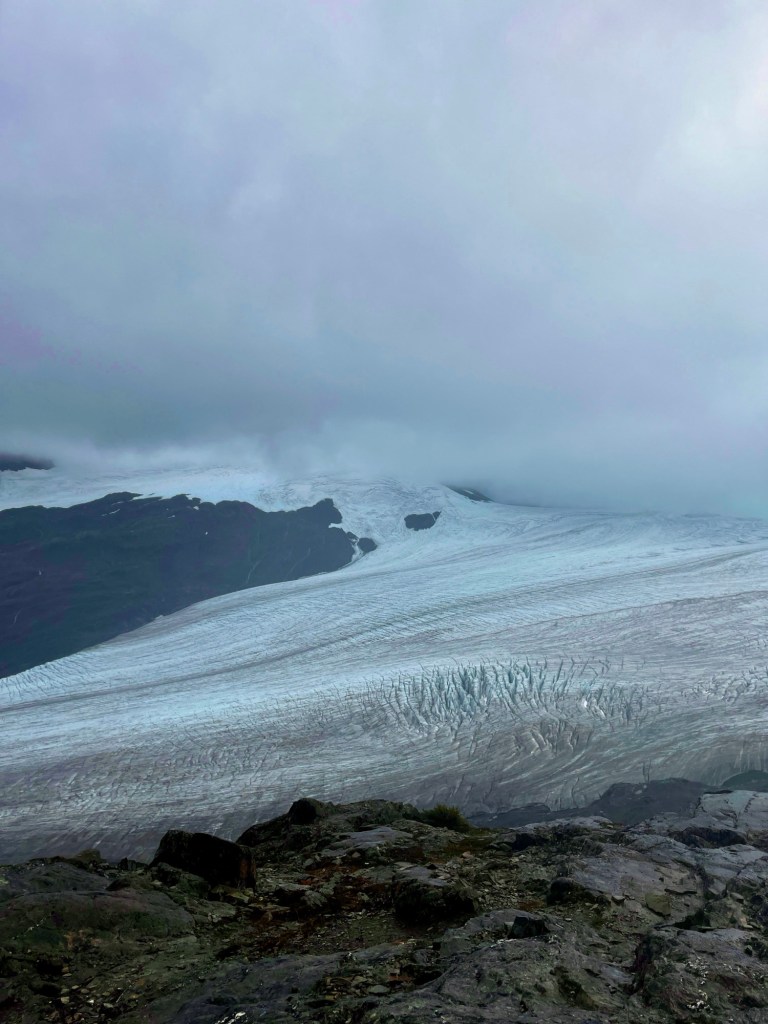
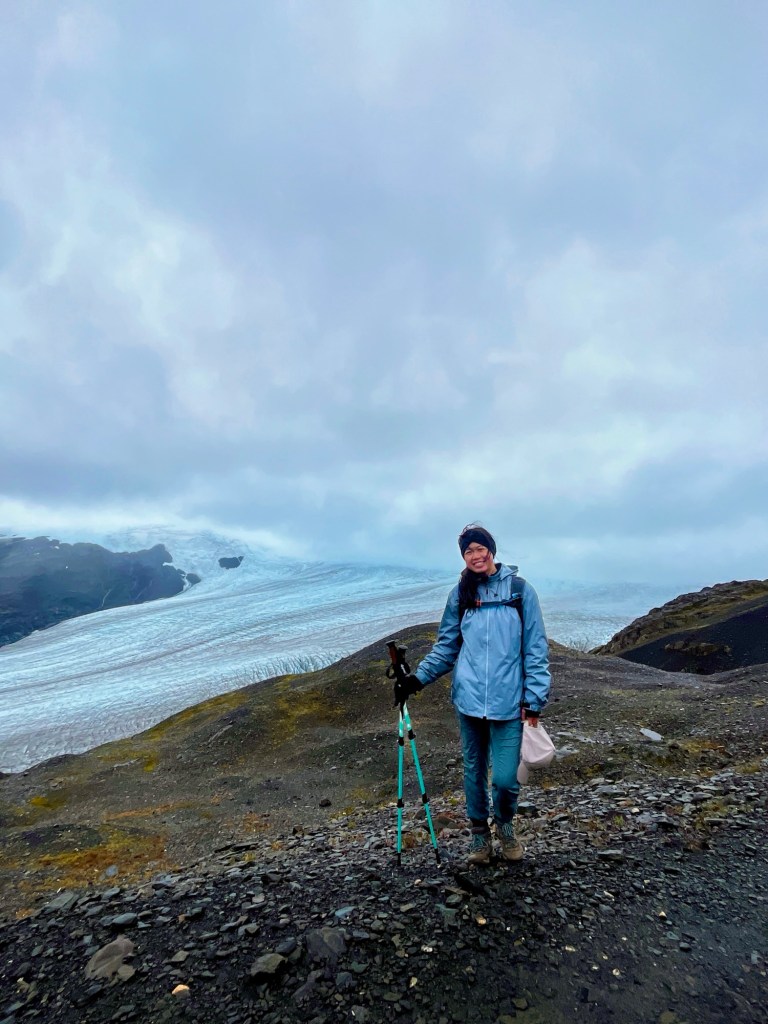
We completed the trail in mid-September, after the closure of the visitor center at Exit Glacier, but before the trail was too heavy as far as snow near the end. However when we completed the trail, the conditions near the top were extremely windy, with light snow, so we recommend bringing layers, and clothes for the more extreme weather up there if you are hiking during the shoulder season.
Exit Glacier
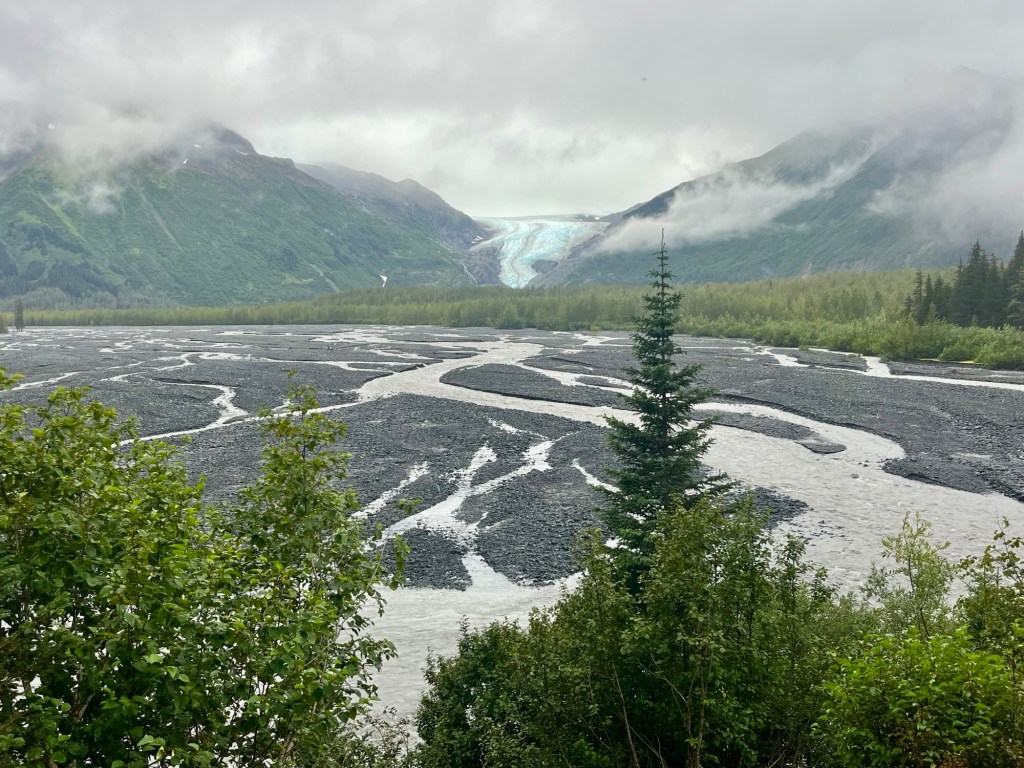
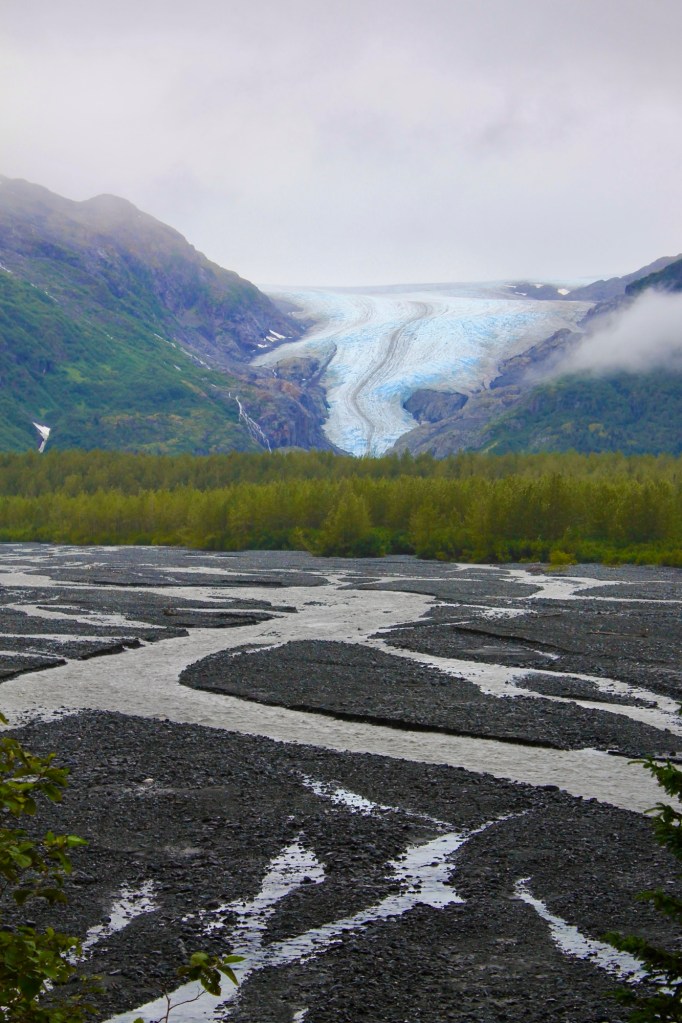
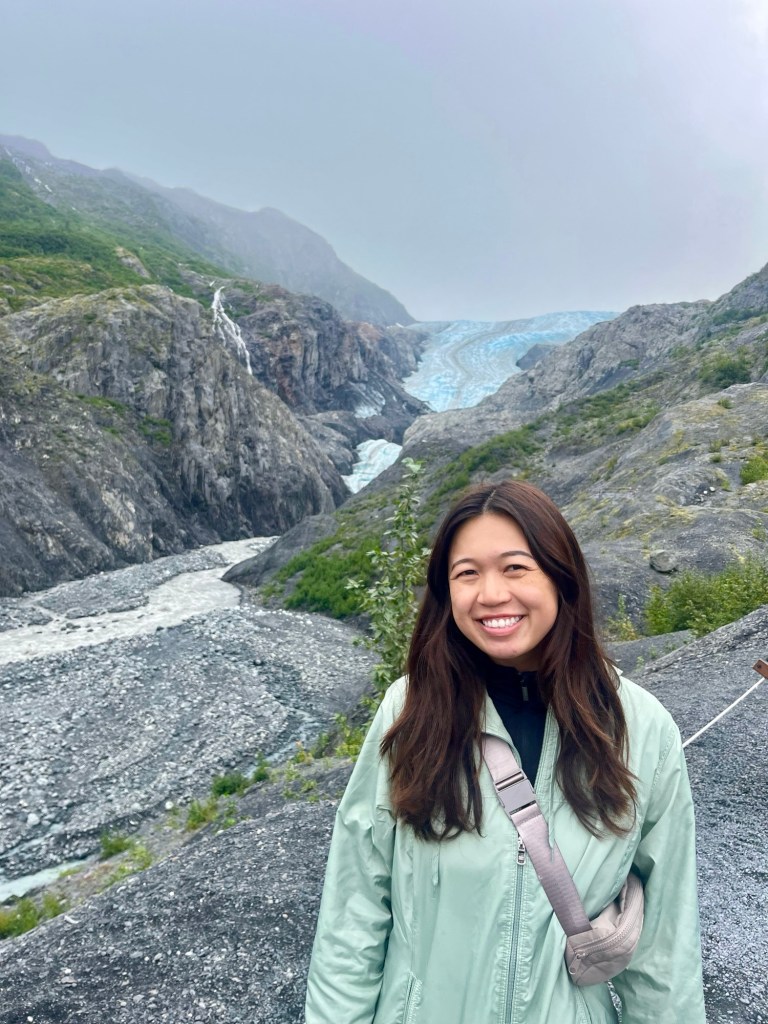
As one of Kenai Fjords National Park’s major attractions, Exit Glacier is derived from Harding Icefields and is an easily accessible valley glacier on a 2.2 mile loop trail. Just 15 minutes from town, it is an easy trail with only a 300 foot elevation gain which includes both the view and overlook loop.
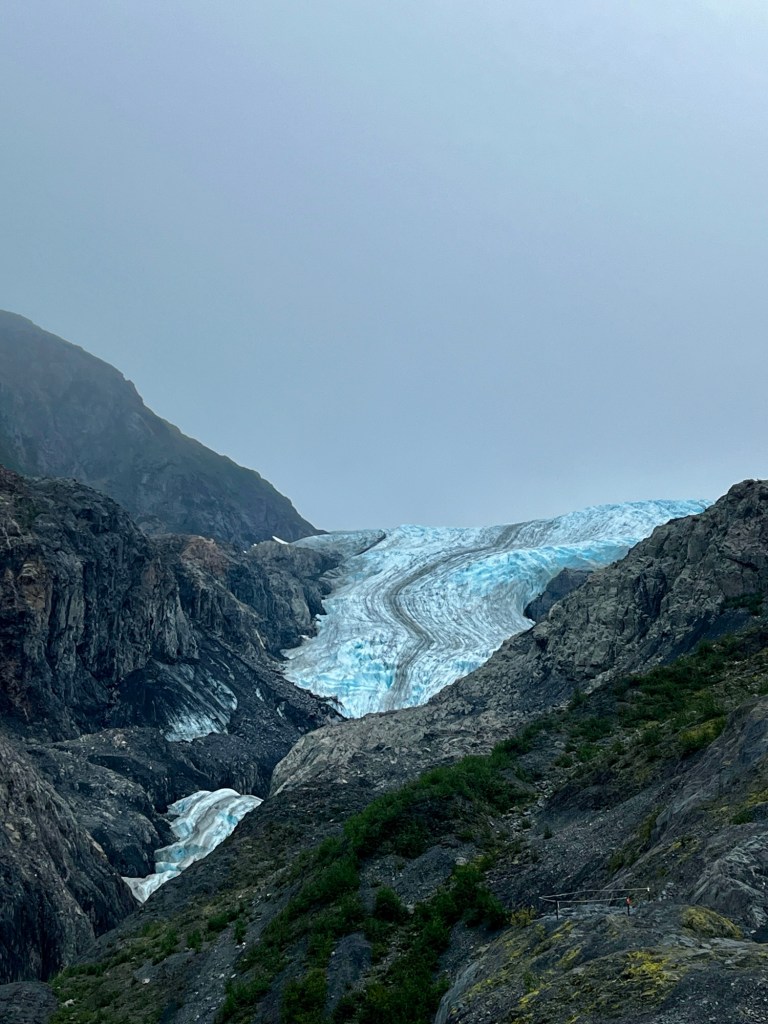
You are able to get some good views from various viewpoints along the road to the the visitor center, but the closest views (without hiking the more strenuous Harding Icefield trail) are able to be seen through the quick Exit Glacier overlook loop trail that is easily accessible from the visitor center parking lot.
Other Trails
Seward Waterfront Trail — Flat, easy path running along the shoreline for views of the bay and mountains
Mount Marathon — Every July 4th, runners race nearly 3,000 vertical feet from town to the mountains summit. However, you can hike at your own pace (around 3-4 hours round trip) to get views over Seward and Resurrection Bay
Lowell Point & Tonsina Point — Coastal hikes through lush rainforest, chance to see sea otters offshore
Lost Lake Trail — Longer day hike/backpacking trip through alpine meadows and crystal lakes
Caines Head Trail — Coastal trek beginning at Lowell Point that passes through rainforest and beaches to the ruins of WWII-era Fort McGilvray (essential to hike at low tide)
Iditarod Trail
About the Idatarod Trail History
The Iditarod Trail is a historic 2,300-mile network of trails in Alaska that once served as a key overland route for mail delivery, freight hauling, and transportation by dog sled teams in the early 20th century. This route began in Seward and ended in Nome. Nowadays, that histroy is honored as the Iditarod National Historic Trail. At first before learning more about the topic, I thought that the Iditarod Trail ran the same route as the famous Iditarod race itself, but through visiting Seward, I learned that I was wrong!
When we hear the term, “Iditarod”, we typically were actually thinking of the Iditarod Trail sled dog race, which is a modern sporting event that began in 1973. It was originally created to “honor” the history of the Iditarod Trail, as well as preserve the tradition of sled dog mushing in Alaska. Nowadays, the Iditarod race is 1,000 miles with a ceremonial (but not official) start in Anchorage, the official start in Willow, and ending in Nome (the same place that the original trail ended).
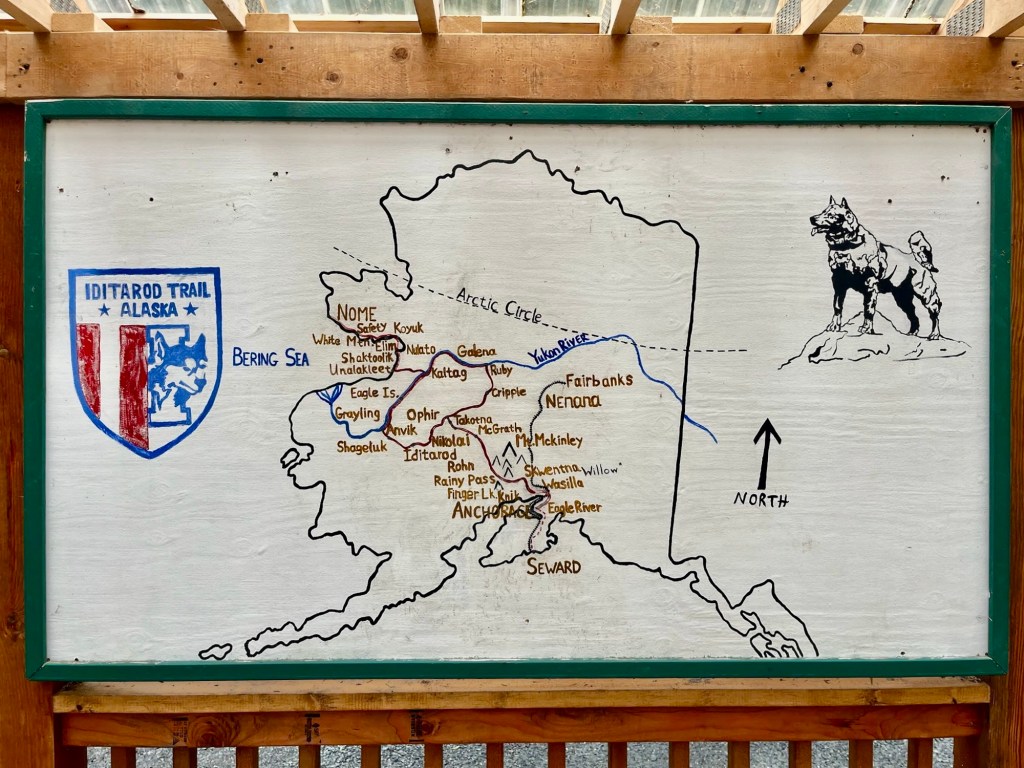
As a result, even though Seward was the original “start” of the Iditarod Trail, it is not included at all in the modern day race. However, Seward is not lacking in histiroy relating to the original trail and the influence to the state of Alaska that the people and dogs working on the trail had. Some of the Iditarod related attractions in town include:
1. Iditarod Trail “Mile 0” Marker
Located near Third Avenue and Jefferson Street, this marker denotes the southern beginning of the historic Iditarod Trail, which once stretched from Seward to Nome during Alaska’s Gold Rush era. Maybe not as famous as the Mile 0 marker of the Alaska Highway, but certainly deserves a quick visit if you have the time.
2. Iditarod Trail Mural
On the north side of the TelAlaska building on 4th Avenue, you’ll find a vibrant mural by Jon Van Zyle celebrating Seward’s place in Iditarod history.
3. Iditarod Exhibits at Seward Museum
The Seward Museum includes exhibits detailing the original Iditarod Trail and its evolution into the sled-dog race that is world famous today. We did not have the time ourselves to visit this museum, but it seems to be a nice, compact way to learn more about the history of the trail, race, and Seward area as a whole!
Dog Sledding
Related to my last point of the Iditarod Trail, another one of my favorite experiences in Alaska and mostly for the puppies!! We visited Seavey’s IdidaRide in early September, so since it was still summer, there was no snow for us to sled on. One option during that time of year is flying in a helicopter to a glacier to dog sled on the glacier, but unsurprisingly, that type of trip is very expensive. Instead, we did a summer dog-sledding tour, where a team of dogs pulled us with a specially-made cart that works on terrain without snow, and also helps the dogs train with pulling a “sled” in the summer in order to begin to work on their endurance prior to the main training season in the late-fall and winter.
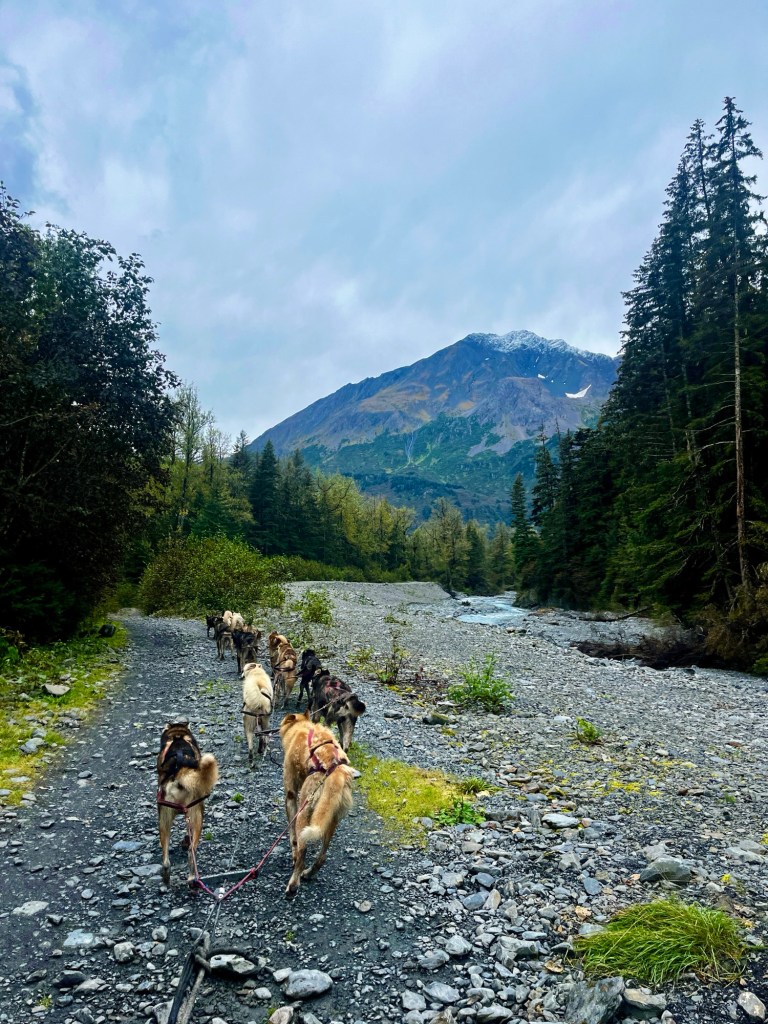
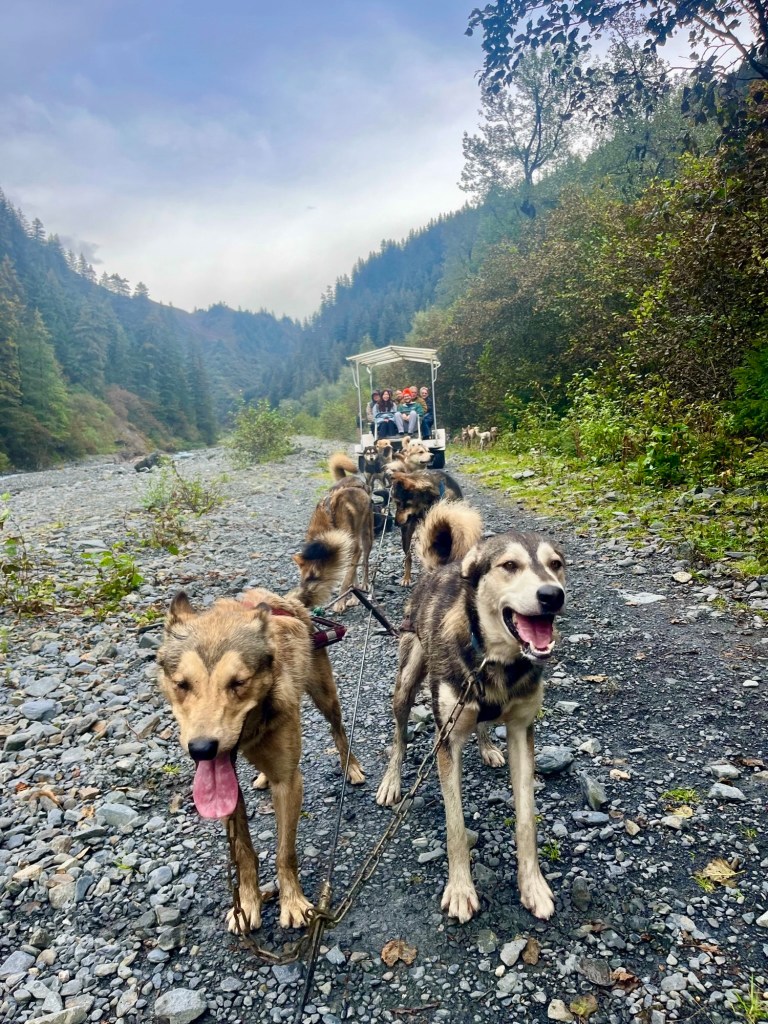
At the beginning of the tour, the employees teach you about the history of dog sledding, the Iditarod, the Seavey family, and more. Mushing has been in this family for generations, so it was so cool to learn about their experiences and meeting some champion dogs!
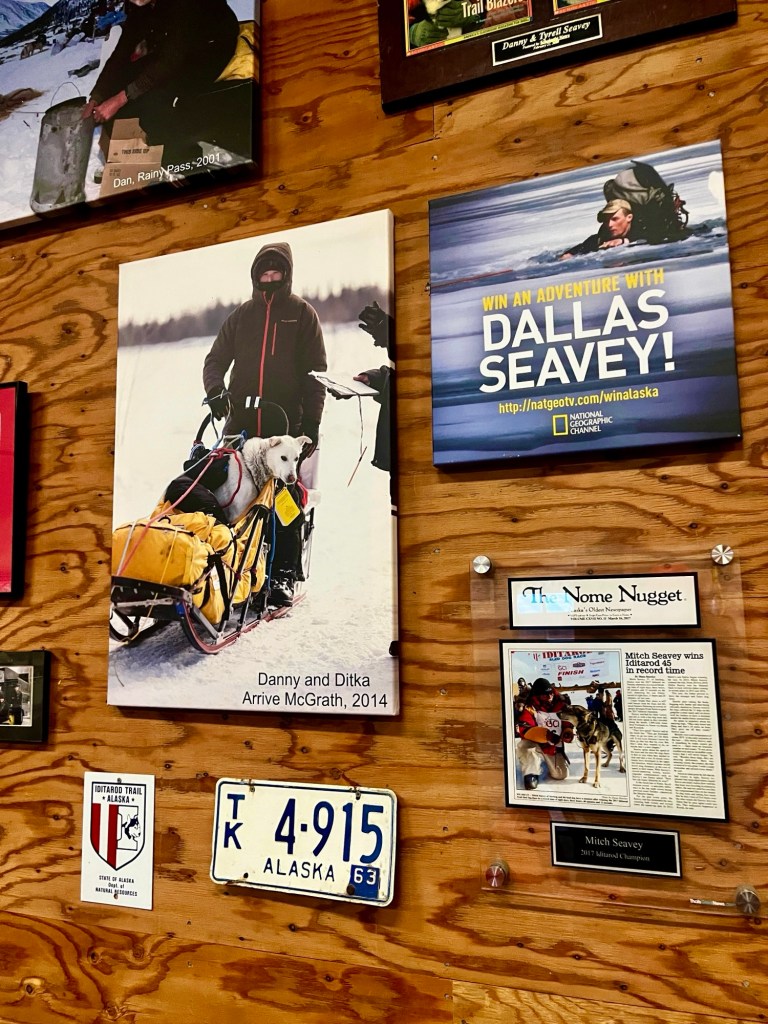
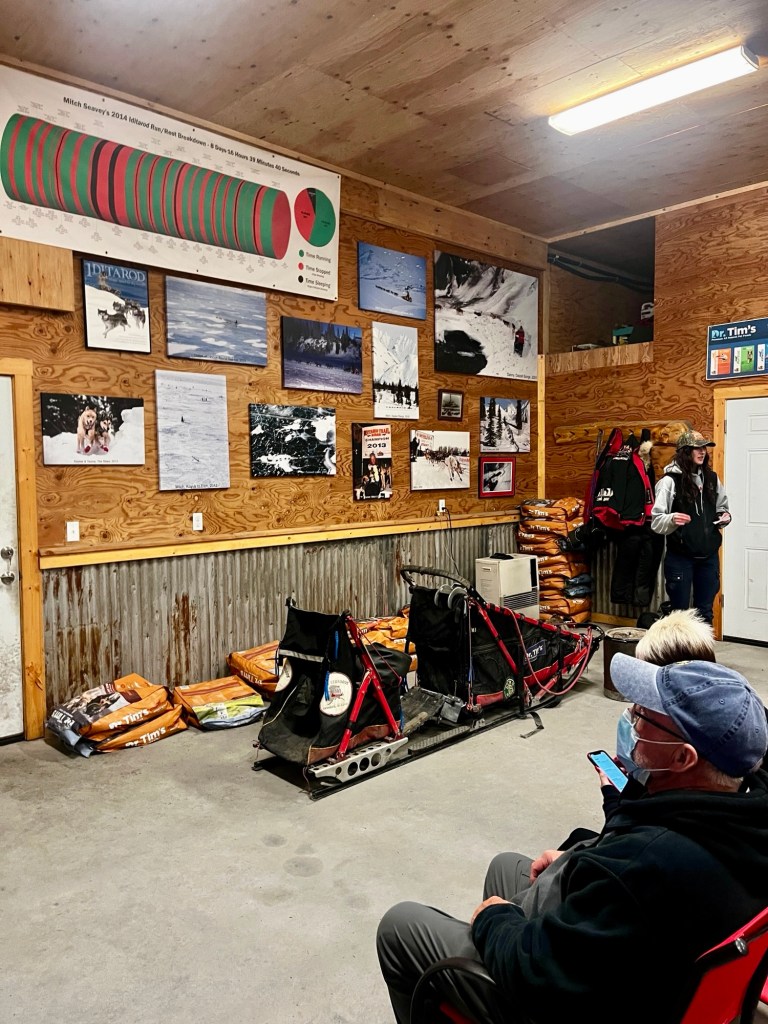
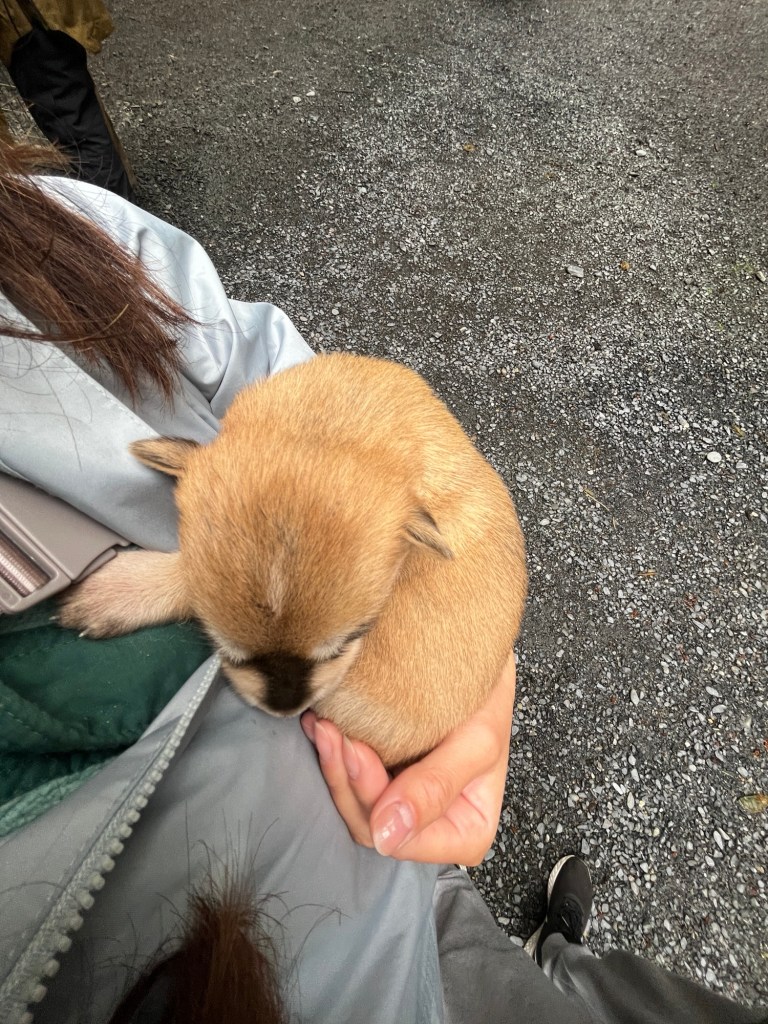
While learning about the history and how the Iditarod works, we met and cuddled their kennel’s newest puppies, which were only 14 days old!
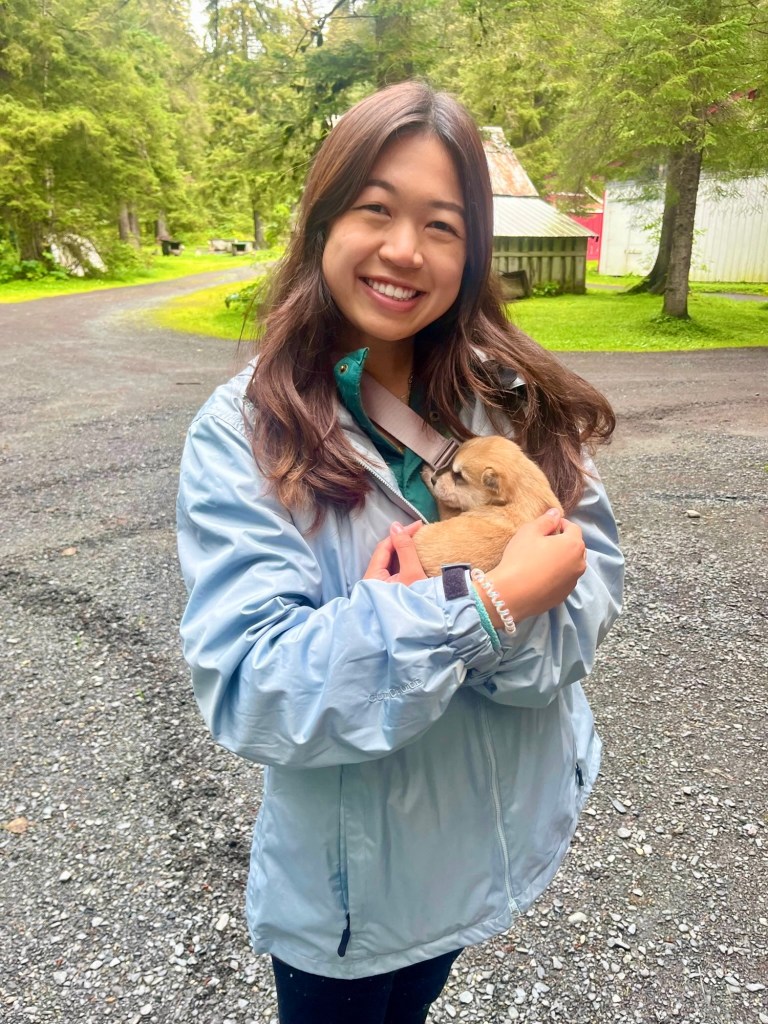
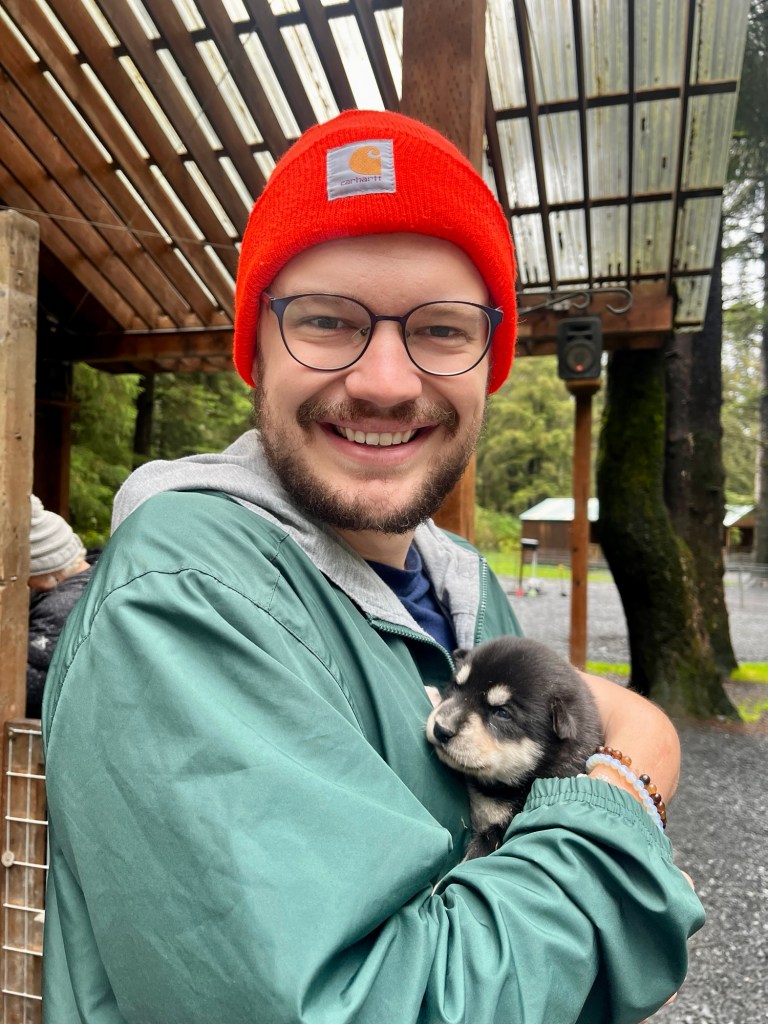
I wish I could’ve taken him home!
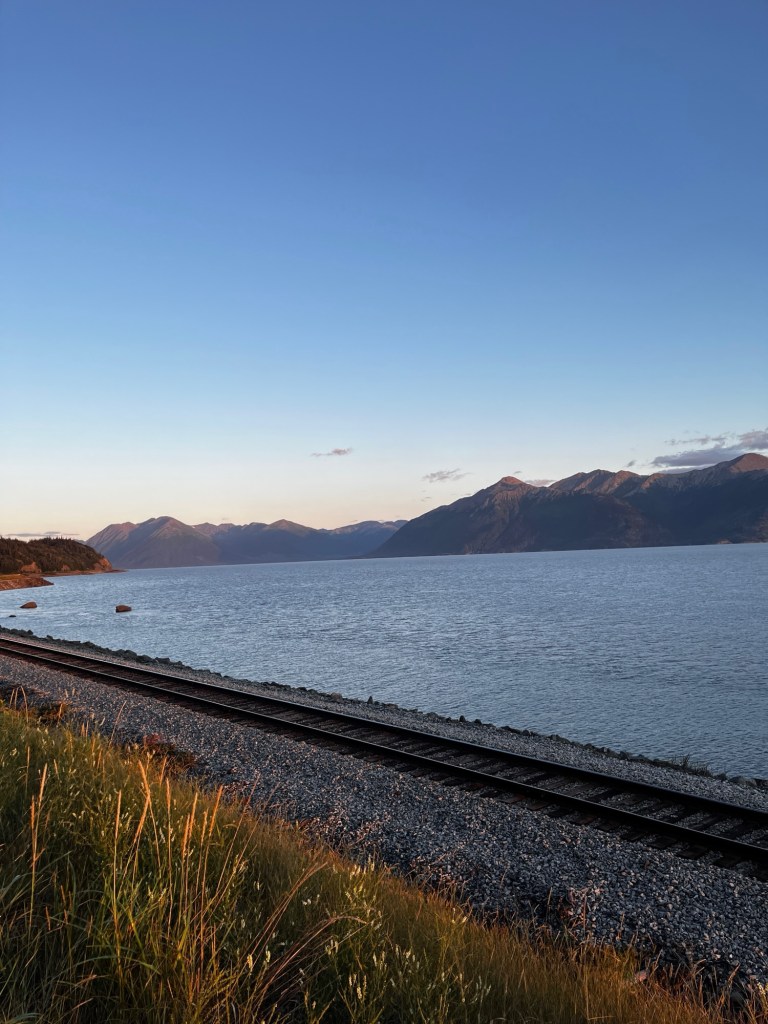
Seward Highway
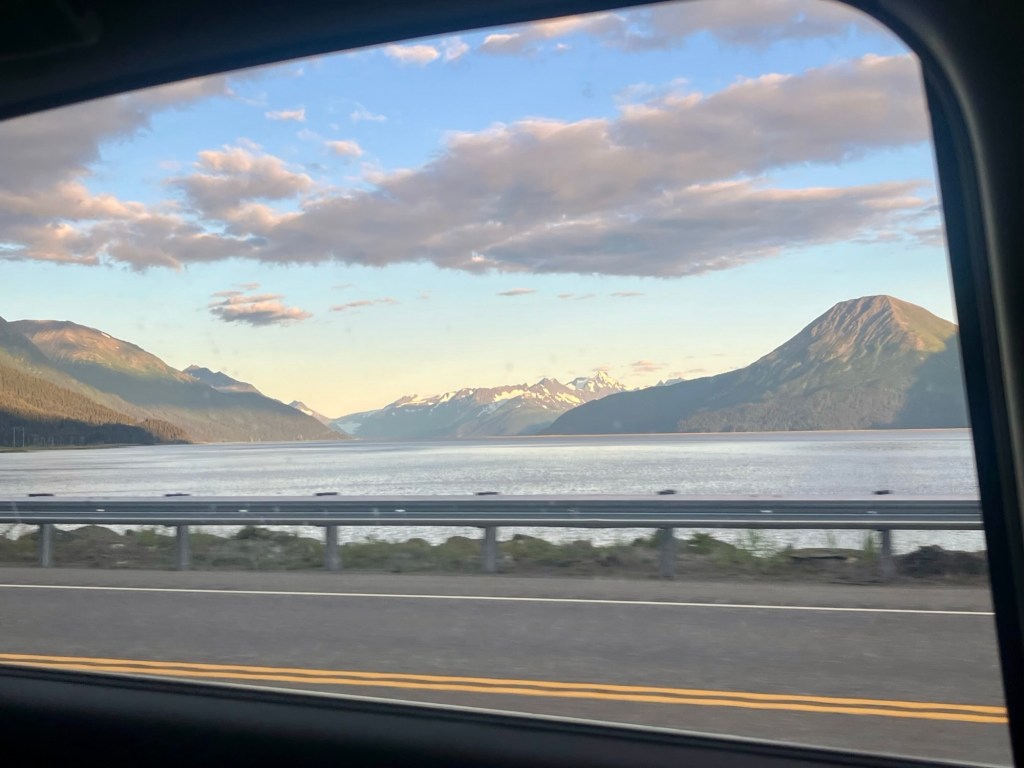
If you’re driving to Seward from Anchorage, you will drive on the Seward Highway. Not only a beautiful coastal drive, there’s a good chance of seeing wildlife as you drive along the Cook Inlet on the primary portion of the highway that follows the ocean from Potter Marsh just south of Anchorage to Portage. We plan on making another article that describes this drive, as well as the other drives we did in the Kenai Peninsula, but as far as ease of access to marine wildlife near Anchorage, it’s hard to beat the portion of the Seward highway along the ocean.
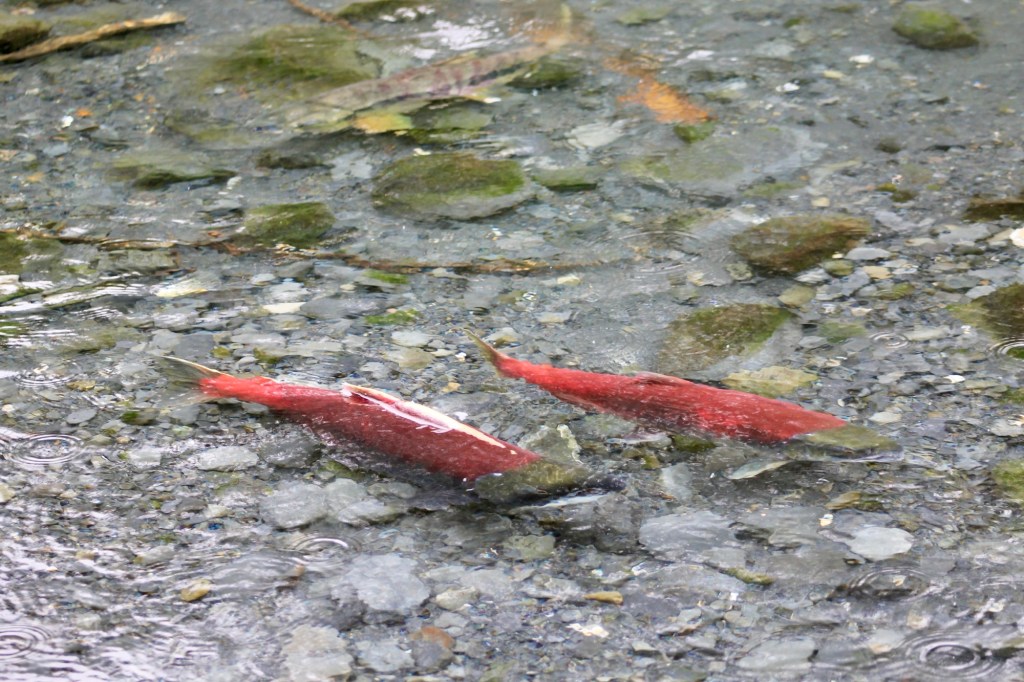
As the summer season comes to an end, so does the salmon run. Luckily, we were able to spot a few salmon near Portage Creek!
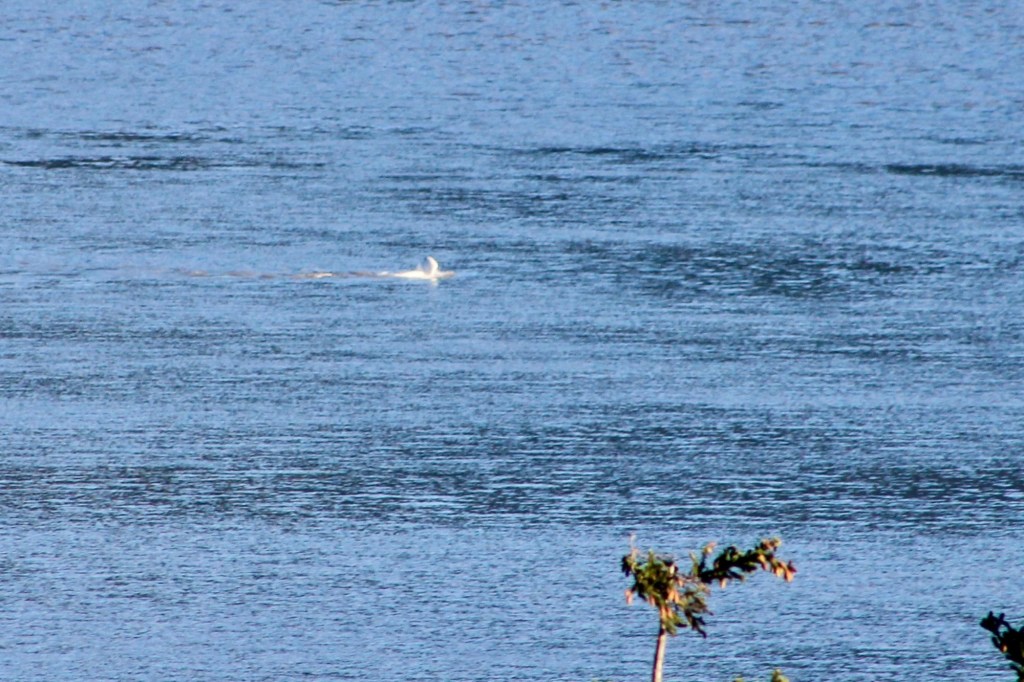
Through various pullouts, you might be able to observe wildlife, such as humpback whales, harbor porpoises, beluga whales, and orcas. We were lucky to spot a large pod of beluga whales on our drive back along the Seward Highway, which we were able to watch for over an hour. At various pull-outs like Bird Point and Beluga Point, there are even informative signs on the Cook Inlet beluga population, as well as belugas as a whole.
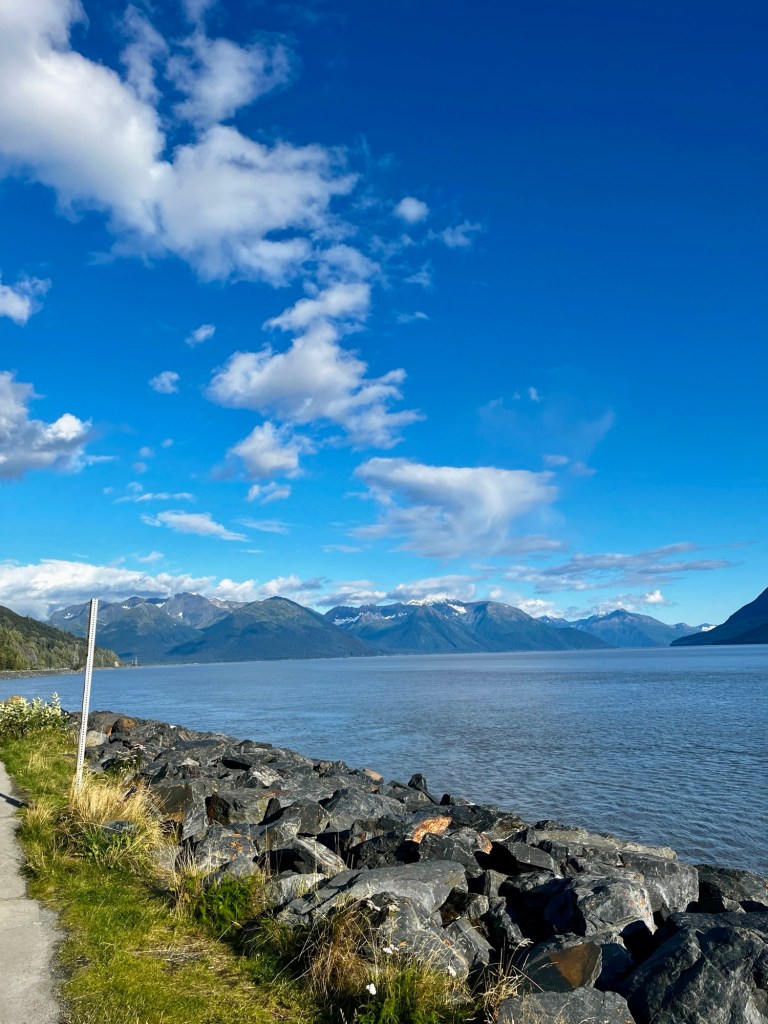
The many pullouts on this highway, including Beluga Point, is a great place to park to try to spot the white bumps of beluga whales swimming in the ocean. We stayed and watched belugas for an hour one day! (Unfortunately they were so far away, I don’t have many good pictures of them).
Fishing Charters
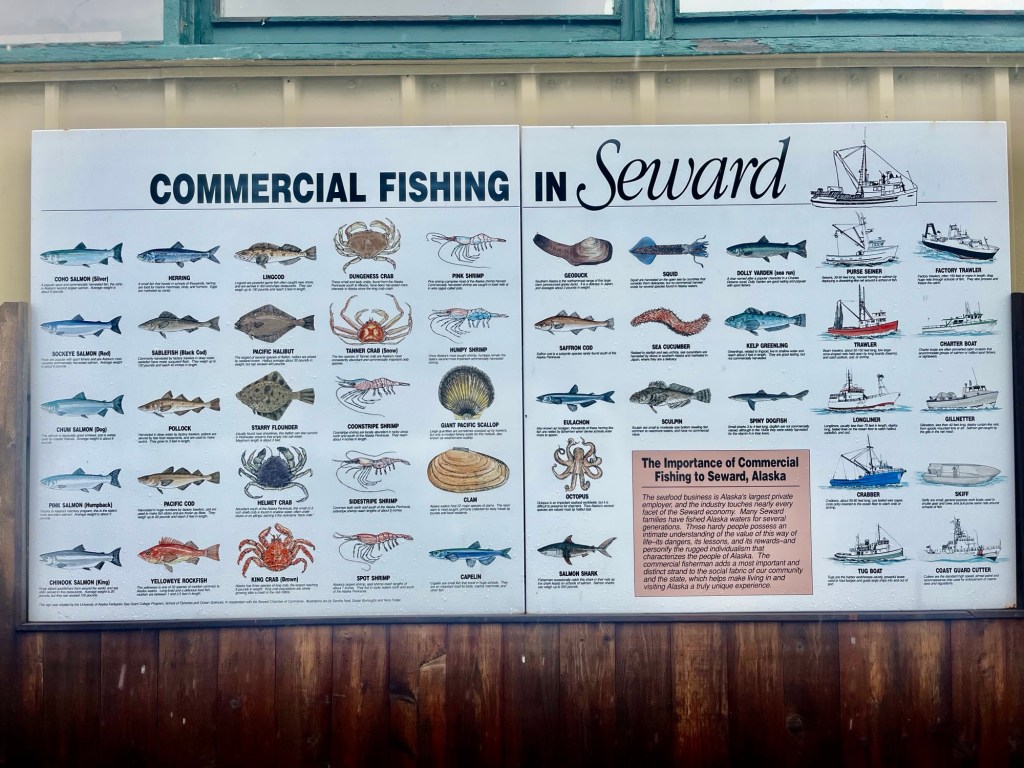
While I am not a fisherman (fisherwoman?) myself, I must mention that Seward is one of the best places in Alaska to take a fishing charter. One benefit of Seward for a fishing charter is that Seward is located in Resurrection Bay, which is a deep ice-free port that offers relatively quick access to deeper waters in the Gulf of Alaska. This allows you to get closer to fishing grounds for your charter faster than many other fishing “towns” in Alaska.
Typical fish species included in these charters include halibut, salmon (especially silver and king), rockfish, and lingcod. It is also common for the charters to include packages that include the “targeting” of multiple species during your day. There are numerous operators in town that have been operating for many years, with certified captains, and a reputation for great service with a focus on safety. Many charters also offer fish cleaning, filletings, and packing services as well.
Also, another bonus of going sportfishing in Alaska is that you almost always will have the chance to see a great variety of wildlife, as well as have natural beauty all around you during your trip, which is certainly still the case in Seward. Wildlife such as various species of whales, orcas, puffins, and bald eagles, all with the backdrop of beautiful mountains and glaciers.
One last pro of a charter in Seward is that the town is accessible through many methods from Anchorage, such as a cruise ship, train (via the Alaska Railroad), or a 2.5 hour drive. There is a relatively large amount of infrastructure in Seward to help make the process easier: many accommodations, restaurants, outfitters, and fish processing facilities.
So while I have not yet taken an Alaskan fishing charter, I think it is for sure worth looking into in Seward as an option if you are looking for a charter! Check out resources like the alaska.org website article on Seward fishing charters for some options of local companies.
Things We Missed
Due to time and budget constraints, we can’t see everything! Here are some things we missed.
Alaska SeaLife Center
The Alaska SeaLife Center, located in downtown Seward, is the only permanent marine mammal rescue and rehabilitation facility in all of Alaska! Opened in 1998, the center also is a public aquarium, which combines to form a unique place to visit, with a focus on marine science, wildlife rehabilitation, and visitor education.
The wildlife rehabilitation at the center focuses on key Alaska-area species such as puffins, harbor seals, steller sea lions, and sea otters. The center even updates their website whenever they admit new wildlife “patients” to their center! The wildlife response program ran by the center responds to live and dead marine wildlife that has been abandoned, stranded, or injured throughout Alaska. During tragic oil spill events that have happened in recent years in Alaska, such as the Exon-Valdez spill, the Center assisted in the cleanup efforts and the rescue of impacted animals.
Kayaking in Resurrection Bay
Half-day to multi-day guided trips of kayaking with glacier views, otters, and sea lions.
Helicopter or Plane Tours
There are many places throughout Alaska to hop in an aircraft to see the scenery. Helicopters or plane tours allow you aerial views of the fjords, glaciers, and mountains surrounding Seward.
Wildlife Cruises or Whale Watching Tours
Shorter or half-day options are available if you’re not doing the full fjords tour to focus more on wildlife sightings.
Gallery
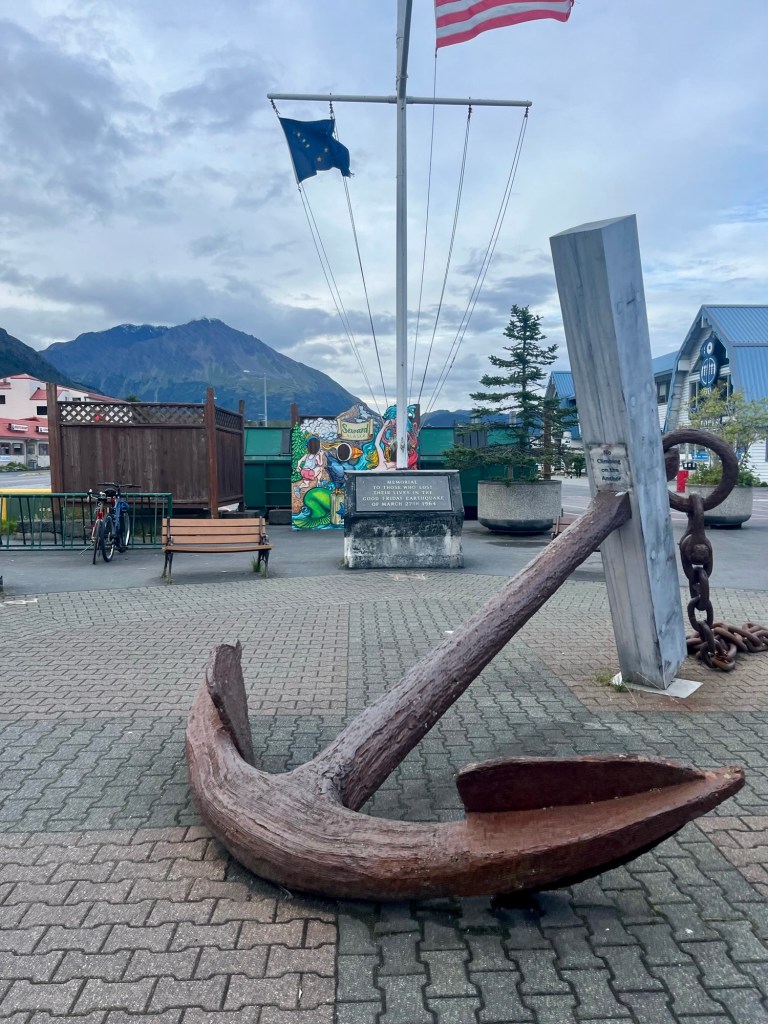
Here are a few images to inspire you on your own trip to Seward!

What’s Next?
Seward is a place where every corner feels like a picturesque postcard. From glaciers to whales to simple moments of quiet by the water, Seward is most definitely worth at least a stopover if you’re in Alaska.
Once we get back to Anchorage, it’s a quick turnaround and the next day, we’re heading to Valdez!
Thanks for reading my little blog! 🙂 Have you been to Seward or planning a trip there? Send me your thoughts about what you loved the most or are most excited about! If you have any questions, feel free to leave a comment.
Pin it for next time! 📍

 mir on mountains
share your thoughts!